

Oven Pot Roast With Root Vegetables and a Gravy Worth Defending
A chuck roast, a Dutch oven and three and a half hours. The vegetables stay whole and the gravy comes from the pot, not a packet.
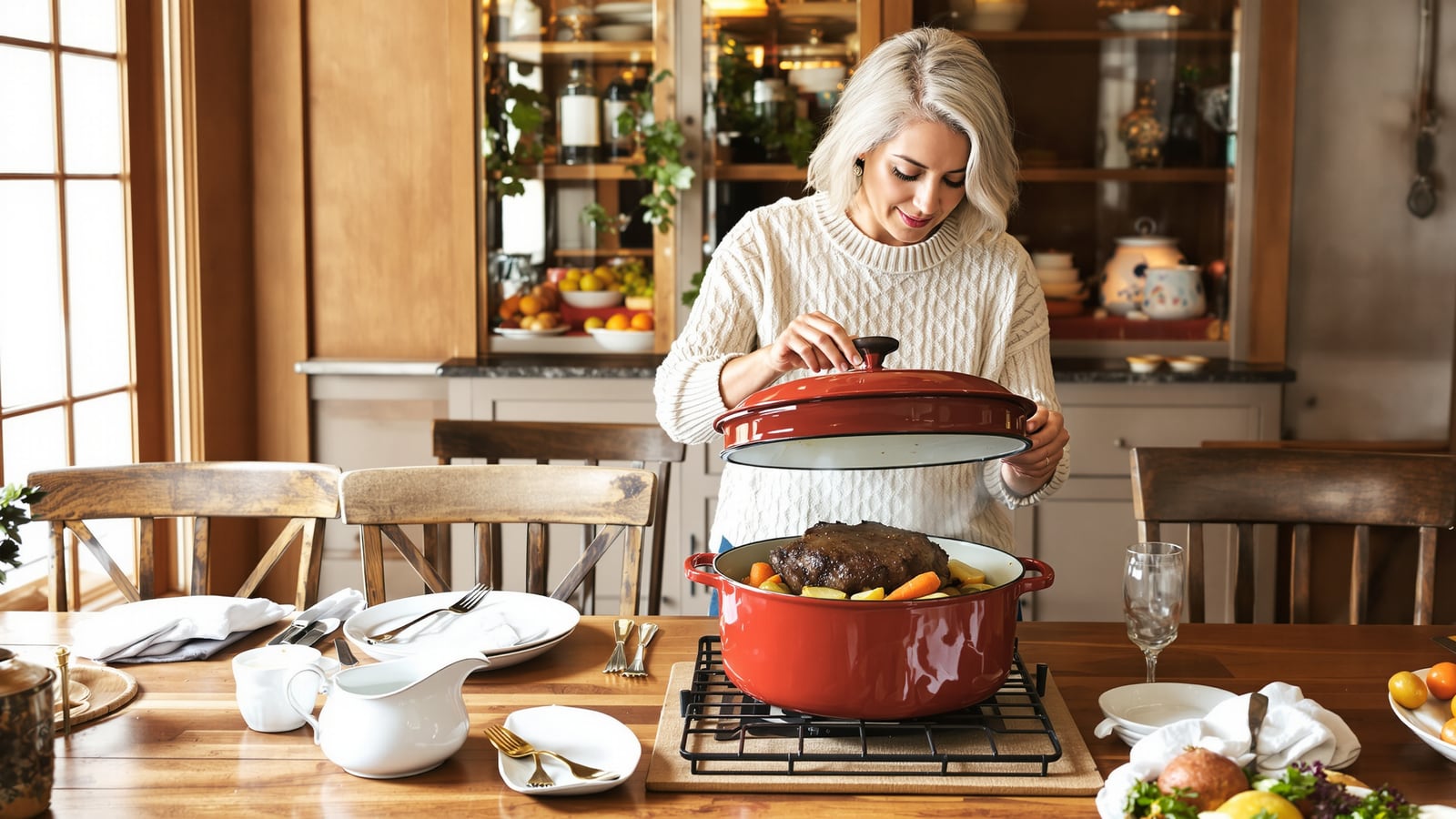
Quick answer: Sear a 3½-pound chuck roast, braise it covered at 325°F for 2 hours, add the vegetables, then braise 1 to 1¼ hours more. Pull the roast when a fork twists in with no fight, rest it 15 minutes, and build the gravy from the juices in the pot.
Serves: 6 to 8 Prep time: 25 minutes Cook time: 3 hours 30 minutes Total time: 3 hours 55 minutes
Pot roast is cheap beef, patience and a heavy lid. That's all it ever was. The only way to ruin it is to rush it or to buy the wrong cut, and most people do one of those two.
If you'd rather leave the oven off, the slow cooker pot roast with carrots that don't turn to mush is the same idea on the counter. This one is for the cold Sunday when you want the house smelling like a roast by two o'clock.
What you need
For the roast:
- 1 boneless beef chuck roast, 3½ to 4 pounds
- 2 teaspoons kosher salt, plus more for the gravy
- 1 teaspoon black pepper
- 2 tablespoons vegetable oil
- 1 large yellow onion, cut into thick half-moons
- 4 cloves garlic, smashed
- 2 tablespoons tomato paste
- 3 cups low-sodium beef broth
- 1 tablespoon Worcestershire sauce
- 1 tablespoon apple cider vinegar
- 2 bay leaves
- 4 sprigs fresh thyme, or 1 teaspoon dried
For the vegetables:
- 1½ pounds carrots, peeled, cut into 2-inch chunks
- 1½ pounds Yukon Gold potatoes, scrubbed, cut into 2-inch chunks
- 1 pound parsnips or turnips, peeled, cut into 2-inch chunks
For the gravy:
- 3 tablespoons fat skimmed from the pot (or butter to make up the difference)
- 3 tablespoons all-purpose flour
- 2 cups braising liquid from the pot
- Salt and pepper to taste
You'll also need a Dutch oven, 5 to 7 quarts, with a tight lid.
Buy the right cut
Chuck. Not round, not rump, not "lean pot roast" from the case marked for people on a diet. Chuck is marbled and full of connective tissue. Over hours of low heat, that tissue melts into the silky texture that makes a pot roast what it is. Lean cuts just go dry and stringy, and no amount of gravy fixes that.
Chuck is also one of the cheaper cuts in the case, which is the whole point of the dish.
Steps
- Heat the oven. Set the rack in the lower third and heat to 325°F.
- Dry and season the roast. Pat it very dry with paper towels. Rub the salt and pepper all over. If you have 30 minutes, let it sit out. Wet meat steams. Dry meat browns.
- Sear. Heat the oil in the Dutch oven over medium-high until it shimmers. Lay the roast in and leave it alone for 4 to 5 minutes, until a dark brown crust releases from the pot. Turn and repeat on every side, including the ends. Expect 15 minutes total. Move the roast to a plate.
- Build the base. Lower the heat to medium. Add the onion and cook 5 minutes, scraping up the brown bits stuck to the bottom. Add the garlic and tomato paste. Stir for 1 to 2 minutes until the paste darkens to brick red.
- Add the liquid. Pour in the broth, Worcestershire and vinegar. Scrape the pot again. Drop in the bay leaves and thyme.
- Braise. Set the roast back in. The liquid should come about halfway up its sides. Cover, slide it into the oven, and leave it for 2 hours.
- Add the vegetables. Carefully lift the lid. Tuck the carrots, potatoes and parsnips around and partly under the roast so they sit in the liquid. Season them with a big pinch of salt. Cover again and return to the oven for 1 to 1¼ hours.
- Check for done. The roast is ready when a fork slides in and twists with almost no resistance, and the meat starts to pull apart. The USDA calls beef safe at 145°F, and this roast passed that mark hours ago. Tender chuck lands around 200°F, so if you're probing, that's the number. If it's still tight, it isn't overcooked. It's undercooked. Put the lid on and give it another 20 to 30 minutes.
- Rest. Move the roast and vegetables to a warm platter and tent with foil. Rest 15 minutes while you make the gravy.
- Make the gravy. Pour the pot liquid through a fine strainer into a large measuring cup. Let it sit a few minutes, then spoon off the fat floating on top. Return 3 tablespoons of that fat to the empty pot over medium heat. Whisk in the flour and cook 2 minutes, until it smells nutty. Slowly whisk in 2 cups of the strained liquid. Simmer 5 to 8 minutes until it coats the back of a spoon. Taste. It will almost always need salt. Add pepper.
- Serve. Pull the roast into big chunks along the grain, or slice it thick. Pour gravy over all of it and pass the rest in a bowl.
What usually goes wrong
The roast is tough. It isn't done. Nine times out of ten, the cook pulled it early because the clock said so. Roasts vary. Go by the fork.
The vegetables are mush. They went in too early, or they were cut too small. Two-inch chunks added at the 2-hour mark come out soft but whole. Add them at the start and you've made stew.
The gravy is bland. Salt first. Then a splash more Worcestershire. If it's still flat, a teaspoon of cider vinegar wakes it up.
The gravy is greasy. You skipped the skimming. A few minutes of settling makes it easy.
The gravy is lumpy. Add the liquid slowly while whisking. If lumps form anyway, pour it through the strainer again.
The lid is loose. A loose lid lets steam out and the liquid reduces too far. If your lid rattles, lay a sheet of foil under it first.
Make ahead, store, swap
Make ahead. Pot roast is better the next day. Braise it through step 8, cool it in its liquid, and refrigerate overnight. The fat sets on top and lifts off in one piece. Reheat covered at 300°F for about 45 minutes, until hot all the way through, then make the gravy.
Storage. Refrigerate leftovers within two hours, in a covered container, up to 4 days. Freeze meat and gravy together for up to 3 months. Potatoes get a little grainy after freezing, so if you plan to freeze, cook them separately next time.
Swaps.
- Skip the parsnips and use more carrots, or add a rutabaga.
- Use a bottom round roast only if you must, and expect it to slice rather than shred.
- Cornstarch works for the gravy. Mix 1½ tablespoons with 3 tablespoons cold water and whisk it into the simmering liquid.
- A couple of tablespoons of prepared horseradish stirred into the gravy at the end puts a little heat in the back of it.
Leftovers
Cold pot roast makes a serious sandwich. Pile shredded meat on a toasted roll with a little warmed gravy for dipping. It also makes a quick hash the next morning: dice the leftover potatoes and meat, crisp them in a skillet and top with an egg.
If you want something with a faster clock for a weeknight, the Sunday meatballs and marinara still feed a full table without a three-hour wait. And when you've run through this one and want another dinner, our sister site delicious.com has thousands more recipes to pick from.
Set the table before the roast comes out of the oven. Nobody should be stalling at the stove while the gravy goes cold.
Wes Dunbar
Country & Skills
Grew up on an acreage and never quite left. Covers trucks, trades, land, and how to do the thing yourself.

Watch
Worth an hour of your evening
More from Recipes.
From channels we rate. Plays on YouTube.
Read next