

Smoked Beef Ribs That Bend and Don't Break
One rack, salt, pepper, and about seven hours. Pull them by feel, not by the clock, and you'll get tender beef with a crust that holds.
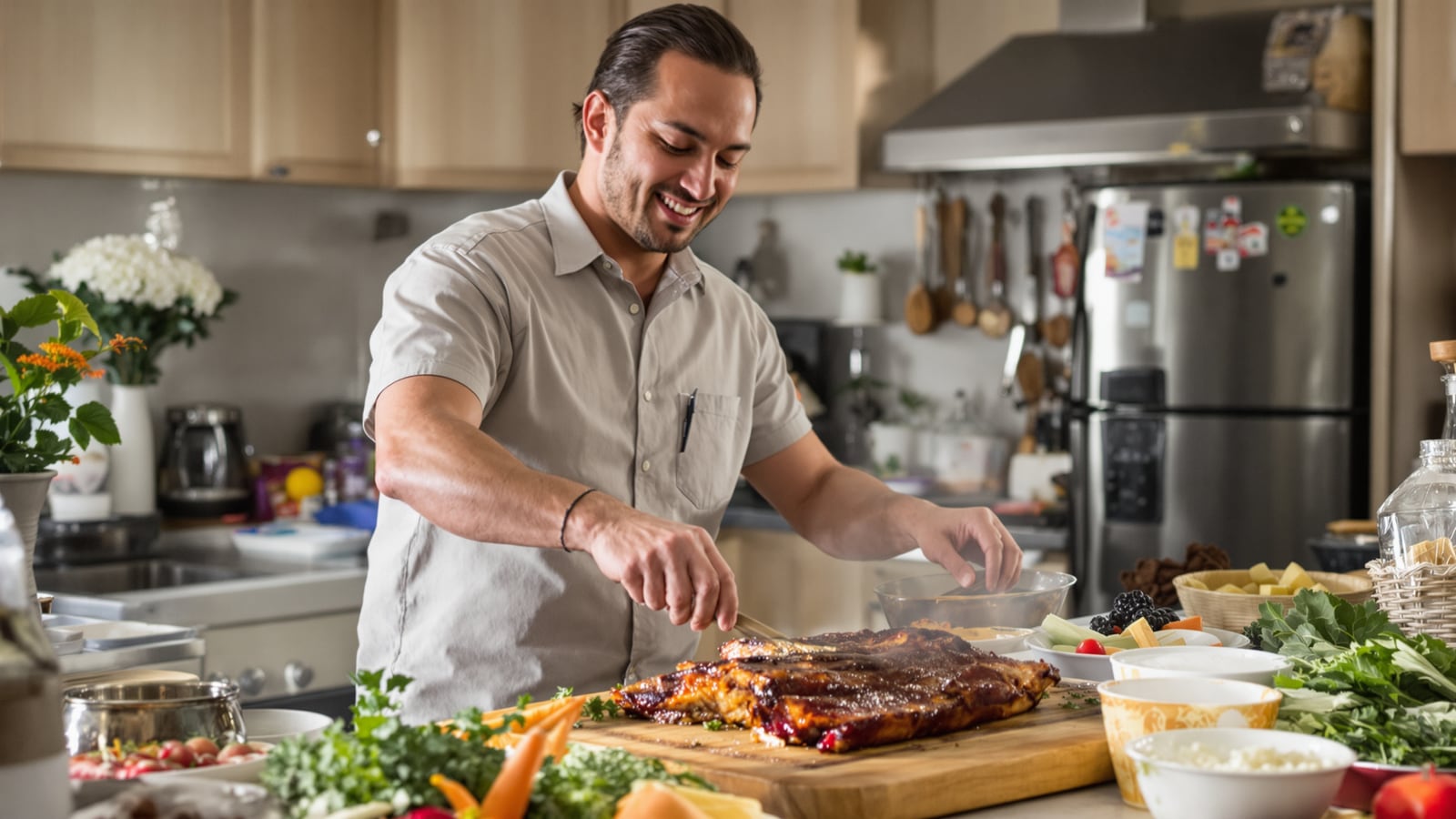
Quick answer: Season a 4 to 5 pound rack of beef plate ribs with salt and coarse pepper. Smoke at 275°F until the meat probes like warm butter, usually 200°F to 205°F inside. Rest it an hour. Done.
Servings: 4 generously (about one bone per person, plus a fight over the last one) Prep time: 20 minutes, plus an optional overnight dry brine Cook time: 6 to 7 hours Rest time: 45 to 60 minutes Total time: about 8 hours
What you're actually cooking
Beef plate ribs are the big ones, three or four bones, each topped with a thick slab of meat. Ask the butcher counter for "plate short ribs" or "beef plate ribs, bone-in." Some grocery stores keep them in the back. Warehouse clubs often carry them. They aren't cheap, but one rack feeds a table, and the work is mostly waiting.
Beef back ribs are the budget cousin. They have far less meat, they cook in about half the time, and they're a fine weeknight-weekend project. This recipe is for the plate ribs. If you buy back ribs, start checking for tenderness at three hours.
Ingredients
For the rack:
- 1 rack beef plate ribs, 4 to 5 pounds (3 to 4 bones)
- 2 tablespoons yellow mustard (optional, helps the rub stick, and you won't taste it)
For the rub:
- 3 tablespoons kosher salt (Diamond Crystal; use 2 tablespoons if yours is Morton, it's saltier by volume)
- 3 tablespoons coarsely ground black pepper
- 1 tablespoon garlic powder
- 1 teaspoon onion powder
- 1 teaspoon paprika
For spritzing:
- 1/2 cup apple cider vinegar
- 1/2 cup water
For wrapping:
- Pink butcher paper or heavy-duty aluminum foil
You'll also need a smoker or a charcoal grill set up for indirect heat, oak or hickory chunks or pellets, and a probe thermometer. A spray bottle is nice. Skip the bottled barbecue sauce. These don't need it.
Prep: trim, season, wait
- Flip the rack bone side up. You'll see a thin, shiny membrane. Slide a butter knife under one corner, grab it with a paper towel, and peel it off in one piece. If it tears, keep going. It's tough and leathery when cooked, and nobody wants to chew it.
- Trim any hard, waxy fat from the top of the meat down to about 1/4 inch. You want fat that will melt, not fat that will sit there like a candle.
- Pat everything dry. Rub the mustard over the meat side if you're using it.
- Mix the rub in a bowl. Coat every surface, including the ends and the bone side. It will look like way too much. It's right.
- If you have time, set the rack on a wire rack over a sheet pan, uncovered in the fridge, overnight. The salt pulls moisture out, then the meat draws it back in. If you don't have time, rest it at room temperature for 45 minutes while the smoker comes up.
The cook
- Heat the smoker to 275°F. Add your wood. Use two or three chunks, not a whole bag. Thin blue smoke is what you want. Thick white smoke makes bitter ribs.
- Put the ribs on bone side down, meat facing up, away from direct heat. Slide a probe into the thickest part of the meat, between bones, not touching bone.
- Leave the lid shut for the first 2 hours. Every peek costs you heat and time.
- After 2 hours, check the color. When the rub has set to a deep mahogany and doesn't smear when you touch it with a fork, start spritzing lightly every 45 minutes or so. If the bark still looks wet or pale, wait.
- Around 4 hours in, the internal temperature will probably sit stubbornly in the 160s for a while. That's the stall, and it's normal. Moisture is evaporating off the surface and cooling the meat. Don't turn up the heat.
- When the bark is firm and dark and the meat reads 170°F to 175°F, wrap the rack tightly in butcher paper, or foil if that's what you have. Paper keeps the bark crisper. Foil cooks faster and softens the crust. Both work.
- Put it back on the smoker. Start probing at 195°F.
How you know it's done
Temperature gets you close. Feel tells you the truth. Most ribs land somewhere between 200°F and 210°F, but pull them when the probe slides into the meat with almost no resistance, like pushing into a jar of peanut butter.
Then do the bend test. Unwrap the rack and lift it with tongs from about a third of the way in from one end. It should sag into a deep curve, and the surface crust should crack but the meat shouldn't tear apart. If it holds stiff, give it another 30 minutes. If it splits in half and falls off the bone in the air, you went a bit long. They'll still taste great, but they won't slice clean.
For the record, USDA says whole cuts of beef are safe at 145°F. These ribs are cooked far beyond that because the goal here is melted collagen, not just safe meat.
Rest and slice
- Pull the wrapped rack and set it in an empty cooler, or wrap it in an old towel on the counter. Rest it 45 to 60 minutes. This is not optional. Slice too early and the juice runs onto the board instead of staying in the meat.
- Unwrap over a pan to catch the drippings. Skim the fat off the top of the liquid and keep what's left as a dipping jus.
- Slice between the bones with a sharp knife. One bone per cut. Serve with the jus on the side.
What usually goes wrong
Pulling by the clock. Seven hours is a guess. Your rack, your smoker, and the weather are all different. Probe it.
Wrapping too early. If the bark is still soft when you wrap, it turns to mush in the steam. Wait until it's set.
Too much smoke. Beef takes smoke fast. More wood doesn't mean better flavor. It means bitter.
Cooking too hot. Above 300°F, the outside burns before the inside has time to render. Keep it at 275°F.
Skipping the rest. It's the hardest hour of the day. Do it anyway.
Oven version
No smoker? Heat the oven to 275°F. Set the seasoned rack on a wire rack over a sheet pan and cook uncovered for 3 hours. Wrap tightly in foil and cook another 2 to 3 hours until probe tender. You won't get smoke, but a teaspoon of smoked paprika in the rub helps, and the beef will still be good.
Make-ahead, storage and swaps
- Make-ahead: Rub the ribs up to 24 hours ahead. The cooked rack can be wrapped and held in a cooler for up to 2 hours before slicing.
- Storage: Refrigerate leftover ribs in an airtight container for up to 4 days. Freeze for up to 3 months.
- Reheat: Wrap in foil with a splash of the jus or beef broth, and warm in a 275°F oven until the meat reaches 165°F. Microwaving works in a pinch, but you'll lose the bark.
- Swap the rub: Cut the garlic and onion powder and go pure salt and pepper if you want it Texas-plain. Add 1 tablespoon of chili powder if you want some warmth.
- Swap the cut: Chuck short ribs work too. They're smaller and cook a little faster, usually 4 to 5 hours.
Leftover meat chopped into a skillet with eggs is a good Monday. If you want another slow-cooked beef project that rewards patience, the slow cooker pot roast runs on the same principle, and Sunday meatballs and marinara will keep a full table happy on a weekend. For more ideas, sister site delicious.com has thousands more recipes.
Light the fire early, keep the lid down, and let the ribs take the time they need. Good beef doesn't care about your schedule.
Wes Dunbar
Country & Skills
Grew up on an acreage and never quite left. Covers trucks, trades, land, and how to do the thing yourself.

Watch
Worth an hour of your evening
More from Recipes.
From channels we rate. Plays on YouTube.
Read next