Cook a steak properly, once, and you'll never do it badly again
Dry it, salt it early, get the pan far hotter than feels sensible, and stop guessing.
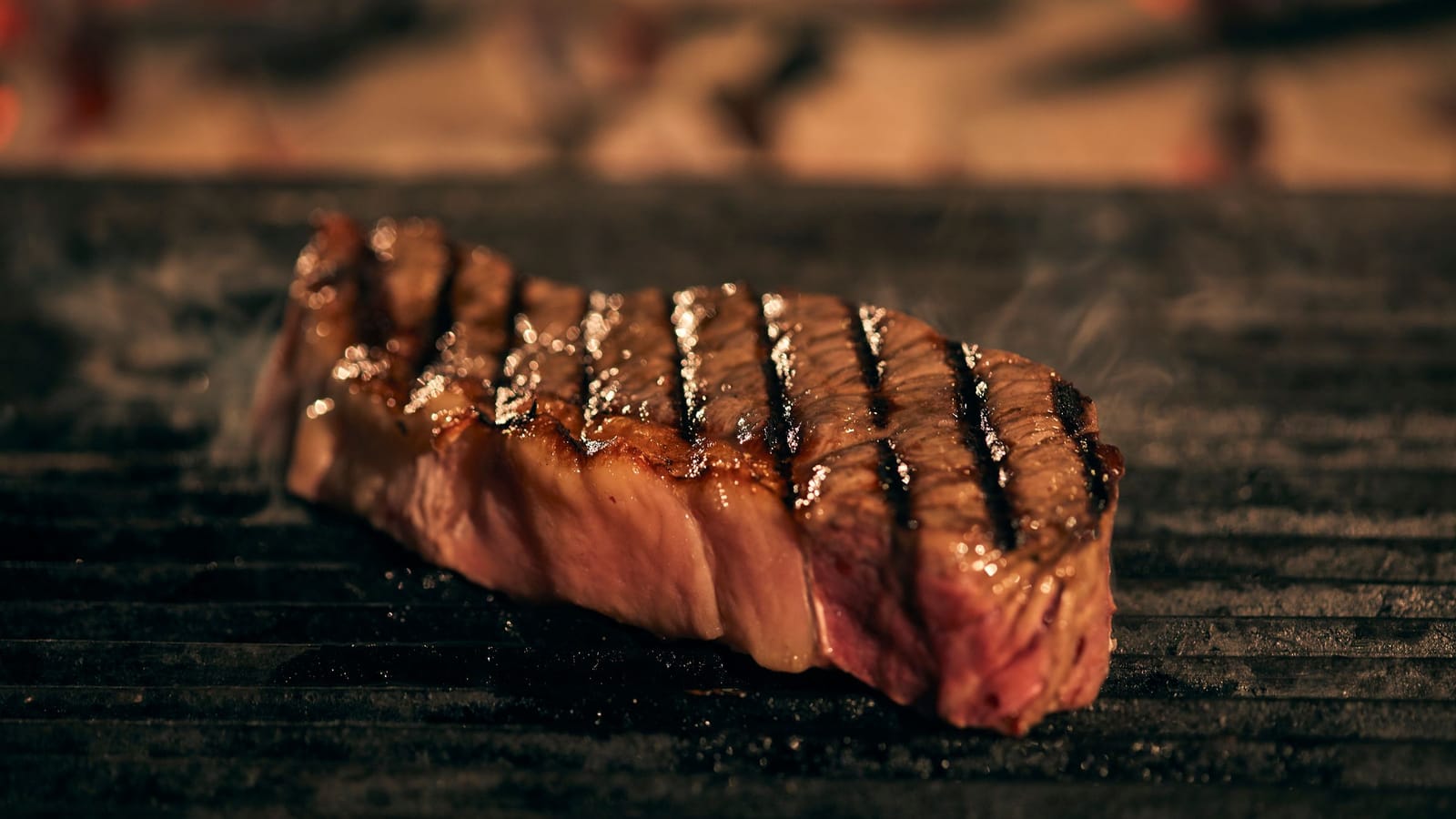
A good steak isn't a skill. It's four decisions, and most people get three of them wrong in the same predictable ways.
Buy thick
This is the one that matters most and the one people skip. A 3cm steak is enormously easier than a 1.5cm one, because a thin steak goes from raw to gray in the time it takes to build a crust. There's no window.
Thick gives you a window. One thick steak for two people beats two thin ones every time.
Ribeye if you want flavour and don't mind fat. Sirloin if you want a cleaner bite. Flat iron if you want most of the ribeye for half the money, which is the genuine bargain of the butcher's counter.
Salt it early or salt it late — the middle is the trap
Salt pulls moisture out of meat, then over time that brine gets reabsorbed and seasons it through.
So: salt at least 45 minutes ahead, ideally uncovered in the fridge overnight. Or salt immediately before it hits the pan.
The disaster zone is five to thirty minutes, which is what everybody instinctively does. That's long enough to draw a wet layer to the surface and not long enough for it to go back in — so the steak steams instead of searing, and you get gray.
Dry, and hot
Pat it completely dry with kitchen paper right before cooking. Surface water has to boil off before any browning starts, and every second spent doing that's a second the inside is cooking.
Then get the pan hotter than feels reasonable. Heavy cast iron, on the highest heat you've, for a good four or five minutes. It should be just shy of smoking. A high-smoke-point oil — not butter yet.
The steak should make a violent noise the instant it lands. If it doesn't, the pan wasn't ready, and you've already lost the crust.
Don't move it
Down, and leave it. Two and a half to three minutes on a thick steak. Moving it around resets the contact and you get pale patches instead of a crust.
Flip once. Another two to three minutes. Then add butter, a crushed garlic clove and a sprig of thyme if you've it, tilt the pan, and spoon the foaming butter over the top for the last minute. Butter goes in at the end because it burns at searing temperature.
Use a thermometer
This is the part that separates people who occasionally get it right from people who always do.
Color, firmness and the poke-your-palm thing are all guesses. A $15 instant-read thermometer is the single best value item in any kitchen.
Pull the steak off 5°C below your target — it keeps cooking as it rests.
- Rare — pull at 48°C
- Medium rare — pull at 52°C (this is the one)
- Medium — pull at 57°C
- Medium well — pull at 62°C
- Well done — buy a cheaper cut, genuinely
Rest it
Five to ten minutes on a warm plate, loosely covered. Cutting straight in dumps the juice onto the board.
Then slice against the grain. Look at which way the muscle fibers run and cut across them. On a flat iron or a bavette this is the difference between tender and chewy, and it has nothing to do with how well you cooked it.
Wes Dunbar
Country & Skills
Grew up on an acreage and never quite left. Covers trucks, trades, land, and how to do the thing yourself.

Watch
Worth an hour of your evening
More from Skills.
From channels we rate. Plays on YouTube.
Read next