

Brined, Butterflied Grilled Chicken Breast That Stays Juicy
A thirty-minute brine and one knife cut fix the two reasons grilled chicken breast turns out dry. Neither takes skill.
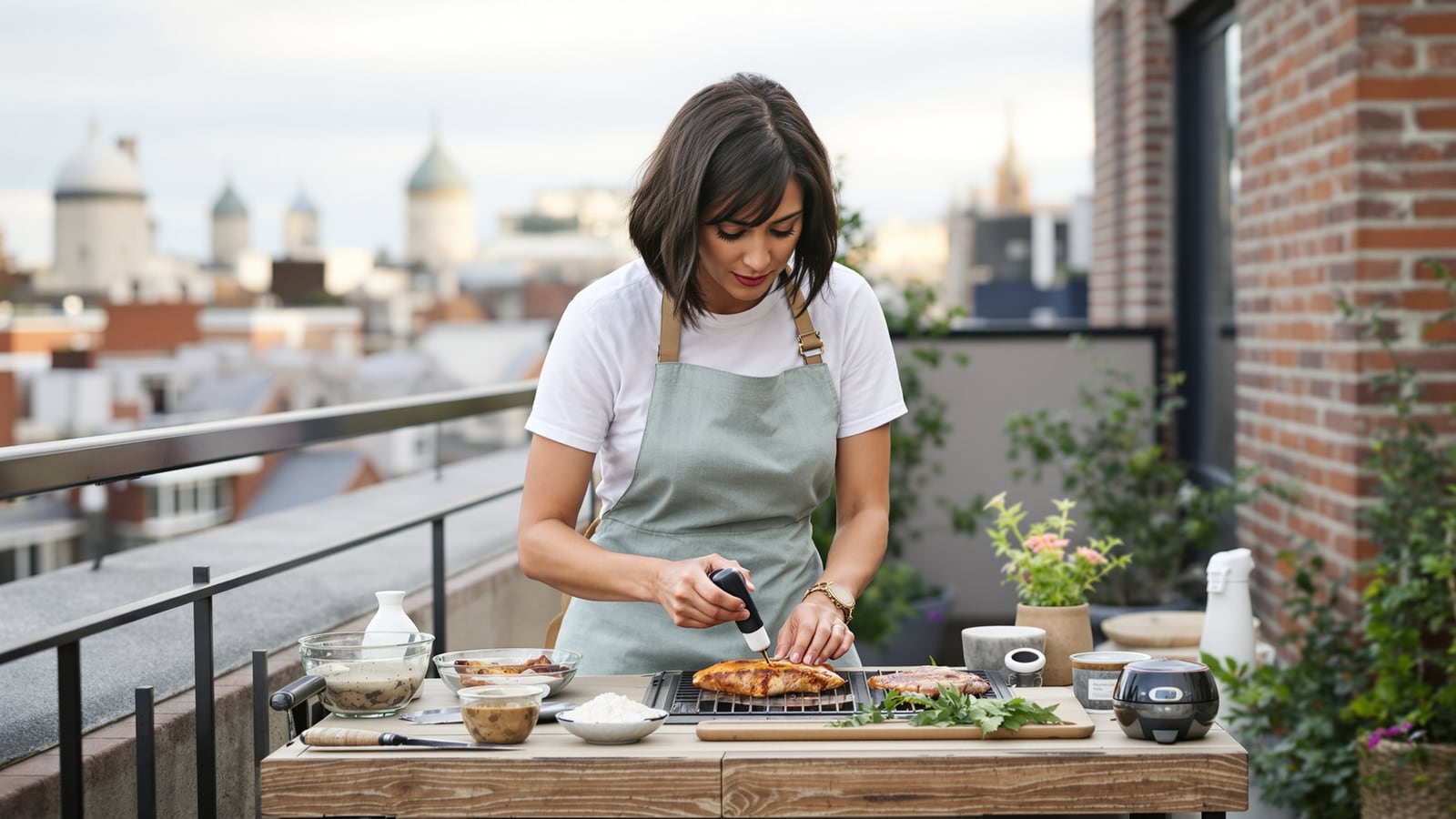
Quick answer: Soak the chicken in salted water for 30 to 60 minutes, slice each breast open like a book, and grill over medium-high heat about 5 minutes a side. Pull it at 160°F and let it rest. It'll reach the safe 165°F on the cutting board.
Servings: 4 | Prep: 15 minutes | Brine: 30 to 60 minutes | Cook: 10 to 12 minutes | Total: about 1 hour to 1 hour 30 minutes
A chicken breast is shaped like a doorstop. The thick end needs 165°F to be safe, and by the time it gets there the thin end has been cooking for five minutes too long. That's the real reason it comes off the grill like a flip-flop.
Brining holds the moisture in. Butterflying evens out the thickness so the whole breast finishes at the same moment. Do both and the problem is gone. Do only one and you've fixed half of it.
Ingredients
For the brine
- 4 cups cold water
- 2 tablespoons kosher salt if it's Morton, or 3 tablespoons if it's Diamond Crystal
- 1 tablespoon sugar
For the chicken
- 4 boneless, skinless chicken breasts, about 8 ounces each (2 pounds total)
- 1 tablespoon olive oil, plus more for the grates
- 2 teaspoons smoked or regular paprika
- 1 teaspoon garlic powder
- 1 teaspoon onion powder
- ½ teaspoon black pepper
- ½ teaspoon dried thyme
You'll also need a leave-in or instant-read thermometer. It's the cheapest upgrade in the kitchen, and it beats guessing every time.
Notice there's no salt in the rub. The brine already did that job, and adding more is how you end up with chicken that tastes like a pretzel.
Check your salt first
Kosher salt comes in two common brands, and they aren't interchangeable by the spoonful. Diamond Crystal is lighter and flakier, so it takes 3 tablespoons. Morton is denser and takes 2. Table salt is denser still. If that's all you have, use 4 teaspoons.
Guess wrong in the salty direction and you've ruined dinner for four people. Read the box.
Instructions
- Make the brine. Stir the water, salt and sugar together in a large bowl or a gallon zip bag until the salt dissolves. Cold water only. Warm brine starts moving chicken toward the danger zone before it ever sees the grill.
- Butterfly the chicken. Lay one breast flat on a cutting board with your palm on top. Starting at the thick side, slice horizontally through the middle, stopping about half an inch from the far edge. Open it like a book. You've got one flat piece about twice as wide and roughly ¾ inch thick. If the middle is still thicker than the edges, cover it with plastic wrap and tap it with a rolling pin or heavy skillet until it's even.
- Brine it. Submerge all four breasts, cover, and refrigerate for at least 30 minutes and no more than 1 hour. Butterflied pieces are thin, so they brine fast. (More on what happens at hour four below.)
- Heat the grill. For gas, set up two zones: burners on high on one side, low or off on the other. For charcoal, bank the coals to one side. You want the hot side around 450°F. Clean the grates with a brush.
- Dry the chicken. Pull the breasts from the brine and discard the liquid. Pat them dry on all sides with paper towels. Really dry. Wet chicken steams and sticks instead of searing.
- Season. Mix the paprika, garlic powder, onion powder, pepper and thyme in a small bowl. Rub the chicken with the olive oil, then coat both sides with the spice mix.
- Oil the grates. Fold a paper towel, dip it in a little olive oil, and wipe the hot grates using tongs. Don't spray oil near an open flame.
- Grill. Lay the chicken on the hot side. Close the lid. Leave it alone for 5 minutes. It should release from the grate with a nudge from the tongs. If it grabs, give it another 30 seconds. Flip once.
- Check the temperature. After about 4 to 5 more minutes, slide the thermometer into the thickest part of each piece. Pull the chicken at 160°F. If one piece is behind, move it to the cooler side with the lid down and check every minute.
- Rest it. Move the chicken to a clean plate, not the one it came to the grill on. Wait 5 minutes. The temperature will climb to 165°F, the USDA's safe mark for poultry, and the juices will settle back into the meat instead of running onto the board.
- Slice and serve. Cut against the grain into strips, or serve whole.
Doneness cues
The thermometer is the answer. 165°F in the thickest part, after the rest.
If you're caught without one, the juices should run clear and the meat should be opaque white all the way through with no pink near the center. Cut into the thickest spot to look. That costs you a little juice, but it beats serving undercooked chicken.
What usually goes wrong
It's spongy or tastes like ham. The brine ran too long. Salt keeps working on the proteins, and past a couple of hours the texture turns soft and almost cured. Set a timer on your phone.
It stuck to the grill. The grates weren't hot enough, weren't clean, or you flipped too early. Properly seared chicken lets go on its own.
The outside is black and the inside is raw. The fire was too hot, or the pieces weren't pounded even. Slide the chicken to the cooler zone and let it finish with the lid closed.
It's still dry. Check the thermometer honestly. Pulling at 175°F because you "just want to be sure" undoes the brine. Trust 160°F and the rest.
It's too salty. Wrong salt for the measurement, or you added salt to the rub.
Make-ahead, storage and swaps
You can butterfly and pound the breasts a day ahead. Wrap them tightly and refrigerate, then brine them the day you cook. Don't brine overnight.
Leftovers keep in an airtight container in the fridge for up to 4 days. Get them in the fridge within 2 hours of cooking. Slice them cold for sandwiches, salads or wraps. Frozen, cooked chicken holds up for about 3 months. Thaw in the fridge overnight and reheat gently, or just eat it cold.
Handle the raw chicken like it's carrying something, because it might be. Don't rinse it. Wash your hands, the board, and anything the raw chicken touched before it meets anything else.
Swaps:
- Boneless thighs don't need brining or butterflying, and they're nearly impossible to dry out. The honey chipotle chicken thighs are a good place to start.
- Skip the paprika blend and use 1½ teaspoons of your favorite store-bought rub. Check that it has no salt, or cut the brine salt back by a third.
- Add the zest of one lemon to the rub for brightness.
- No grill? Use a heavy skillet over medium-high heat for the same 5 minutes a side, or try the lemon garlic skillet chicken with green beans.
What to put next to it
Corn on the cob goes on the same grill. Sliced tomatoes with a little salt take two minutes. Cold potato salad from the day before means you only have one thing to watch.
Cook a double batch, slice the extra, and you've got Tuesday's lunch handled. If you want to keep cooking beyond this, our sister site delicious.com has thousands more recipes to work through.
The cut takes two minutes and the brine takes thirty. After that, the grill does what it always could have done: cook a breast all the way through without drying it out.
Wes Dunbar
Country & Skills
Grew up on an acreage and never quite left. Covers trucks, trades, land, and how to do the thing yourself.

Watch
Worth an hour of your evening
More from Recipes.
From channels we rate. Plays on YouTube.
Read next