

Chimney Sweeping Pays in Fall and Little Else
The first cold snap fills a sweep's calendar. What it costs to start, what it pays, and why insurance is the real gate.
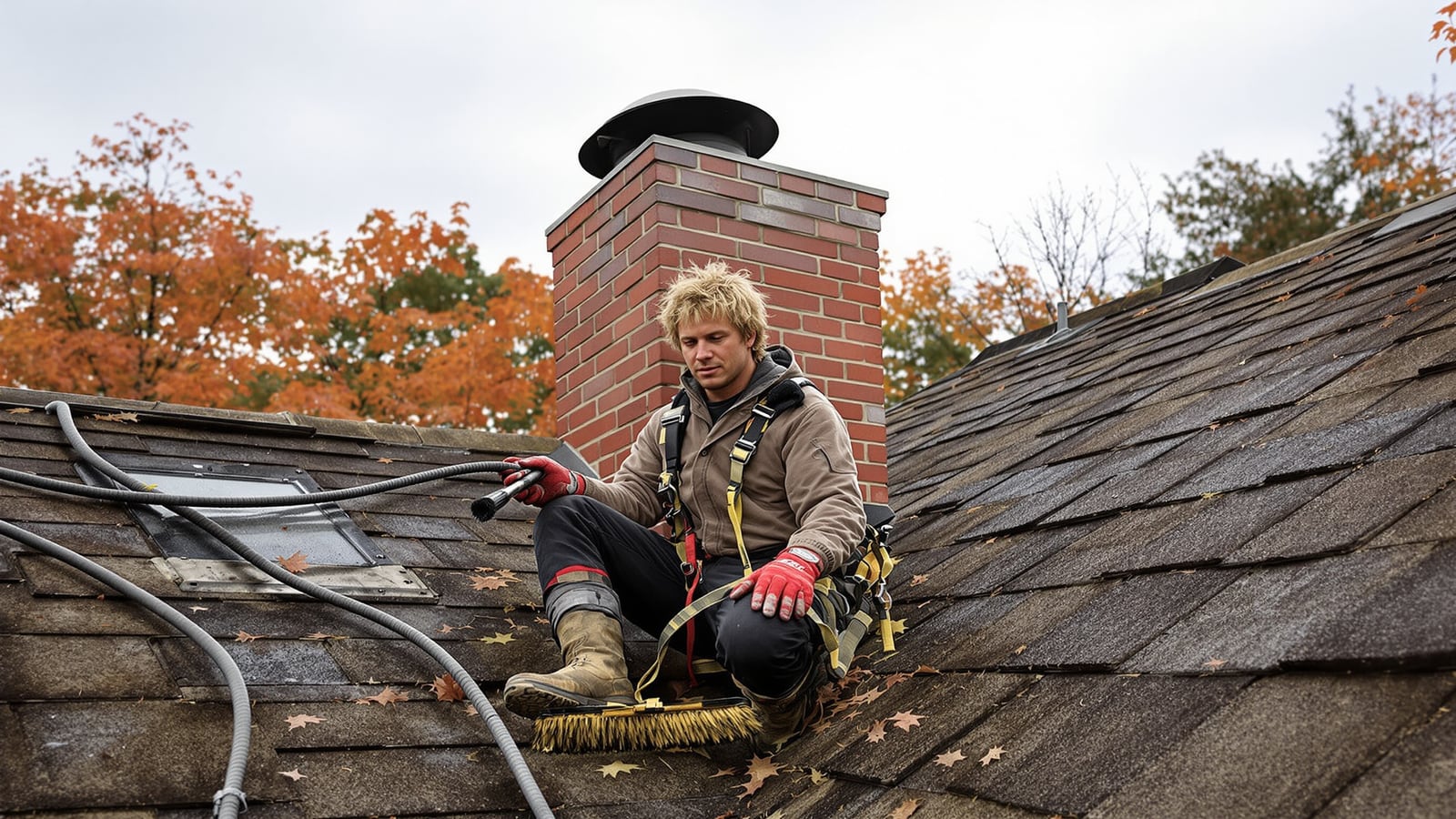
Quick answer: Chimney cleaning can pay well for about three months a year, mostly on weekends, if you're comfortable on a roof and can get insured. If you're not, skip it. This is the one trade in the side-hustle pile where a shortcut can burn a family's house down.
The call comes the first cold night
Every November the same phone call goes out to every sweep in town. A homeowner lights the first fire of the year, smells something wrong, and wants somebody out by Saturday. Or they've sat on a half-cord of oak all fall and just realized nobody has looked up that flue in three years.
That's your market. Demand is lopsided. Roughly September through December is busy, January is a trickle, and summer is quiet except for home-sale inspections. Plan the hustle around that shape or you'll resent it by April.
What you're actually selling
Two things get lumped together.
Cleaning removes soot and creosote, the tarry buildup that's the fuel for a chimney fire. Rods, brushes, a good vacuum, and a lot of drop cloths.
Inspection is where the real value sits. The industry standard, NFPA 211, describes inspection levels. A Level 1 is a visual check of what's reachable, normal for a yearly cleaning on a flue that hasn't changed. A Level 2 adds a camera run through the flue and is the one called for when a home is sold or after a chimney fire or major change. Level 3 means tearing into masonry, and that's not a side-hustle job.
Anyone with a brush can clean. The customer pays extra for someone who can look at a cracked flue tile and say so plainly. That also means you'll sometimes tell a neighbor their chimney isn't safe to use. Say it kindly, say it clearly, put it in writing, and don't soften it because the sale gets awkward.
Startup cost, honestly
These are planning ranges, not quotes. Prices shift by region and brand, so price your own gear before you commit.
- Rods, brushes, and a drop-cloth kit: a few hundred dollars.
- A HEPA shop vacuum: a regular one just blows fine soot back into the room. Budget a few hundred.
- Ladder, roof gear, respirator, headlamp, tarps: a few hundred more, depending on what's already in your garage.
- Inspection camera: the biggest single purchase, anywhere from a few hundred dollars for an entry unit to well into four figures for a pro rig. Start without one and rent or add it after you've got paying customers.
- Training and certification: the Chimney Safety Institute of America (CSIA) runs the best-known certification. Check their site for the current exam and prep costs.
A realistic starting figure without a camera is somewhere around a thousand to fifteen hundred dollars. Add the camera later out of earnings, not savings.
Insurance is the gate
Get this settled before you take a dollar from a customer.
You need general liability coverage that specifically covers chimney work. Some insurers won't write it for an uncertified sweep. Others charge more. Call an independent agent and ask three questions: whether the policy covers a fire that starts after your work, whether certification changes the rate, and whether your own health coverage handles a fall off a ladder.
Expect the premium to run from a few hundred to over a thousand dollars a year. For a part-timer, that's a real chunk of first-season profit. It's also the thing standing between one bad call and losing everything you own.
Your homeowner's policy won't cover a business. A generic "handyman" policy may exclude chimney and fireplace work. Read the exclusions yourself. If an agent can't answer a question, find one who can.
The money, with sample math
Sweeps in many markets charge somewhere around $150 to $300 for a standard cleaning and Level 1 look, with cameras and extra work adding to the ticket. Check what three local outfits actually quote before you set a price. Don't undercut by half to get started. Customers who pick the cheapest sweep tend to be the ones who call back angry.
Here's a sample season, with made-up round numbers so the arithmetic is clear. Say you average $175 a job and do four jobs on a Saturday. That's $700 gross. Run ten weekends from late September through early December and you've grossed $7,000.
Now take out what it costs:
- Insurance, spread across the season
- Gas and truck wear
- Replacement brushes and vacuum filters
- Advertising, mostly a decent sign, a Google Business listing, and a few neighborhood posts
- Self-employment tax, roughly 15.3 percent on net, plus regular income tax
Walk away with maybe half to two-thirds of that gross as real take-home in a good first season, and less if you're slow to fill the calendar. Set money aside for the IRS from the first job. What to Set Aside for Taxes on Side Income From Dollar One covers how.
Hours matter too. A cleaning runs 45 to 90 minutes on site. Add driving, setup, and cleanup. Four jobs fills a day.
What goes wrong
The roof. Most chimney work happens up there. Pitch, wet shingles, and a ladder on frost-damp ground are how people get hurt. If heights make you uneasy, stop here.
The mess. A sloppy sweep leaves soot on the carpet. Lay drop cloths from the hearth to the door, vacuum before you leave, and wipe the mantel. Leave the room cleaner than you found it. That one habit gets you referrals.
The unfixable find. You'll open a flue and find a cracked liner or a damaged cap. Repair and relining generally call for a licensed mason or chimney contractor, depending on your state. Don't improvise the fix. Write up what you found, show photos, and refer it out.
Gas appliances and carbon monoxide. A fireplace insert or a gas log set has its own venting rules. Know what you're qualified to inspect. If a customer reports headaches, dizziness, or nausea while a fireplace or appliance is running, tell them to get everyone outside into fresh air and get medical help right away. Then talk about the chimney.
When it's not worth it
- You won't go on a roof, or you can't carry a ladder and a shop vac up stairs.
- You can't get liability coverage at a price that leaves profit.
- Your area is already full of established sweeps with strong reviews, and you don't have a sharper offer.
- You want income in July.
- You'd rather skip certification. That's a harder sell with customers and insurers.
If those describe you, a seasonal trade with less risk fits better. What Moving Help and Junk Hauling Really Pay on a Saturday is a lower-stakes way to fill weekends.
Making it a business
Once you've got a dozen repeat customers, the question changes. Do you add a camera, take on Level 2 inspections, and work toward a full-time sweep route? Or keep it as a fall hustle? When a Side Hustle Should Become a Business and When It Shouldn't walks through that decision.
One more habit worth stealing from old-school tradesmen. Send a postcard each August to everybody you served. "Your chimney's due." Most homeowners forget until the first cold night. The sweep who reminds them in August is the one they call.
This is general education, not financial or legal advice. Talk to an insurance agent about coverage and a tax professional about how your income is reported.
Ray Okonkwo
Money & Business
Former commercial banker turned small-business owner. Covers salary, credit, margins and the arithmetic nobody does before signing.

Watch
Worth an hour of your evening
More from Side Hustles.
From channels we rate. Plays on YouTube.
Read next