Attic Insulation Pays Best When You Seal the Leaks First
Fall attic work can fill your weekends and your wallet. It's also itchy, hot and unforgiving, and the numbers only work if you skip the usual shortcut.
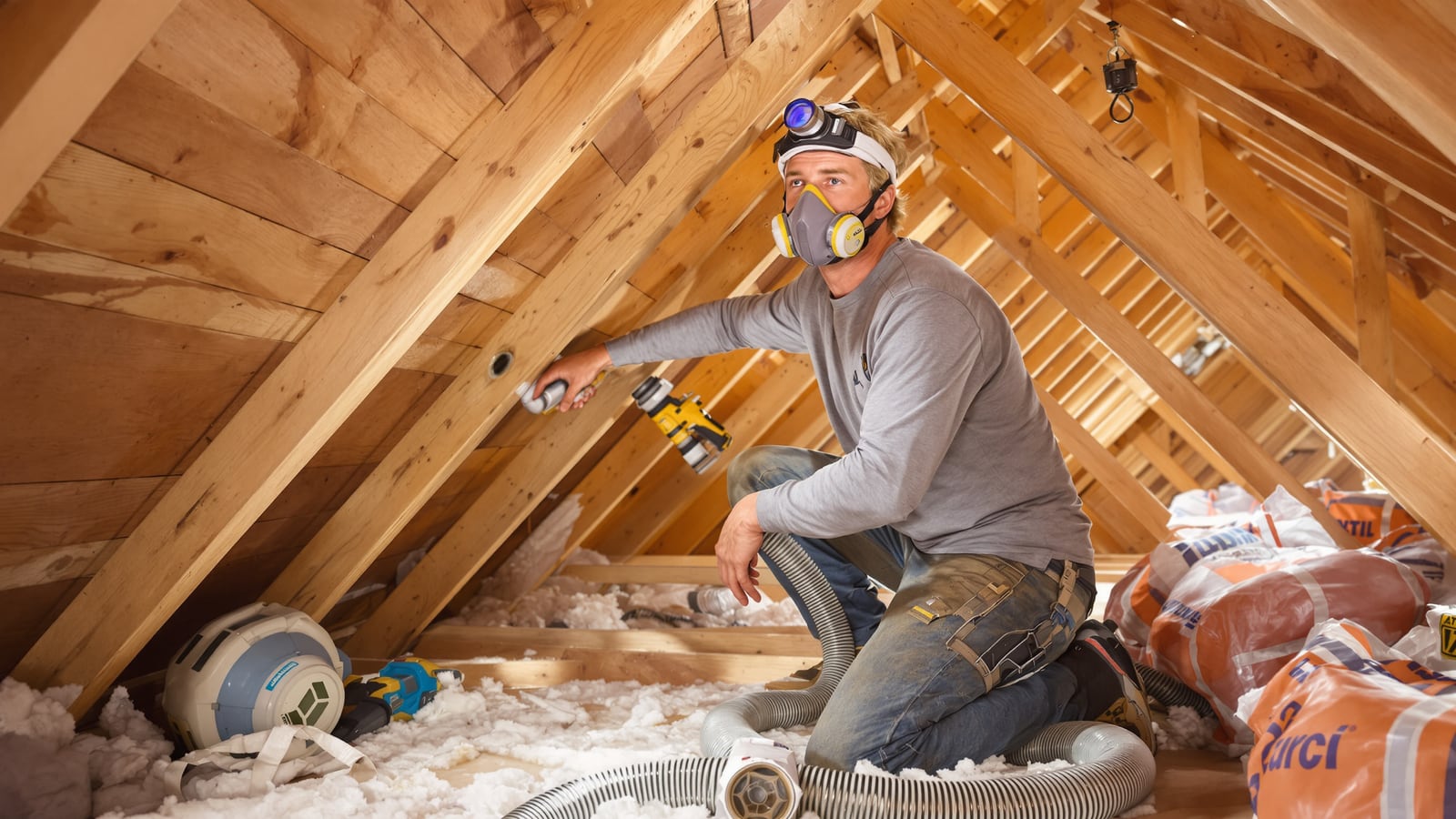
Quick answer: A solid fall side hustle if you're handy, fit and fine with crawling around a 110-degree attic. Expect roughly $1,000 to $2,000 a month for three or four months, after materials, if you land a couple of jobs a week or a few a month. Those are illustrative numbers, not a promise. Swap in your own market's prices before you buy anything.
The mistake that wastes the whole job
Most guys picture this work as renting a blower and burying the attic floor in fluffy stuff. That's the part customers can see, so it's the part amateurs do.
It's also the second step.
Warm air in a house doesn't just drift through insulation. It leaks up through gaps around light fixtures, wire and pipe holes, the top of interior walls, the chimney chase, and the attic hatch. Pile insulation over those leaks and you've put a sweater over an open window. It helps a little. The house still bleeds.
So the real product is air sealing first, insulation second. You caulk and foam the gaps, then you blow the insulation. That's what separates a guy who gets referrals from a guy who gets a call in February: "My bill barely moved."
It's also how you justify your price. Anybody can rent a machine. Not everybody will spend half a day on their back in the dark with a can of foam.
What the work actually looks like
A typical single-family attic is a one-day job for two people, and a long day for one.
- Inspect. Look for moisture stains, mold, old wiring, bath fans dumping into the attic, and the existing insulation depth. Take photos.
- Seal. Foam or caulk around wire and pipe penetrations, plumbing stacks, and the top plates where walls meet the attic floor. Use fire-rated materials around flues and chimneys.
- Baffle. Install rafter vent baffles at the eaves so insulation doesn't choke off the soffit vents. Skip this and you've traded a drafty house for a damp roof.
- Cover the hot spots. Recessed can lights that aren't rated for insulation contact need covers or replacement. Flues need clearance. Follow the spec on the product. When you're unsure, stop and call a pro.
- Blow it. Use the coverage chart on the bag, not your gut. Place depth markers in the attic so the customer can see the finished level.
- Finish. Weatherstrip and insulate the attic hatch. Clean up. Leave the place better than you found it, down to the sawdust and the footprints on the stairs.
For the target R-value, send customers to the Department of Energy's recommendations for their climate zone. Don't make up a number. It varies a lot between Minnesota and Georgia.
Startup cost, honestly
Without buying a blower, figure a few hundred dollars to get properly equipped:
- A P100 half-face respirator and spare filters
- Disposable coveralls, gloves, and eye protection
- Knee pads and a good headlamp, plus a work light
- Caulk gun, fire-rated caulk, and cans of foam
- Plywood or wide boards to walk on across joists
- A shop vac and heavy trash bags
- A ladder that reaches the hatch and a hatch cover to protect the ceiling
The blower is where people get nervous. Many big-box stores loan one free if you buy a minimum number of bags. Policies change, so ask before you commit. That setup makes sense for your first handful of jobs. If you're doing it every week, you'll start pricing a used machine, and that's a business purchase. Think it through with the piece on when a side hustle should become a business and when it shouldn't.
The income math
Here's an example. Plug in your own numbers.
Say a mid-size attic job takes you and a buddy one long day, and you quote the customer a flat price. After materials, equipment wear, and paying your helper, you keep $500 to $900. Land two of those a week in October and November and you're working your weekends away. Land two a month and it's a nice cushion.
To set your price, call two or three local insulation companies for quotes on a house like yours. See what the market bears. Then price your labor like you would for Saturday handyman work: by the hour you'd actually accept, plus materials, plus a cushion for the surprise you always find behind the box of Christmas decorations.
And the season is short. Demand spikes when the first cold snap makes people open their utility bills. It fades by January. Plan on this being a fall-and-early-winter hustle, with some spring and summer work for people who want to get ahead of next year.
Insurance and taxes
Your homeowner's policy almost certainly doesn't cover you working in a stranger's house. An insulation job means you're in somebody's attic, on top of their ceiling, near their wiring. One foot between joists and you're through the drywall.
That's a general liability claim. Talk to an independent insurance agent about a small contractor's policy. Costs vary by state and by what else you do, and it's an expense you build into your price. Some states and cities also require a contractor license or registration even for small jobs, and some have rules specific to insulation or energy work. Check with your state licensing board before the first quote.
Taxes are the same as any side income: it goes on your return, and self-employment tax on top of income tax adds up. Read what to set aside for taxes on side income from dollar one and talk to a tax professional. This isn't financial advice. It's the stuff you'd want somebody to tell you before April.
When it's not worth it
Be honest with yourself on these.
- Vermiculite insulation. If you open the hatch and see pebbly, gray-brown granules, stop. Some of it has contained asbestos. Don't disturb it, don't sell the job. Tell the owner to have it tested by a qualified professional.
- Mold, rot, or active roof leaks. That's a repair job first. Insulating over it hides the problem and puts your name on it.
- Old cloth-sheathed wiring or anything that looks scorched. Walk away or bring in an electrician.
- You can't handle heat or tight spaces. An attic in a mild October can still be miserable. A bad back or bad knees will end this fast.
- You're comparing it to simpler money. If you already earn decent money doing pressure washing, which you can read about in what weekend pressure washing actually pays, it may beat this on hours and discomfort. Attic work wins on ticket size and repeat referrals, not on comfort.
The honest pitch
The customer isn't buying insulation. They're buying a quieter furnace, a bill that finally drops, and a man who shows up on time and doesn't leave a mess.
Do the air sealing right and take pictures of the before and after. Hand them a sheet showing the depth you installed. Then ask for the referral. In a neighborhood, one good attic gets you the next three.
The pay is real. So is the sweat. Nobody gets rich in a Tyvek suit, but plenty of guys have paid off a truck in one.
Ray Okonkwo
Money & Business
Former commercial banker turned small-business owner. Covers salary, credit, margins and the arithmetic nobody does before signing.

Watch
Worth an hour of your evening
More from Side Hustles.
From channels we rate. Plays on YouTube.
Read next