The lawn looks dead in April. Don't sell the fix until fall.
Aeration and overseeding can fill a few good weekends a year with real money. Here's the honest math, the timing trap, and who should skip it.
Quick answer: It's a seasonal side hustle, not a monthly paycheck. Expect a handful of busy weekends in fall and a few in spring, decent pay per hour on those days, and nothing in between. It's worth it if you already own a truck or trailer and have neighbors with tired grass. If you'd have to buy everything first, probably not.
The call comes in April. The right answer is "not yet."
Every spring, a homeowner steps outside, sees a brown, thin, patchy yard, and decides it's dead. He calls somebody. That somebody is about to be you.
Here's the part that separates a decent operator from a guy who takes money for nothing. A lot of brown grass in early spring isn't dead. Warm-season turf like Bermuda and zoysia goes brown every winter and wakes up when the soil warms. Cool-season grass can look rough for weeks after a hard winter and then come back on its own.
Do the tug test. Grab a handful of the brown stuff and pull. If it's rooted and stays put, it's alive. If it lifts out like carpet fuzz with no roots, it's dead. Then push a screwdriver into the soil. If it takes a fight to go in six inches, the ground is compacted, and that's where aeration earns its fee.
And timing matters. For cool-season grass, which covers most of the northern half of the country, late summer through early fall is the best window for aerating and overseeding. Spring works, but it's the second-best option. Seed competes with weeds, and summer heat arrives before young grass has roots. In the South, warm-season lawns get aerated in late spring or early summer, and overseeding is a different conversation.
So the smart play is to take the April call, look at the lawn for free, tell the truth, and book the work for September. That's how you build a list of customers who trust you.
One more spring trap
Crabgrass preventer, the pre-emergent herbicide many homeowners put down in early spring, stops seed from sprouting. That includes your grass seed. If the customer already applied it, overseeding that spring is wasted money unless the label says otherwise. Ask before you quote. Read the bag if they still have it.
What the work actually involves
A core aerator pulls small plugs of soil out of the lawn so air, water, and nutrients reach the roots. Overseeding is spreading grass seed over the top, usually right after, so the seed drops into those holes. You'll also want a spreader and some starter fertilizer.
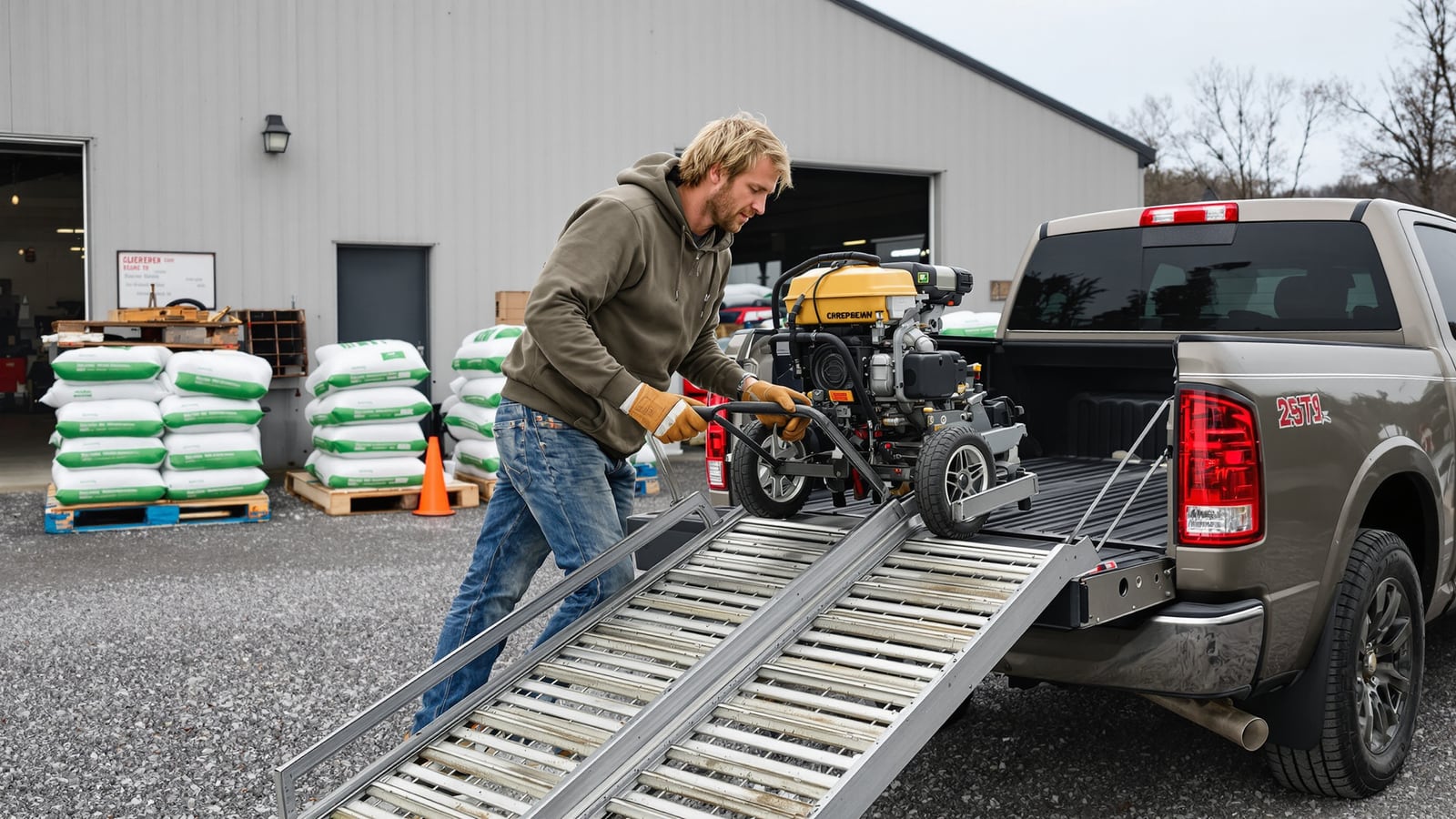
The machine is the hard part. A gas-powered plug aerator is heavy and awkward. You need a truck or a trailer with a ramp, and you need to be comfortable wrestling it up and down. Renting one by the day is the cheapest way in. Call your local rental yard and get the actual rate. Prices vary a lot by region.
Before every job:
- Walk the yard and flag sprinkler heads, shallow irrigation lines, and any buried pet fence. These are what you'll break.
- Ask the customer to mark anything you can't see.
- Mow the lawn a bit shorter than normal first.
- Put the watering instructions in writing and hand them over.
That last one is the whole game. New seed has to stay moist for the first couple of weeks. If the customer waters twice and quits, the seed fails, and you get blamed. Don't promise germination. Promise good work, good seed, and clear instructions, and put that in writing.
You can leave the soil plugs where they fall. They break down in a couple of weeks. Tell the customer so they don't call you about "dirt turds."
The math, with made-up numbers
These figures are placeholders to show you the shape. Replace every one with your own quotes. Call three local lawn companies and ask what they charge. Price the seed at a farm store or feed supply, not a big-box garden aisle, and divide by the coverage on the label.
Say you charge $150 for a typical lawn and do four on a Saturday.
- Revenue: $600
- Seed and starter fertilizer: about $140
- Machine rental for the day: about $100
- Gas and truck fuel: about $25
- Left over before taxes: about $335
That's maybe eight or nine hours once you count driving, loading, and the lawn that took longer than you thought. Call it $35 to $40 an hour before taxes. Decent for a Saturday. Not a career.
Now the month. A good fall month with four working Saturdays might net around $1,300 on those numbers. Spring is lighter. Summer and winter are zero. Over a year, you're likely looking at a few thousand dollars, maybe more if you add weekday evenings and build a route in one neighborhood.
If you'd rather buy than rent, the math only works at volume. A used machine you own is one fewer rental fee per job, but you're paying for storage, repairs, and the truck. Rent for a full season first.
Taxes and insurance, in plain terms
This is general education, not financial advice. Talk to a CPA or tax preparer about your situation.
When you work for yourself, you generally owe self-employment tax of 15.3 percent on net earnings, on top of regular income tax. Net earnings is what's left after legitimate business costs like seed, rental fees, and fuel. Keep every receipt and a simple mileage log. Our piece on what to set aside for taxes on side income from dollar one walks through how much to put aside.
Insurance is where side hustlers cut corners and regret it. Your homeowner's and personal auto policies commonly exclude business use. Call your agent and ask, specifically, what happens if you cut a customer's irrigation line or your trailer causes an accident on a job. Ask what general liability costs for a small lawn operation. A policy is real money, and on a thin-margin Saturday it matters. A single repair to a damaged sprinkler system can eat the day's profit.
Who should skip this
Skip it if:
- You don't own a truck or trailer and don't want to buy one. Check out what renting out your trailer and tools actually pays to see the other side of that deal.
- Your area has a short, wet season where the window barely opens.
- You can't lift and load heavy equipment safely.
- You'd be doing three lawns a year. The setup cost never pays back.
It works best as the second act for someone who already cuts grass or runs a pressure washer. The weekend pressure washing crowd has the same customers and the same trailer. If you're stringing several of these together and the calendar starts filling, read when a side hustle should become a business before you buy anything big.
The line that builds the route
Tell the homeowner the truth, even when it costs you a job. "That grass isn't dead, give it three weeks." A man who hears that in April calls you in September, and he tells the neighbor with the bare patch by the mailbox.
Ray Okonkwo
Money & Business
Former commercial banker turned small-business owner. Covers salary, credit, margins and the arithmetic nobody does before signing.

Watch
Worth an hour of your evening
More from Side Hustles.
From channels we rate. Plays on YouTube.
Read next