Buying old tools at flea markets and selling them for a profit
Most people who flip vintage tools lose money on the ones they fall in love with. The margin is in the boring middle.
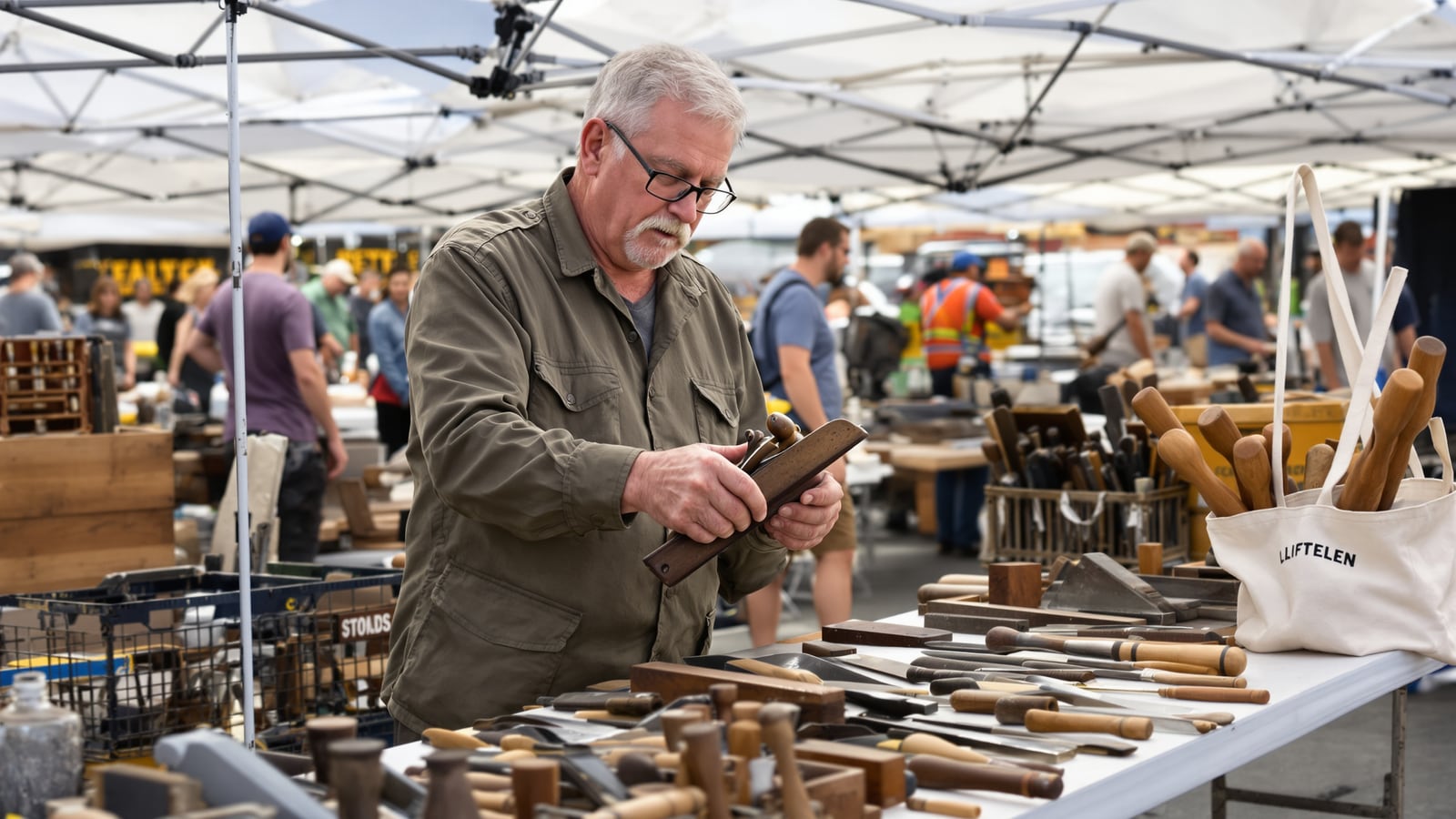
Quick answer: Reselling vintage tools can pay a few hundred dollars a month for a few hours a week, if you buy working tools cheap, clean them well and sell the heavy ones locally. It's slow, it eats storage space, and if you'd rather be doing anything else with your Saturday morning, skip it.
The math before the romance
Say you find a rusty bench plane at a flea market for $8. You spend two hours getting it working: soak, scrub, flatten the sole, sharpen the iron, oil it. You photograph it, write the listing, and it sells for $45. Shipping a plane that weighs several pounds runs you $12 to $15, and the marketplace takes its cut, call it $5 or $6.
You're up about $20 for roughly three hours of total work. That's under $7 an hour.
Those are example numbers, not a market report. Your area, your tools and your timing will move them around. But run your own version of this arithmetic on every purchase, because it explains why most people quit by month four.
The way out isn't finding the one $400 treasure. It's lowering the hours per tool and raising the margin on each one.
Where the margin actually lives
Rare collectibles get all the attention. They're also what the experienced dealers and serious collectors already know cold, and you'll rarely beat them at a table at 7 a.m.
The money for a beginner sits lower down:
- User-grade hand tools. Old Stanley planes, Disston saws, good framing squares, solid hammers and chisels with real steel. People buy these to use, not to display.
- Tools sold in lots. A coffee can of mixed chisels and files for $15 often holds two or three pieces worth keeping and a few more worth selling.
- Tools that need only a cleaning. Dirty isn't the same as damaged. Grime and light surface rust come off in minutes. Pitting, cracks and missing parts don't.
Walk past anything that needs a part you can't easily replace. A saw with a bent plate, a plane with a cracked casting, a brace with a stripped chuck. You'll lose the afternoon and the sale.
What goes wrong at the table
Three mistakes eat most beginners' money.
You buy what you'd like to own. It's the most common one. The tool is beautiful, so you pay a little too much, tell yourself you'll sell it later, and put it on a shelf. Now you have a hobby with a spreadsheet. That's fine if you know it. Just don't call it income.
You over-restore. Collectors often want original finish, even a little honest patina. Strip a rare tool down to bare metal and polish it and you can cut its value in half. Users want a tool that works. Know which buyer you're selling to before you pick up the wire wheel. When you aren't sure, clean gently, oil it, and stop.
You ignore weight. Cast iron planes, bench vises, anvils and old drill presses are cheap to buy and expensive to ship. A vise can cost more to mail than you paid for it. Sell heavy things locally, to a buyer who'll show up with a truck. Keep the shipping for small, light, high-value pieces: chisels, small planes, specialty hand tools.
Startup cost and the first month
You don't need much. Figure a few hundred dollars to start, and a lot of it is stuff you may already own:
- A wire brush, a brass brush and some fine abrasive paper
- White vinegar or a commercial rust remover, plus a plastic tub
- Machine oil and paste wax
- A sharpening setup: stones or a simple guide
- A kitchen scale or postal scale, boxes and packing paper
- A phone, a plain background and decent daylight
Then set a buying budget you can lose without flinching. Pick $150 for the first month and don't touch it again until you've sold some of what it bought. Keep every receipt and every sale record from day one.
Go to the flea market early, because the good stuff leaves first. Go late too, because sellers who don't want to haul tools home get flexible. Bring cash in small bills. Ask the price, then ask if that's the best they can do. Say it politely and mean it. Being a pushover costs you money, and being a jerk costs you the next deal with the same seller.
Hours, and what you can realistically make
Count all of it: driving, hunting, hauling, cleaning, photographing, listing, answering messages, packing, shipping, and the buyer who vanishes. Beginners count only the cleaning.
If you work at it a solid six to eight hours a week and move ten to fifteen decent tools a month, a net of a couple hundred dollars is plausible. A few hundred is possible once you've learned your market and cut your cleaning time. That's arithmetic, not a promise. Slow months happen, and some tools sit for half a year.
To improve your hourly number, pick a lane. Someone who knows Disston saws or old woodworking planes well will beat someone who buys "old tools" in general. Check completed sales rather than asking prices, since anyone can ask anything. And sell the cleaned, sharp, ready-to-use version. A tool you'd be proud to hand to a friend sells faster and gets fewer complaints.
That's the old rule too: return a tool cleaner and sharper than you got it. It works in a sale as well as in a borrowed-tool situation. Buyers remember it and come back.
Taxes and the paperwork
If you're selling for profit and doing it regularly, the IRS treats that as income, even if the sale happens at a card table. Profit is generally what you took in minus what the tools and expenses cost you. Self-employment tax can apply once you net above a modest amount, and that's separate from regular income tax. Set money aside from the first sale. This piece on what to set aside for taxes on side income covers the habit, and a CPA can tell you what applies to your situation.
Two other things to check. Many states and cities require a seller's permit or have sales tax rules for in-person sales, flea markets included. And selling a single old tool from your own garage is different from buying to resell as a regular activity. Ask a tax professional where you land.
Insurance is thinner than people assume. Your homeowner's policy may not cover business inventory or a customer who visits to pick something up. Call your agent and ask. If this grows into real volume, read when a side hustle should become a business and when it shouldn't before you rent a booth.
When it isn't worth it
Skip this one if:
- You don't have a dry spot to store and work on tools.
- You only want quick cash. The cycle from buying to selling is weeks, not days.
- You get no pleasure from the hunt. The hunt is half the pay.
- You won't track costs honestly.
If you already own a trailer and a garage full of tools, you may do better renting out your trailer and tools than buying old ones.
But if you like the hunt, and you've got a Saturday morning and a spot to work, this is one of the few side jobs where the stock itself is worth something even if the sale falls through. A good plane doesn't spoil, and it never gets less useful. Try that with a pallet of anything else.
Ray Okonkwo
Money & Business
Former commercial banker turned small-business owner. Covers salary, credit, margins and the arithmetic nobody does before signing.

Watch
Watch how it's done
Picked for this article.
From channels we rate. Plays on YouTube.
Rex Krueger
Thrift store wooden planes: total restoration, perfect shavings.
Eoin Reardon
How To Restore A Stanley Hand Plane
Read next