Sell the fall home visit homeowners keep putting off
A winterization visit is a short, seasonal gig. Here's the checklist, the hours, the insurance question, and when it isn't worth your Saturday.
Quick answer: Most homeowners know they should winterize and don't get to it. You can sell one flat-rate visit, two to three hours, with a written checklist and photos. It's a six-to-eight-week season, not a monthly paycheck. Check your state's handyman licensing and your insurance before you take the first job.
The angle: a visit, not a to-do list
Nobody wakes up wanting to buy gutter cleaning, caulk work and hose disconnects as separate line items. They want to know the house is ready and they want to stop thinking about it.
So sell one thing. A "Pre-Winter Visit," flat price, same checklist every time, done in an afternoon. Your customers are the ones who travel, work long hours, are past climbing ladders, or just keep losing the battle with the weekend.
You're not selling labor. You're selling a house that makes it to January without a surprise.
What the visit covers
Build your checklist from jobs you can do safely and finish in one trip.
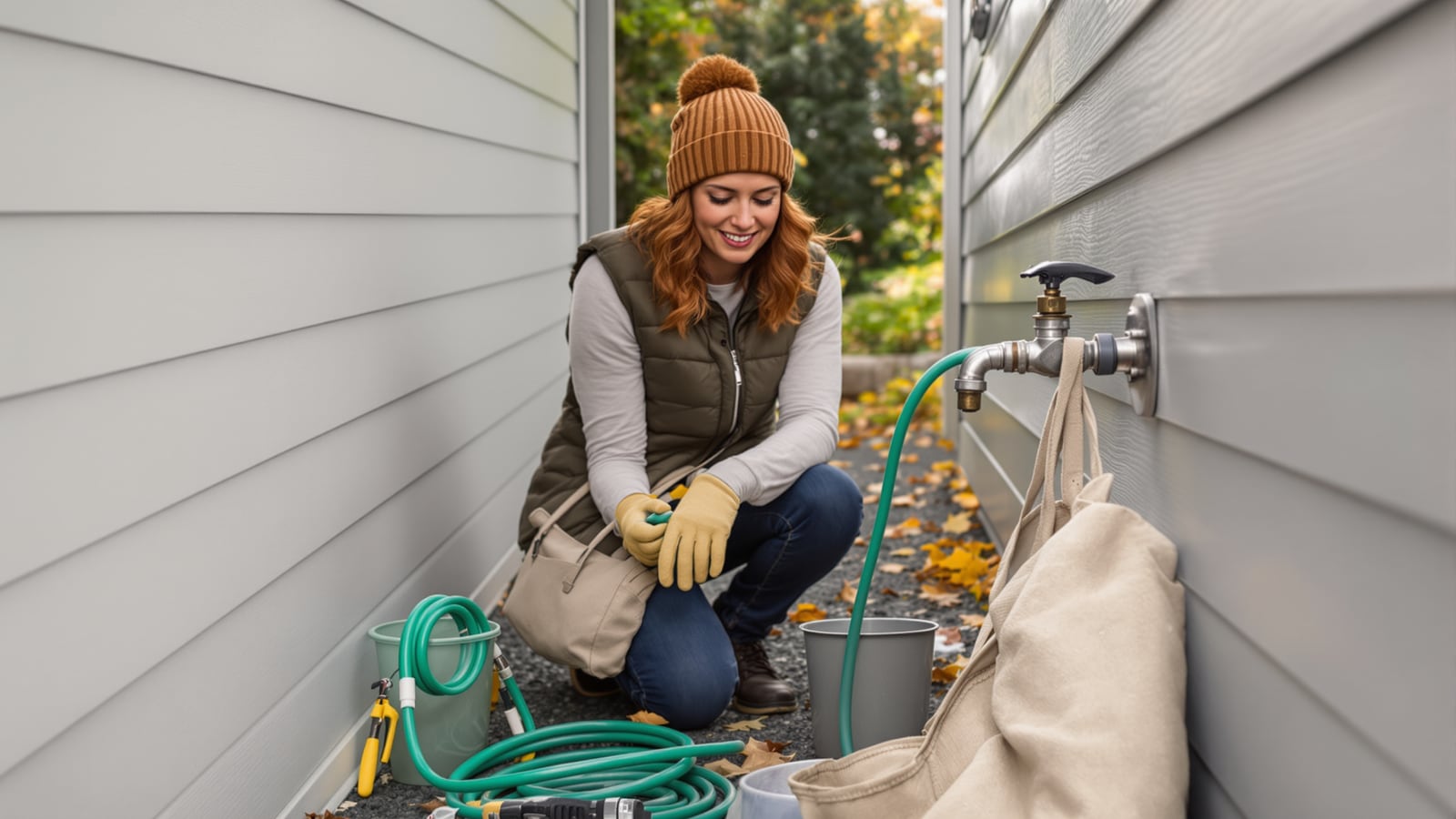
- Outdoor spigots. Disconnect every hose. A frost-free faucet can still freeze and split if a hose stays attached and traps water. Drain the hoses and coil them in the garage.
- Gutters and downspouts. Clear the debris and make sure the downspouts carry water away from the foundation. Frozen, clogged gutters are how ice dams and fascia damage start.
- Furnace filter. Swap it for a fresh one of the right size. Note the size on the invoice so the customer knows what to buy next time.
- Smoke and carbon monoxide detectors. Test each one and replace the batteries. Check the date on the back, since units wear out and have a replace-by date printed on them.
- Gaps and drafts. Caulk around windows, replace cracked weatherstripping, and add a door sweep where daylight shows under the door.
- Exposed pipes. Foam sleeves on pipes in the garage, crawl space or an unheated basement.
- Ceiling fans. Many have a switch to reverse direction. On low speed it pushes warm air down from the ceiling.
- Yard gear. Run the mower low on gas or add fuel stabilizer, then store it. Get the snow blower started and make sure it runs before the first storm.
- The main water shutoff. Find it, label it with a tag, and show the homeowner. When a pipe goes at 2 a.m., nobody wants to search for it with a flashlight.
- A look from the ground. Check the roof for missing shingles, and note any tree limbs hanging over the roofline or service lines.
Stop there. Skip anything that needs a license or a lot of risk. Furnace repair, gas lines, electrical work, chimney inspection and sprinkler blowouts belong to licensed pros. Your note on the report says "recommend a pro for this," and you hand over a name if you have one. Pointing out the problem is part of the value. Fixing it yourself is how you end up in trouble.
Hours and startup cost
The first visit runs slow, maybe four hours. By the tenth you'll be around two to three, including drive time and a ten-minute walkthrough with the customer.
Most guys already own the ladder, caulk gun, drill, screwdrivers and a shop vacuum. What you buy is consumables: filters in common sizes, caulk, weatherstripping, foam pipe sleeves, batteries, and a few hose-bib covers. Figure a few dozen dollars of materials per visit, and bill the customer for them or build them into the flat price. Decide which before you quote, not after.
Add a good pair of gloves, a headlamp, and a ladder with a stabilizer or standoff if you'll be working gutters. That's gear for safety, not for show.
Run the math with your own numbers
I won't hand you a market rate, because yours depends on your town. Check what handymen and gutter crews near you charge, then do the arithmetic.
Say you charge $175 a visit, spend $30 on materials, and the job takes three hours door to door. That's $145 for three hours, about $48 an hour before gas, taxes and insurance. Book four visits a weekend across six weekends and that's 24 jobs. At those assumed numbers you'd gross about $4,200 and keep about $3,500 before taxes and insurance.
Those are example figures. Your price, your pace and your bookings will move them, and they might move them down. A slow October, a rainy weekend or a no-show can eat a lot of that.
Taxes and insurance
This is income. If you net $400 or more from self-employment in a year, you generally owe self-employment tax on it, on top of income tax. Set money aside from the first invoice, and read what to set aside for taxes on side income from dollar one. A tax professional can tell you the right amount for your situation.
Insurance is the part guys skip and regret. Your own homeowner's policy often doesn't cover work you do for pay at someone else's house. Call your agent and ask directly. Ask about general liability coverage for a small service business, and whether a one-person policy fits. If you're going up on ladders and roofs, ask about injury coverage for yourself.
Also check your state and city. Some places require a license or registration for home-repair work above a certain dollar amount, and the threshold varies. Your state's contractor licensing board website will tell you. If you're pricing odd jobs beyond this checklist, what to charge for Saturday handyman work covers the pricing side.
Protect yourself on every job
Write the scope on one page and have the customer sign it before you start. Take dated photos of the spigots, gutters, filter and detectors as you leave them.
Say plainly what you didn't do. If you didn't shut off and drain the water lines, the paper says so. If a pipe bursts in January in a part of the house you never touched, that page and those photos are your defense.
Don't promise outcomes. You're promising a checklist completed, not that nothing will go wrong this winter.
When it isn't worth it
Skip this if you can't do ladder work comfortably, or if your area barely freezes. In mild climates the demand is thin.
Skip it if you're stretched thin already. A short season of Saturdays can turn into a second job quickly.
And think twice if the only way to make it pay is to cut insurance or ignore the license rules. One uncovered claim can wipe out a season of earnings.
If it works, it can lead somewhere. Customers who trust you in October will call in spring, and a second service fits easily alongside it, like weekend pressure washing. When repeat jobs start piling up, read when a side hustle should become a business and when it shouldn't before you quit anything.
This is general education, not financial, legal or tax advice. Ask a tax professional, an insurance agent and your state licensing board before you take your first paid job.
Then pick one street, knock on five doors, and offer to do your own neighbor's spigots first. A job done well on your own block is the best advertising you'll ever buy.
Ray Okonkwo
Money & Business
Former commercial banker turned small-business owner. Covers salary, credit, margins and the arithmetic nobody does before signing.

Watch
Worth an hour of your evening
More from Side Hustles.
From channels we rate. Plays on YouTube.
Read next