Four jackets that cover the whole year
One for rain, one for fall, one for real cold, and one that makes a plain T-shirt look deliberate, plus the fit checks and fixes that keep them alive.
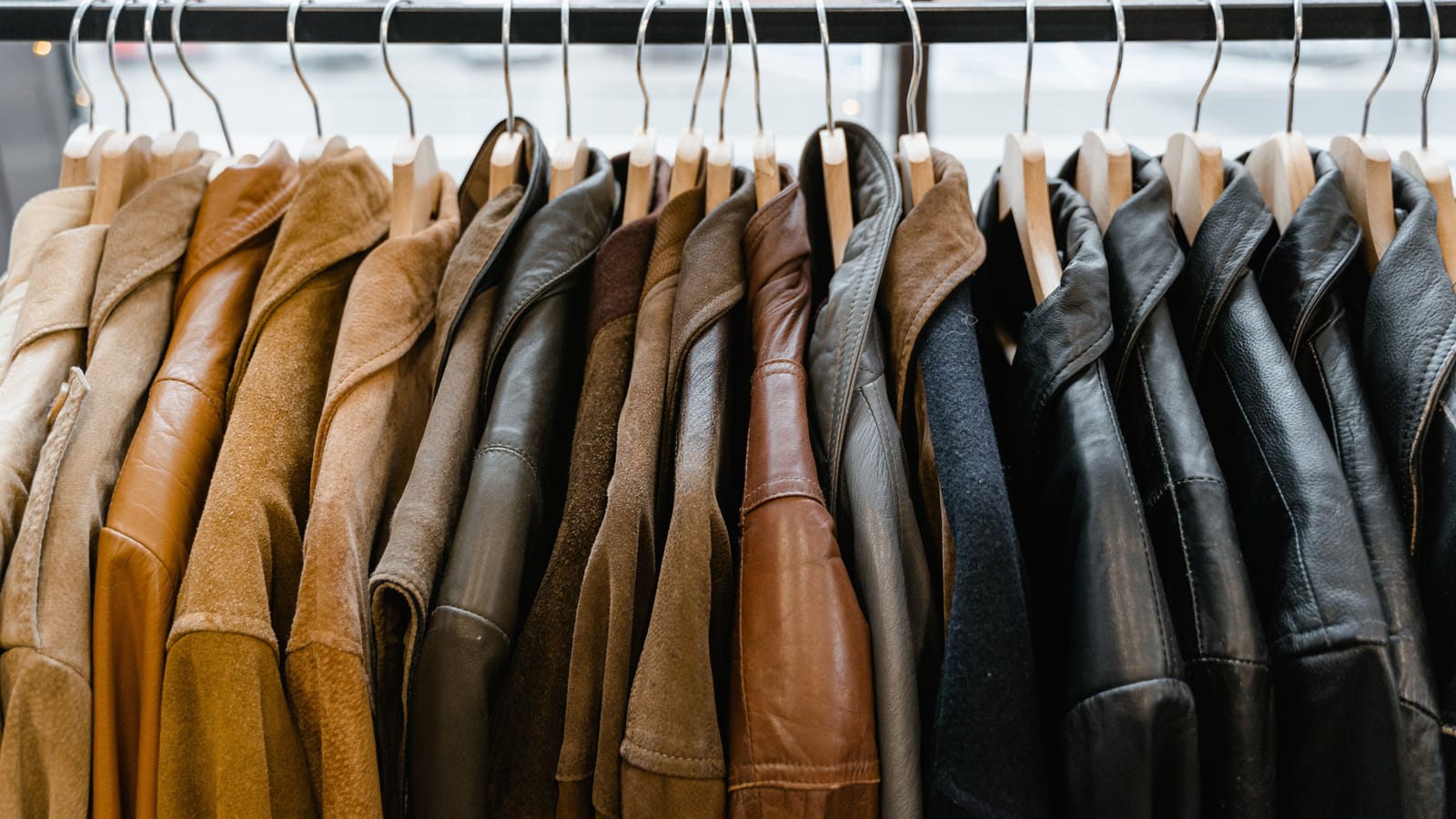
Open the coat closet by your front door and count. Most guys have seven jackets and a gap. There's a heavy one for January, a hoodie doing work it shouldn't, and five in between that all do roughly the same thing on a 55-degree day. Then it rains and you wear the wrong one anyway.
Four covers it. Not four expensive ones. Four that fit, in materials that make sense for the weather they're assigned to.
The fit rule that decides all four
Outerwear fits over something. So try it on over that something, not over the T-shirt you wore to the store.
Pick the thickest layer you'll actually wear under it. For a chore coat that's probably a flannel shirt. For a winter parka it's a crewneck sweater or a fleece. Bring it. Wear it in the fitting room. A jacket that fits perfectly over a tee and binds over a sweater is a jacket you'll stop reaching for by November.
Then run three checks.
Shoulders. On a blazer the seam sits on your shoulder point. On outerwear it's allowed to sit half an inch past it, because there's a layer underneath. What you can't have is the seam collapsing down your arm with a dent above it. That's too big and no tailor fixes it cheaply.
The hug. Cross your arms hard in front of you, like you're reaching across the truck for something in the passenger footwell. If the upper back pulls tight enough to lift the hem, go up a size. If the sleeves feel short when you do it, that's normal. If they feel short when you stand still, it's the wrong jacket.
Sleeve length. Outerwear sleeves end a touch past the wrist bone, far enough to cover a shirt cuff. Longer than a sport coat, shorter than a bathrobe. Anything more than an inch off needs a tailor, and on some jackets the tailor can't help. More on that below.
Fabric comes second. Brand comes last, and honestly brand barely comes at all. A farm store chore coat that fits beats a designer one that doesn't, and everyone can tell which is which from across a parking lot.
1. The unlined chore coat, for 45 to 65 degrees
This is the one you'll wear most, and the reason is boring: it works over a T-shirt on a cool morning and over a flannel at night, it doesn't look like gym clothes, and nobody's ever been overdressed in one.
Cotton canvas or duck, unlined or lightly lined. Four patch pockets, straight hem, no waist elastic. It should stop right around mid-fly, covering your belt and nothing more. If it covers your back pockets, it's a barn coat and it'll swallow you.
Navy, olive and tan all behave. Black canvas tends to read cheap as it fades unevenly, so if you want black, pay for a heavier fabric or skip it.
The mistake people make is buying it too roomy because it's a workwear shape. Workwear shapes are already roomy. Buy your actual size.
2. The rain shell you'll actually put on
Most men own a rain jacket that lives in the trunk and comes out twice a year, because it looks like something you'd wear to change a tire at a marathon. That's why you're wet right now.
Get one in a solid dark color with no logo across the back and no reflective piping. Hood attached, not zip-off, because zip-off hoods are always in the other coat. Long enough to cover your seat when you're standing, so rain running off it doesn't land on your pants.
Two features earn their keep. Taped seams, which is the difference between water-resistant and waterproof. And pit zips, if you ever walk more than a block in it.
Sizing is forgiving here on purpose. This one goes over the chore coat in a cold spring downpour, which means it's the one jacket where you size for two layers, not one. Check that you can still work the zipper with a sweater sleeve bunched at your wrist.
3. The trucker, in waxed cotton or leather
Call it the fall coat. Waist-length, cropped so the hem hits right at your belt, cuffs that button or snap. A waxed cotton one runs cooler and handles drizzle. A leather one runs warmer, gets better looking every year, and costs more up front.
This is the jacket that makes a plain white T-shirt and jeans look like a decision instead of an accident. It's also the one people get wrong most often, because they buy it long.
The hem has to sit at your natural waistband or an inch above. Not below. A cropped jacket works because it shows where your waist is; drop that hem three inches and the whole proportion goes soft.
If you go leather, go lambskin only if you want it to look elegant and die young. Cowhide, goat or horsehide take abuse. Suede is the third option, and it's better than its reputation as long as you accept that you'll be brushing it and you won't be wearing it in rain.
4. The winter coat, and the fork in the road
Here's where you have to be honest about your life.
If you wear a suit or a sport coat to work more than twice a week, buy a wool topcoat. Charcoal or navy, single-breasted, hem at the top of the knee or just below, and it needs to close over a jacket without straining across the chest. Check that by buttoning it while wearing your sport coat. In the store. Yes, feel silly for ninety seconds.
If you don't wear tailoring, buy a real insulated parka and stop apologizing for it. Hood, mid-thigh length, cuffs that seal. Down is warmer for the weight and useless once it's soaked. Synthetic insulation is heavier, bulkier, and keeps working wet. If your winter is wet more than it's brutal, take synthetic.
One thing both need: a collar that stands up and stays up. A winter coat with a floppy collar means the wind goes straight down your back.
Fixes that buy you five more years
Sleeve length, before you buy. Look at the cuff. A plain cuff with a button can be shortened from the bottom by most tailors for the price of lunch. A cuff with a zipper, a knit band, or a storm flap has to be shortened from the shoulder, which costs real money and can go wrong on waxed cotton or leather. Ask at the counter which kind you're holding.
Re-wax once a year or two. When the waxed jacket stops beading and starts looking chalky, warm it up somewhere heated, rub a thin coat of wax in with a cloth, work the seams, then even it out with a hair dryer and hang it overnight. Never machine wash it. Never dry clean it. Cold water and a sponge is the whole cleaning routine.
Refresh the water repellency on the shell. It wears off at the shoulders and hips first, where your bag rides. Wash it with a technical wash, not detergent, then add a wash-in or spray-on proofer, then tumble it warm and low to set it. Fabric softener kills rain jackets. So does regular detergent, slowly.
Wash down at home. Front-loading machine, down-specific wash, then tumble low with a few clean tennis balls for two or three hours until the clumps break apart. It takes longer than you think. Pull it out early and you've got a lumpy coat and a moldy one.
Snaps and sliders are cheap. A popped snap or a broken zipper pull is a ten-minute job at a cobbler or a leather shop. A whole new zipper coil isn't. When the slider starts separating the teeth behind it, take it in that week.
Four jackets, four jobs, no overlap. The other seven in that closet can go to somebody whose shoulders they actually fit.
Tobias Reed
Style & Grooming
Spent a decade in menswear retail watching men buy the wrong size. Believes fit is ninety per cent of it and says so weekly.

Watch
Watch how it's done
Picked for this article.
From channels we rate. Plays on YouTube.
Justin Kwan
Jacket Fit - Myth Busting Slim Fit + 6 Point fit Check
Read next