Make a good pair of shoes last ten years
Cedar trees, twenty minutes of polish and one honest look at the welt will get more out of your shoes than buying new ones ever will.
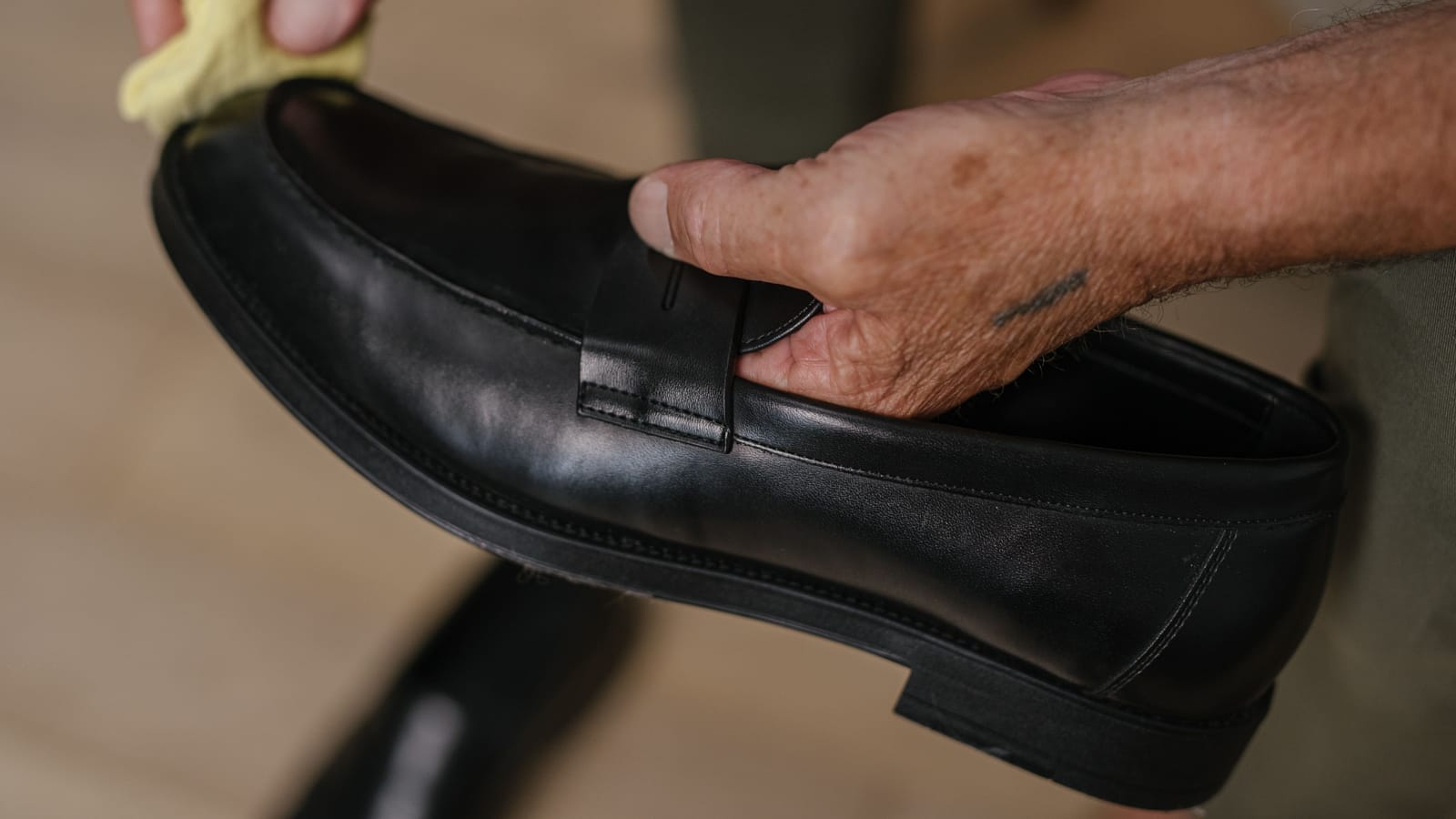
Buy the cedar trees first. Before the polish, before the brushes, before the tin of anything. A pair of unfinished cedar trees runs somewhere around twenty-five to thirty-five dollars, and they do more for the life of a leather shoe than every product on the shelf behind them combined.
Your foot puts out moisture all day. That moisture goes into the leather lining and the insole, and as it dries the leather shrinks and the upper folds hard along the creases it already has. Do that five days a week and you get those deep cracked lines across the vamp that no polish fills. Cedar pulls the moisture out, holds the shape while it dries, and keeps the toe from curling up like an elf boot.
Put them in warm. Not the next morning. The second you take the shoes off.
The rotation rule isn't snobbery, it's drying time
One pair of leather shoes worn every day is a pair of leather shoes with a two-year lifespan. Two pairs alternated is four or five years each. It costs you nothing but the patience to buy the second pair before the first one dies.
A shoe needs roughly a full day to dry out properly, longer in a humid summer. So the minimum workable setup is two pairs in the same general color family, worn on alternating days. If you have three, you're set for life. If you only have one right now, that's fine, just don't wear it Monday through Friday and expect it to see the next president.
Conditioner and polish do different jobs
This is where most guys go wrong. They buy one tin of black Kiwi, slather it on twice a year, and call it shoe care.
Cleaning comes first. A damp cloth, or a dedicated leather cleaner if there's salt or grime built up along the welt. Get the old wax off before you add new wax, otherwise you're just building a shell over the dirt.
Conditioning is food. Leather is skin, and it dries out. A cream conditioner like Saphir Renovateur or a Lexol-type lotion puts oils and moisture back in so the fibers stay flexible instead of cracking. Do this every eight to ten wears, or whenever the leather looks thirsty and pale at the flex point.
Cream polish adds color. It's pigmented, it hides scuffs, and it soaks in.
Wax polish adds shine and a bit of weather protection. It sits on top. It does almost nothing for the health of the leather.
Most men need conditioner far more often than they need wax. If your shoes look dull but the leather's healthy, that's a brushing problem, not a polish problem. A horsehair brush and ninety seconds of vigorous work will bring back most of the shine you think you lost.
The twenty-minute routine
Do this once a month per pair, on a Sunday, with a podcast on.
- Trees out, laces out. Laces trap dirt right where the leather flexes.
- Wipe the whole shoe down with a barely damp cloth. Pay attention to the seam where the upper meets the sole. That gutter collects grit that saws away at the stitching.
- Let it dry ten minutes.
- Conditioner on a cloth, thin coat, small circles. Let it sit five minutes.
- Cream polish in a matching color, worked in with a cloth or a dauber brush. Neutral works on everything but won't hide scuffs.
- Brush hard with horsehair until the shoe warms up.
- Optional: a thin layer of wax on the toe and heel counter, buffed with a clean cloth.
- Trees back in.
Skip the mirror shine unless you enjoy it. A high spit shine on the toe cap looks sharp, takes forty minutes the first time, and cracks off the flex points anyway. It's a hobby, not maintenance. Nothing wrong with hobbies.
Suede and rough-out get none of this. Brush them with a crepe or brass suede brush, attack scuffs with a suede eraser, and hit them with a water-and-stain protector spray twice a season. Wax polish on suede is how you ruin a shoe in one afternoon.
Heels are the cheap save you keep putting off
Look at the back of your heel right now. If the rubber heel cap is worn into a wedge and you can see the leather stack layers underneath starting to shear off, you've waited too long.
Replacing a heel cap is one of the cheapest things a cobbler does. In most towns it's twenty to forty dollars and takes a couple of days. Let it grind down into the stacked leather and now the cobbler is rebuilding the heel block, which costs real money and changes how the shoe sits under you.
Same with toe taps. If you drag your right toe, a thin metal or rubber tap set into the front of the sole stops the outsole from wearing through at the tip. Twenty bucks, once, and it protects the part of the sole that fails first.
How to tell it's time to resole
Take the shoe off and press your thumb hard into the ball of the sole from the outside. If it flexes like a slipper, the outsole is thin.
Better test: look at the leather outsole at the ball of the foot under decent light. Leather soles are usually built in layers. When you can see a distinctly different color or texture showing through in the worn spot, you're into the last layer or through it. Resole now.
The other signs:
- Water gets in when you walk on wet pavement, and the sole is otherwise intact.
- The welt stitching along the edge is frayed or missing in a section.
- You can see the cork filling or, worse, the nailheads of the shank.
Go past that point and the water reaches the insole, the insole rots, and now you're paying for a rebuild instead of a resole. A straight resole at an independent cobbler typically runs in the eighty-to-a-hundred-fifty range depending on the sole you pick. Factory recrafting from the maker costs more and usually comes back looking newer than you expected, sometimes newer than you wanted.
Which shoes can even be resoled
Goodyear welted and Blake stitched shoes can be resoled, repeatedly. Look at the edge of the sole for a line of stitching, or pull out the insole sock and look for a line of stitching down the middle of the footbed. That's your answer.
Cemented shoes, which is most sneakers and a lot of dress shoes under a hundred and fifty dollars, are glued. A cobbler can sometimes glue a new sole on, but it's a patch, not a rebuild. That doesn't make them bad shoes. It makes them consumables, and there's no shame in a consumable. A ninety-dollar pair worn for three seasons and replaced is perfectly honest math. Just don't spend eighty dollars trying to save it.
One more thing worth knowing: if you love a pair with leather soles and you're tired of them wearing out every eighteen months, ask your cobbler about a thin rubber half-sole bonded on top, often called a Topy. It adds grip, it adds life, it costs less than a resole, and the purists will tell you it ruins the line of the shoe. The purists aren't walking through February in your city.
Your cobbler knows more about your shoes than you do. Go meet him before you need him.
Tobias Reed
Style & Grooming
Spent a decade in menswear retail watching men buy the wrong size. Believes fit is ninety per cent of it and says so weekly.

Watch
Watch how it's done
Picked for this article.
From channels we rate. Plays on YouTube.
Joseph Cheaney & Sons
Shoe Polishing: A step by step guide
Chris Madaras
Leather Shoe Care FULL GUIDE - From Beginner to Luxury