Shrink it on purpose before the dryer does it for you
Cotton will shrink somewhere. Decide where, measure before and after, and the clothes you paid for will still fit a year from now.
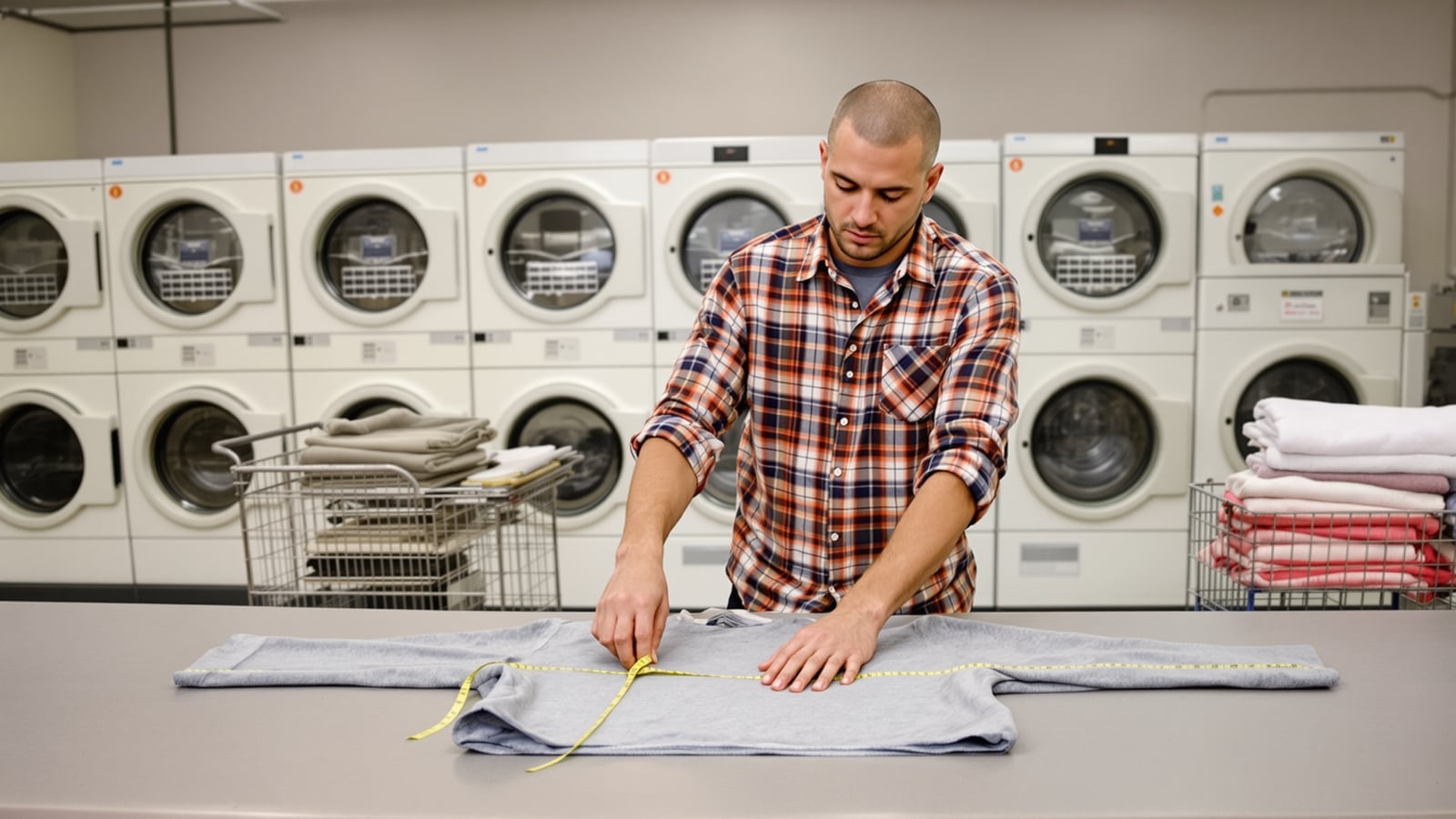
Quick answer: Pre-wash cotton, linen and flannel the way you'll actually launder them, and measure before and after. Don't pre-wash raw denim, wool tailoring or anything labeled dry clean. Buy cotton a touch long and roomy, and let the first wash finish the job.
Measure before you wash
You own a tape measure, or you should. Before the first wash, lay the garment flat and write four numbers on your phone: chest (armpit to armpit, doubled), body length, sleeve length, and for pants, inseam. Takes ninety seconds.
Wash it the way you'll wash it for the next three years. Warm or cold, whatever's on the dial. Dry it the way you'll dry it. Then measure again.
Now you know something the label never told you. A tag that says "preshrunk" means the maker ran the fabric through a process. It doesn't mean the garment won't move. "Sanforized" is the better word, a mechanical treatment that cuts shrinkage way down, but even then you're looking at a little, not none.
Most guys find out about shrinkage the hard way: a favorite tee that was fine in March and rides up over the belt by May. A tape measure turns that surprise into a number.
Where cotton moves
Cotton knits, meaning tees, polos and sweatshirts, shrink mostly in length. The width holds up better, which is why the shirt ends up boxy and short, like it belongs to a smaller, wider man.
Woven cotton, meaning dress shirts, oxfords and chinos, tends to move in both directions, a little. The collar and sleeves are where you'll feel it first. A shirt that buttoned easily at the neck and now makes you hold your breath at a rehearsal dinner has told you everything.
So here's the buying rule. For a 100% cotton tee, buy it with a little extra length and accept that it'll come back to the length you wanted. If it's already the right length on the rack and you plan to hot-dry it, expect to be disappointed. The exceptions are shirts with a blend (cotton and polyester), which move less, and shirts that say they're garment-washed, which have already been through the drum once at the factory.
For chinos, buy the waist that fits you now and the inseam a half inch long if the pair is 100% cotton and unwashed. Hemming up is easy. Letting down a hem that's already been cut is not.
When pre-washing is worth the trouble
Pre-wash these:
- Cotton tees and polos. Wash once, tumble dry on low or hang, then judge the fit.
- Oxford and flannel shirts. Flannel in particular can shrink more than a guy expects, and it can twist at the seams if you dry it hot.
- Chinos and khakis, before a tailor touches the hem. If you hem first and wash second, you've shortened pants that were going to shorten themselves.
- Linen. It softens and tightens up at the same time. Wash it before you decide it's too stiff or too small.
- Anything with a lining, a trim or a contrasting color. Dark or bright dye can bleed in the first wash. Better a gray towel gets stained than your white shirt.
If a tailor is going to hem or take in something cotton, wash it first. Take it to the tailor dry, pressed and the size it's going to stay.
When pre-washing is a mistake
Raw denim. The whole point is fit that molds to you over months. Most guys buy it a bit snug, wear it dry for a good while, then soak it once. If you're not that guy, buy sanforized denim instead, which is what most jeans are, and wash it normally. Check the tag or the maker's site, and when you can't tell, assume it'll shrink at the waist and the length.
Suits, sport coats and tailored wool trousers. Don't throw these in the machine. The canvas and padding inside don't shrink at the same rate as the shell. Dry cleaning is the usual answer, and even that should be rare. Air them out, brush them, hang them on a wide hanger, and clean only when they're actually dirty.
Anything that says "dry clean only" and cost real money. Obey the tag. Some will survive a gentle hand wash, but you're gambling with the nice thing.
Athletic polyester. It barely shrinks. What kills it is heat. A hot dryer can warp elastic and leave a shirt wavy at the seams, so skip the high setting and hang it up.
Wool is its own problem
Wool shrinks in hot water and with agitation. That's felting, and there's no going back from it. A sweater that went in the dryer comes out child-sized, and no amount of regret restores it.
Wash wool cold, by hand or on the gentlest cycle. Press the water out, don't wring. Then lay it flat on a dry towel, shaped to its original size, and leave it. Hanging a wet sweater pulls the shoulders and stretches the body, and you'll own a sweater with shoulders at your elbows.
If you do shrink one a little, there's a fix that sometimes works. Soak it in lukewarm water with a spoonful of hair conditioner for a half hour. Press out the water, lay it on a towel, and gently ease it back toward its old measurements. You won't get all of it back, but a modest shrink often comes back mostly. A hard felt won't.
Fixing the shirt you already shrank
Cotton that's only shrunk a little can be coaxed back. Dampen it, lay it flat, and stretch the length gently by hand while smoothing it. Hang it to dry. Do it twice if the first try gets you halfway.
If the sleeves or collar have moved too much, stop. A tailor can sometimes let out a hem or a cuff, but the collar's usually a loss. Look at what you have left, then check it against the checks that tell you a garment actually fits. Sometimes the honest answer is that it's a yard-work shirt now.
Better still is not getting there. Most shrinkage comes from heat, and the dryer is the main source of it. If you want the long version, it's in the dryer is why your clothes wear out early. The short version: cold or warm water, low heat or no heat, and pull things out while they're still a hair damp.
The first-wash routine
Keep it simple and you'll actually do it.
- Measure and write down the numbers.
- Wash the garment alone, or with similar colors, on cold or warm.
- Dry it on low, or hang it.
- Measure again.
- If it moved more than you can live with, adjust how you buy next time. Size up on that fabric, or look for a blend or a sanforized version.
When you're building a wardrobe from scratch, ten garments that get you through almost any week is a good starting list. Run each piece through this routine once, and you'll stop guessing about which ones hold their size.
A tape measure costs a few dollars. A good shirt that fits you for ten years is worth a lot more than that. Measure it first.
Dean Shaw
Gear & Garage
Reads the warranty, the parts list and the long-term owner reviews before anything else. Trucks, tools, watches, and the cheap version that costs more.

Watch
Worth an hour of your evening
More from Style.
From channels we rate. Plays on YouTube.
Read next