Buy the level first, own a cheap stud finder, rent the laser
A level you can trust, a stud finder that costs less than lunch, and a laser you only need a few times a year. Here's what earns a spot in the toolbox.
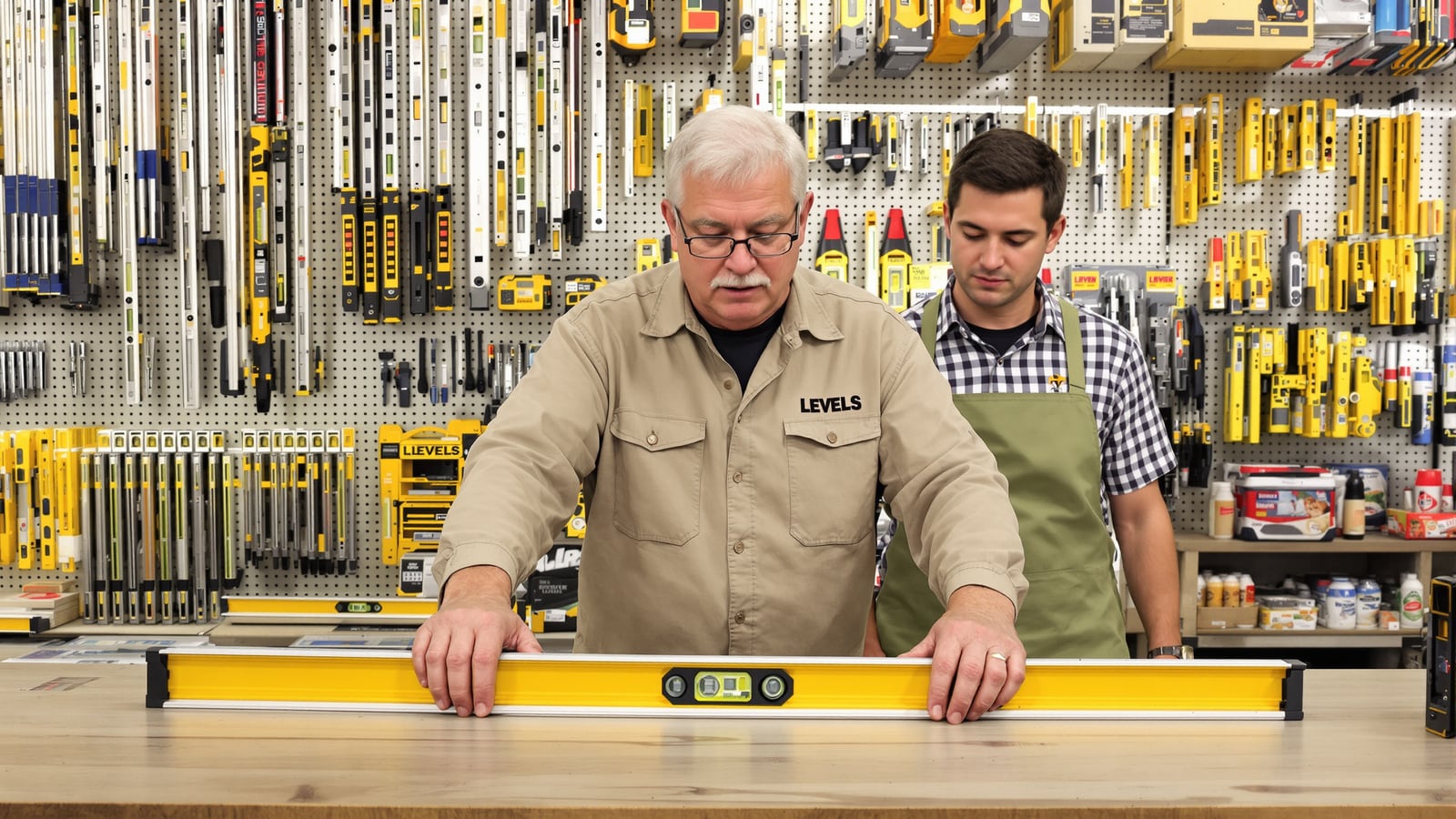
Quick answer: Buy a good 24-inch level and a cheap torpedo level. Add a basic stud finder or a magnet. Get a cross-line laser only if you tile, hang cabinets or build things. Rent anything fancier.
Prices below are rough street ranges. They move, so check before you buy.
The level is the tool you can't cheap out on
Every other tool on this list tells you where something is. The level tells you whether it's right. That's why the level is the one to spend on.
A level is only as good as its vials. A bad one will happily tell you a crooked shelf is straight, and you'll believe it, because it's a level.
Here's the cheap check. Lay the level on a flat board or countertop. Mark where each end sits and note where the bubble lands. Now spin the level end for end, back on the same marks. The bubble should read the same. If it doesn't, the vial is off. Take it back or put it in the junk drawer.
Try this on the display model before you buy. Most stores won't mind. A bad one shows itself in about fifteen seconds.
What you actually need:
- A 24-inch box-beam level. This is your everyday workhorse. It's long enough to span two studs and short enough to fit in a drawer. Budget versions run roughly $15 to $40. Stabila and similar pro-grade brands run higher, often $50 to $100 or more.
- A 9-inch torpedo level. It lives in your pocket or apron. Look for a magnetic edge, which makes it grab a steel pipe or stud. These run roughly $8 to $25. Here the cheap one is fine, as long as it passes the flip test.
- A 48-inch level, maybe. It matters for door frames, long shelving runs and setting a header. Skip it until you have a job that needs one.
What the cheap level gets right: it's a straightedge with a bubble, and a lot of them are accurate enough for hanging pictures and a bookcase.
What it gets wrong: the vials can drift after a drop, and thin aluminum bends. A bent level lies in a way you'll never see. Don't let it ride loose in the truck bed under a bag of concrete.
One more habit. If you lend your level to a neighbor, ask for it back clean and, ideally, with a thank-you. And when you borrow one, wipe it down before it goes home. It's a small thing and it keeps the neighbors lending.
Phone level apps are a toy
They're fine for checking whether a picture is roughly square. They're not fine for a shelf that'll hold your kids' books, because the phone's case, the camera bump and the way you hold it all throw off the reading. Use the real tool.
The stud finder: spend less than you think
A stud finder does one job. It tells you where the framing is behind drywall so your screws bite into wood instead of crumbly gypsum.
Most walls in a house built in the last several decades have studs about 16 inches apart, center to center. Some have 24. Each stud is only about an inch and a half wide, so you have a narrow target.
You've got three honest options:
- A rare-earth magnet stud finder. Roughly $8 to $15. It finds the drywall screws or nails by magnetic pull, and those are in the stud. No batteries and nothing to calibrate. It works well and fails in only one way. Some plaster-and-lath walls and thick coatings can confuse it.
- A basic electronic stud finder. Roughly $20 to $50. It reads changes in wall density. It's fast, and it beeps. It also gets fooled by uneven walls, and you have to calibrate it on an empty section first.
- A scanning model. Roughly $50 to $100 and up, from names like Zircon, Franklin and Bosch. These show stud edges and sometimes warn of live wiring. They're useful if you open walls a lot. For most homes, you're paying for features you'll use twice.
Whichever you choose, confirm what it tells you. Find one edge, find the other, and mark the center. Then tap the wall. A stud sounds dull and solid. A hollow cavity sounds like a drum. Finally, drive a thin finish nail through where you'll be hidden anyway, behind the trim or under the shelf. If it hits wood, you're good.
Know the limit. A stud finder isn't a guarantee about what else is behind that wall. Wires and pipes run through and beside framing. Before you drill anything deep, especially above outlets or switches, near a bathroom or in a kitchen wall, turn off the circuit and think about what's likely back there. For anything beyond a simple hanging job, call an electrician or a plumber.
The laser: own one, but know what it's for
A laser doesn't replace a level. It projects a line across a room so you can hold that line over a long distance. It's good for:
- Hanging a row of cabinets
- A tile backsplash or floor layout
- A chair rail
- A gallery wall
- Setting posts or a deck ledger to the same height
A cross-line laser throws a horizontal and a vertical line. It's the one most people should consider, and the self-leveling kind sits on a small pendulum that swings flat. Budget models run roughly $30 to $60. Brands like Bosch, DeWalt and Milwaukee run higher, often $80 to $200 or more.
Two things matter. First, green beams show up better indoors than red ones, and that's most of what you're paying extra for in the mid-range. Second, lock the pendulum before you move it. Dropping a laser with the lock off is how they end up out of true. A cheap one that gets handled gently outlasts a good one thrown in a bucket.
What the cheap laser gets right: it's accurate enough over ten or fifteen feet, which is a room.
What it gets wrong: in bright sun or across a long yard, the line vanishes. Outdoors you need a detector, and that's a different, more expensive kind of tool.
When to rent instead
Rent a rotary laser when you're setting grade for a patio, a slab, a fence line or a deck footing. It's accurate over long distances and has little to do with hanging a mirror. Your local rental counter can tell you what a day costs and whether it comes with a receiver and tripod. Our piece on the tools you should rent and the ones you should just buy walks through that line in more detail.
If you'll use it twice in your life, rent it.
What we'd buy and what we'd skip
Buy:
- A 24-inch box-beam level you've flip-tested
- A magnetic torpedo level
- A rare-earth magnet or a basic electronic stud finder
- A green-beam cross-line laser, if you do layout work
Skip:
- A level with fifteen features and a digital display, unless you're setting angles every week
- A premium stud finder you'll use four times
- A rotary laser purchase. Rent it.
If you're still building out your kit, start with The 20 Tools Every Homeowner Needs and What to Pay for Each. Then give the level a home in the drawer or on the wall. Where Every Tool Goes and Why You'll Actually Put It Back is how to make sure it's there next time.
The shelf you hang this weekend will still be up when your kids are grown. Check it with a level you trust.
Dean Shaw
Gear & Garage
Reads the warranty, the parts list and the long-term owner reviews before anything else. Trucks, tools, watches, and the cheap version that costs more.

Watch
Watch how it's done
Picked for this article.
From channels we rate. Plays on YouTube.
The Honest Carpenter
IS YOUR LEVEL ACCURATE? Here's How To Tell...(Broken Bubble Level / Spirit Level)
Skill Builder
Is Your Laser Level Really Level? How to Check
Read next