Stop asking one speaker to do both jobs
The speaker you carry and the speaker you keep are different tools. Buy them for different reasons, or you'll overpay for one and be let down by both.
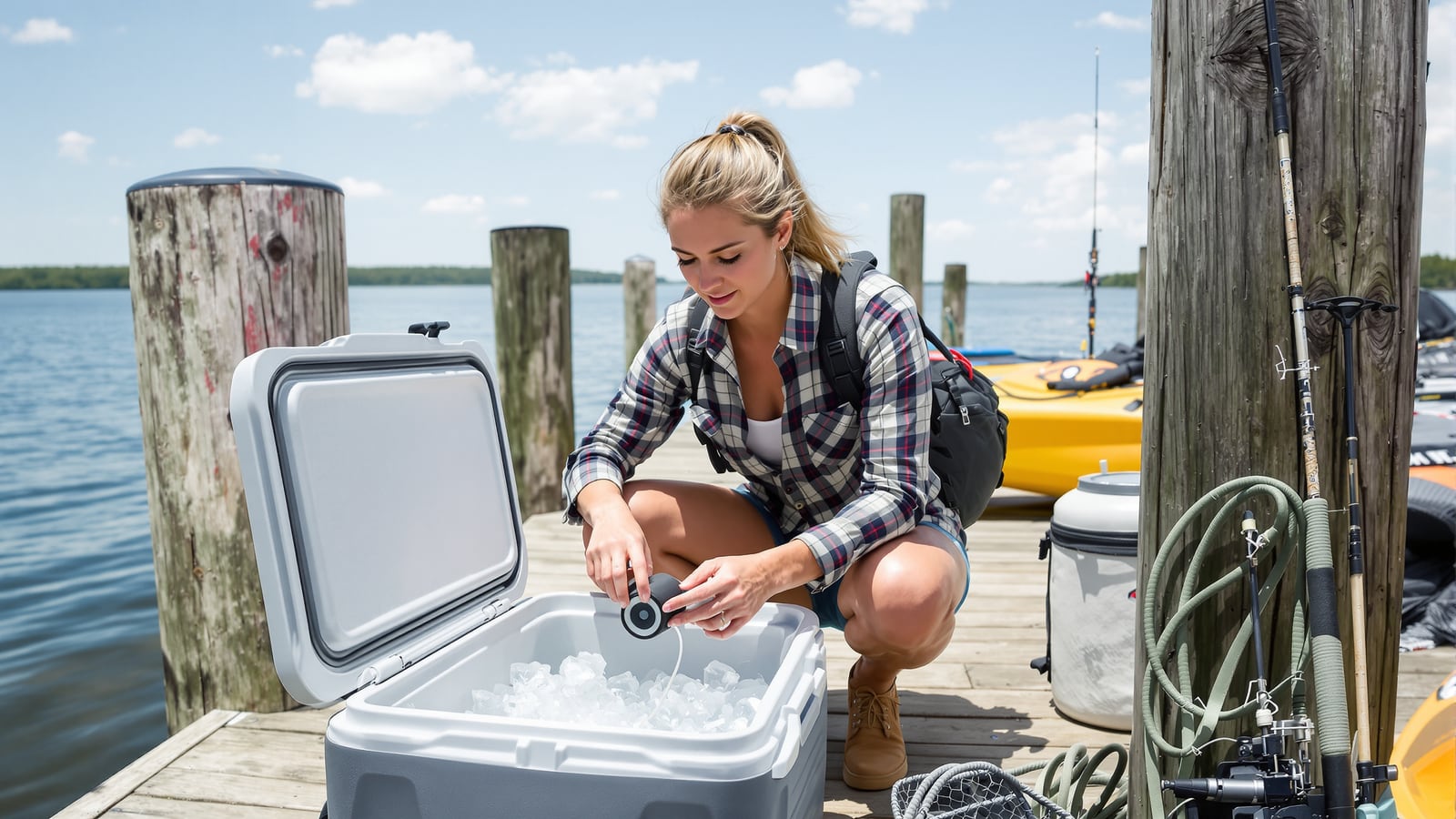
Quick answer: If you're buying one speaker, buy the portable one: small, rugged, rated IP67. If you want good sound at home, skip Bluetooth and plug something in. One speaker rarely does both well.
Most people buy a single Bluetooth speaker and ask it to be the kitchen radio, the backyard system, the campsite stereo and the thing in the truck. It does all four, and none of them well. It's too big to toss in a pack and too weak to fill the living room.
The fix is to decide which job you're hiring for.
The one that goes with you
A carry speaker has three jobs: survive, last, and get out of the way. Sound quality comes fourth, and that's fine.
Start with the rating. Look for IP67. The 6 means dust can't get in. The 7 means it survives being dunked in up to a meter of water for thirty minutes. That covers a dropped speaker in a cooler, a lake, or a Saturday when a kid carries it by the strap through a sprinkler. A speaker that's merely "splash resistant" is a marketing phrase, so check for the actual IP number.
Then the battery. Makers quote hours at moderate volume. Run it loud, outdoors, over a lot of ambient noise, and it drains faster. Treat the claim as a best case. If you want a full day at the lake, buy more battery than you think you need. Check that it charges over USB-C, so the cable in your truck console works.
Then size. If it doesn't fit in a cupholder or a side pocket, it'll stay home, and then you've bought the wrong speaker. The best portable is the one that actually gets thrown in the bag.
And buy it cheap enough to lose. A speaker that rides in a boat or on a tailgate is going to get sand in it, get sat on, and get left at a campsite once. Spend what you'd be able to shrug off.
The one that stays home
This is where people waste money. They buy a nice Bluetooth speaker for the house, and Bluetooth is the weak link.
Bluetooth squeezes the audio on its way from your phone, and it's tied to your phone. Walk to the grill with the phone in your pocket and a wall in between, and the music stutters. Bluetooth's usable range is around thirty feet in the open, less through walls. A text comes in and the chime plays through the speaker in the middle of dinner. Your wife takes a call and the music dies. It's one speaker paired to one phone, and everybody in the house is fighting over it.
At home, you've got better options:
- A Wi-Fi speaker that streams straight from the internet. Your phone just tells it what to play, so you can leave the room, take a call or let the battery die and the music keeps going. If you're going this route, a steady home network matters more than the speaker. The home internet numbers that matter, and the ones that don't will tell you what to check first.
- A powered bookshelf pair, or a soundbar, on a wire. No pairing, no battery, no dropouts. It sounds better because it has bigger drivers and a real cabinet, and nothing's being compressed over the air.
- A speaker you already own, if it has an aux input or can connect to your TV. Don't buy new until you've checked.
The tradeoff is real. Wired and Wi-Fi gear is less convenient. It lives where you put it. You set it up once, and then it just works for years, which Bluetooth in the kitchen rarely does.
If you're also thinking about smart-home gear, Smart home kit that earns its place, and kit that just sits there covers where a speaker fits and where it's a gimmick.
Where the one-speaker rule does hold
There's a case for owning only one. If you live in a small apartment, don't care much about sound, and mostly want background music while you cook, a decent portable covers it. Skip the second purchase. That's an honest choice, not a failure.
Same if you're on a tight budget. Buy the portable first. It gets used more, in more places, and you'll find out what you actually want from it.
But if you've got a house, a family, and a living room where people sit down together, plug something in. It's the cheapest upgrade to how that room feels.
The code for a speaker outdoors
A portable speaker comes with a quiet obligation: other people live where you're playing it.
Campgrounds have quiet hours. Parks have neighbors. If you can hear your music from the next site over, it's too loud, and you won't have to be told. Turn it down at dusk. Put it near you, not pointed at everyone else. Your idea of a good song isn't the whole beach's.
And if you borrow one, bring it back charged and wiped down, with the cable. If it came back from the lake with sand in the seams, rinse it. That's the rule for every borrowed thing: it should come home better than it left.
What to do this week
- Look at what you own. If you have a Bluetooth speaker you never take anywhere, it's a home speaker doing a travel speaker's job, or vice versa.
- If it's going outside, check for IP67 and a USB-C port. If it has neither, that's your reason to replace it.
- If it's staying inside, try the wired or Wi-Fi route before you buy another Bluetooth box.
- Keep the headphones for when you're the only one who needs to hear it. If you're shopping for those, Buy headphones for your week, not for the review scores is the place to start.
Buy one speaker for the lake and one for the living room, and neither has to pretend.
Dean Shaw
Gear & Garage
Reads the warranty, the parts list and the long-term owner reviews before anything else. Trucks, tools, watches, and the cheap version that costs more.

Watch
Watch how it's done
Picked for this article.
From channels we rate. Plays on YouTube.
Danny Pops
Best WIFI Speaker for Your Home? I've Tested Them All!
Rossen Reports
Cheap vs Expensive Bluetooth Speakers — I Tested Them!
Read next