Smart home kit that earns its place, and kit that just sits there
A simple test for every connected device in your house, plus the short list worth buying and the longer list worth skipping.
Apply one test before you buy anything with an app: if the Wi-Fi drops, does the thing still work like a normal version of itself?
A smart lock that still turns with a key passes. A smart thermostat with buttons on the wall passes. A door lock that only opens from your phone fails. A washing machine that needs a cloud account to start a cycle fails. Failing that test doesn't make a product useless, but it means you've added a dependency to something that used to be simple, and dependencies are what wake you up at 6am when your spouse can't get out the front door.
Second test: does everyone in the house use it without being trained? If the babysitter, your mother-in-law and your nine-year-old can all operate it, it's a home improvement. If only you can operate it, you've bought yourself a hobby and disguised it as a household upgrade. That's fine, as long as you're honest about which one you did.
The kit that earns its place
Leak sensors. Cheap, small, battery-powered, and they sit under the dishwasher, behind the washing machine, near the water heater and under every sink. A slow supply-line drip behind a cabinet can run for weeks. A puck that screams and pings your phone the first night is one of the few smart devices that pays for itself in a single event. Add a motorised shutoff valve on the main if you travel often and your plumbing is old.
Smart smoke and CO alarms. Interconnection is the real feature. When the basement alarm goes off, every alarm in the house goes off, and you get a phone alert if you're out. The voice announcement telling you which room matters more than you'd think at two in the morning. Hardwired with battery backup, replaced on schedule, same as any other alarm.
A video doorbell. Not as a security system. As a communication tool. You see the delivery, you see who's knocking, you can tell a courier where to leave the box, and you can talk to your kid who forgot a key. Wired to the existing doorbell transformer if at all possible, because battery models die in cold weather and always when you're away.
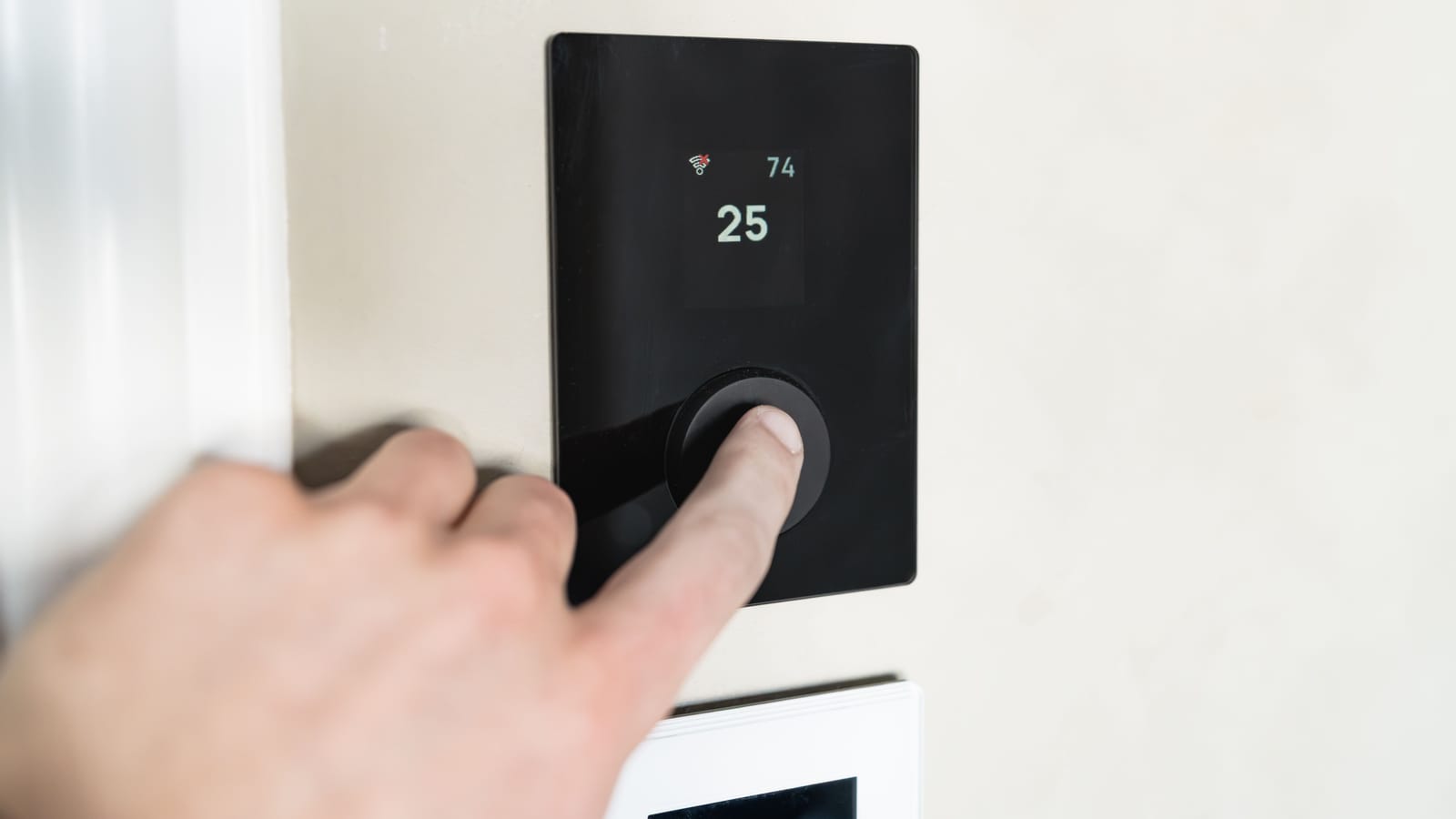
A smart thermostat, if your schedule varies. If someone is home all day every day at the same temperature, a programmable dial does the job. If the house empties at 8am on weekdays and fills up at 4pm, and you go away for long weekends, scheduling and remote control genuinely cut waste. Buy one with a proper physical interface. Buy one your HVAC system supports, and check the C-wire question before you order.
The lock question, answered carefully
A smart lock earns its place when it removes keys from circulation. Cleaner, dog walker, contractor, teenage kid, in-laws coming for a week. Codes you can issue and revoke beat spare keys under a rock.
Buy one with a real keyway as a backup. Buy one from a company that's been making locks longer than it's been making apps. Check the deadbolt grade, not the app rating. And understand the trade-off honestly: you've made your front door dependent on batteries and firmware. Change the batteries on a calendar, not when it warns you.
Where smart locks stop earning their place is interior doors, gates you rarely use, and anywhere you'd have to explain the process to a guest.
The kit that doesn't earn its place
Smart fridges, ovens and dishwashers. The appliance will last fifteen years. The software will be abandoned in four. You're paying a premium for a screen you'll ignore and a security liability you can't patch. Buy the appliance for the compressor, the racks and the repair network.
Smart kettles, toasters and coffee machines. The bottleneck was never the switch. It was you standing in the kitchen.
App-only lighting everywhere. A few smart bulbs on lamps you actually use are pleasant. Converting the whole house means every guest and family member has to learn a system, and someone will flick the wall switch and cut power to the bulb, and then nothing works. If you want whole-house control, put the intelligence in the switch, not the bulb, and keep the switch behaving like a switch.
Cameras pointed inside your own home. There are narrow cases, a nursery monitor being the obvious one. But an indoor camera is a recording of your family that lives on somebody else's server. Bedrooms and bathrooms aren't a gray area, ever, at any age, for any reason. If you do run indoor cameras, tell everyone who lives there, and choose a system with local storage.
Voice assistants in every room. One in the kitchen is useful for timers and lists. One in every bedroom is an always-on microphone in the most private part of the house, and it teaches kids to talk to a device instead of to a person. Draw the line somewhere and mean it.
Anything with a monthly fee for basic function. Recording history, arming and disarming, notifications: check which of those are free and which vanish on day thirty-one. Subscription creep across six devices adds up to a real bill for a house that worked fine before.
Build it in the right order
Pick one ecosystem before you buy your second device. Mixing three apps is how smart homes become a chore. Choose based on the phones your household already carries, then stay in that lane. Look for devices that support an open standard as well, so you're not stranded if one company folds.
Wire what you can. Doorbells, cameras, thermostats and hubs on power beat battery devices for reliability every time. Save the batteries for sensors that genuinely can't be wired.
Get the network right before the gadgets. Nothing makes a house feel broken like fifteen devices fighting over one router in a cupboard. Mesh coverage or a couple of access points, wired back if your walls allow, and a separate network for the connected devices so a cheap plug can't see your work laptop.
Change every default password. Turn on two-factor for the accounts that unlock doors. Write the admin details somewhere your spouse can find them without you, because the point of a household system is that it doesn't have a single point of failure named after you.
What goes wrong, and how it goes wrong
Firmware updates land overnight and change behavior you'd set up. A company gets acquired and the servers go dark. A hub dies and takes forty devices with it. A battery fails in the one sensor you needed. None of that's a reason to avoid smart home gear. It's a reason to keep the manual path intact on anything that matters: doors, heat, water, alarms.
The good version of this is quiet. Nobody in the house talks about the leak sensor until the night it goes off. Nobody thinks about the thermostat. The front door just works, and there's one less key floating around.
If you find yourself explaining your house to guests, you've gone too far. Take something out.
Dean Shaw
Gear & Garage
Reads the warranty, the parts list and the long-term owner reviews before anything else. Trucks, tools, watches, and the cheap version that costs more.

Watch
Watch how it's done
Picked for this article.
From channels we rate. Plays on YouTube.
Marques Brownlee
Smart Home Tech I ACTUALLY Use!
Eric Welander
If I Had to Start My Smart Home Over, Here's What I'd Buy
Read next