Fly Fishing Starts on a Lawn, Not a River
Learn to cast on grass, tie two knots, and fish water close to home. Here's how to start trout fishing with a fly rod without wasting a season.
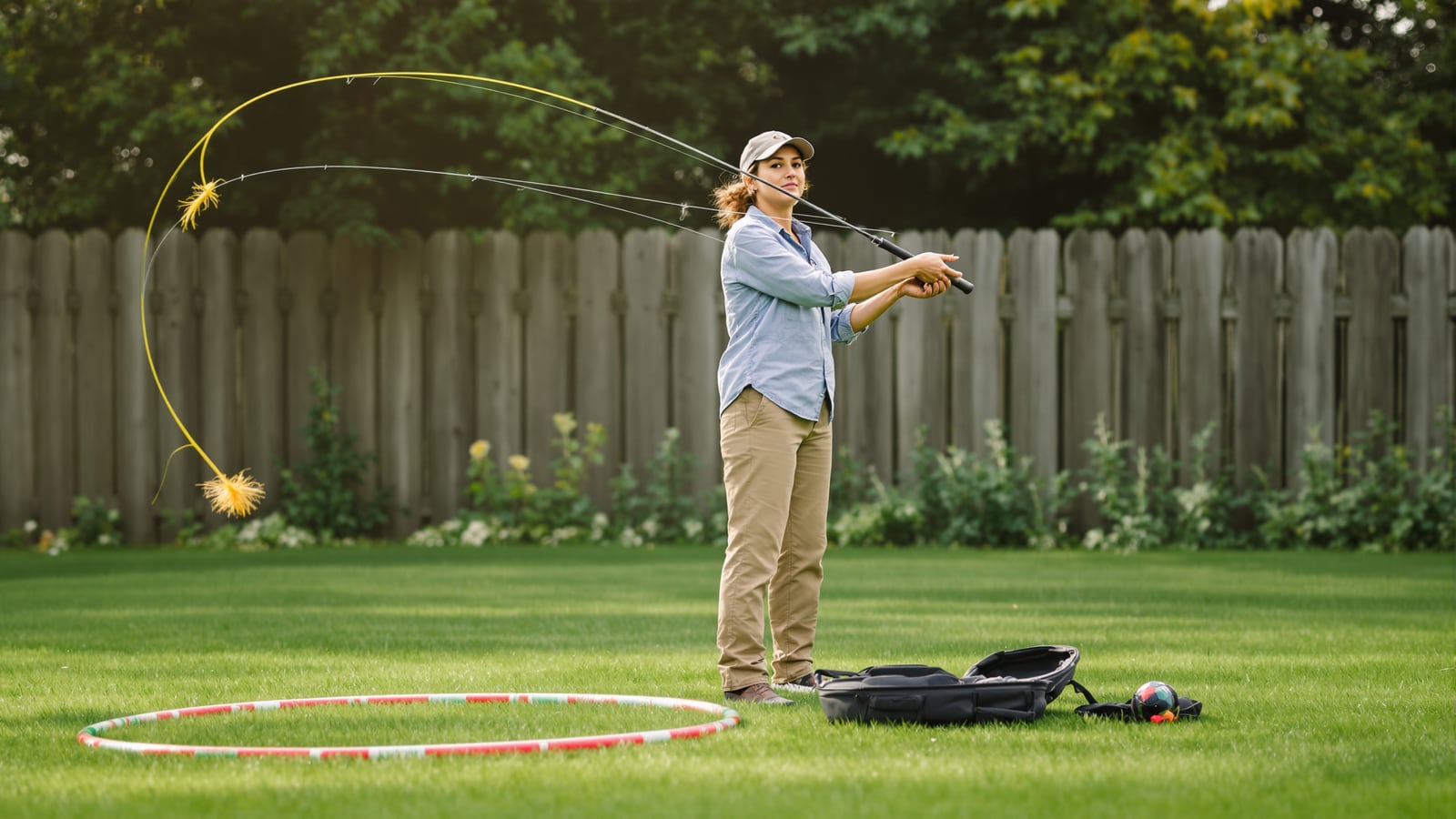
Quick answer: Buy a 9-foot, 5-weight outfit. Spend a week casting a piece of yarn on your lawn. Learn the improved clinch knot and the surgeon's knot. Then fish a small stocked stream or a dam-fed river within an hour of your house.
That's the whole plan. The rest is detail, and the detail is where beginners lose a summer.
Why people get hooked
Fly fishing is the one kind of fishing where you throw the weight of the line instead of the weight of the lure. That's why it feels odd for the first hour and strangely satisfying by the fifth.
You also have to read the place. A trout sits in a seam of slow water next to fast water, facing upstream, waiting for food to drift past. Once you can spot that seam, a river stops being scenery and becomes a puzzle you can solve. A good day might be six fish. A great day might be one, caught on a fly you tied the night before.
It's quiet. It gets a dad and a ten-year-old standing in a creek with nothing to say and no hurry to say it. It works for a wife who wants a morning outdoors that isn't a hike. Nobody needs to be strong or fast.
What it really costs
Expect somewhere between $250 and $500 to be fully outfitted. Prices move, so check current ones.
- Rod, reel and line outfit: Orvis Encounter and Redington Path are the kind of complete starter packages built for this. You want a 9-foot rod, 5-weight, with line already on the reel. A 5-weight handles most trout water in North America.
- Flies: a few bucks apiece at a fly shop. Start with four patterns: Woolly Bugger, Elk Hair Caddis, Pheasant Tail nymph and Adams. Buy a half dozen of each, in a couple of sizes.
- Leaders and tippet: a few packs of 9-foot 4X leaders and one spool each of 4X and 5X tippet.
- Nippers and forceps: nippers cut line, forceps pull hooks. Both clip to your shirt.
- Polarized sunglasses: they cut the glare so you can see fish and rocks. They also protect your eyes from a stray hook. They don't need to be expensive.
- License: buy it online from your state wildlife agency. Do it before anything else.
- Waders: skip them at first. In summer on a warm stream, old sneakers and quick-dry pants work fine. Buy waders when you've fished enough to know you're staying.
The mistake is buying a $700 rod because a forum told you to. You can't feel the difference yet, and you will drop it in a creek eventually.
Your first three things this week
- Buy the license and read the regulations for the water you plan to fish. Many streams require barbless hooks, limit what you can keep, or close for part of the year. Pinch the barb flat with your forceps and you're covered in most places.
- Cast on grass every day for fifteen minutes. Tie a two-foot piece of bright yarn to the end of your leader instead of a fly. No hook, no risk. Pick a spot with room behind you.
- Walk into a local fly shop and tell them you're new, what water you plan to fish and what you've bought. Ask what's hatching. A good shop will talk to you for twenty minutes and sell you six flies, and that's a fair trade.
Casting without the mythology
You'll hear "10 and 2," like the rod is a clock. It's a rough guide. The real rule is simpler.
Make the rod stop. The line follows the tip of the rod, and it only goes where the tip goes. A smooth push forward, then a firm stop, sends the line out. A rod that keeps drifting sends the line into a pile.
Keep your thumb on top of the handle and your elbow near your side. Lift the line off the water, then snap the rod up and stop it just past vertical. Then wait. Let the line straighten behind you. That pause is the whole secret, and it feels uncomfortably long at first. Then push forward and stop.
You'll rush it. Everyone does. If you hear a crack like a whip, you didn't wait. Slow down.
Don't try for distance. Thirty feet of clean cast will catch more trout than sixty feet of mess.
Two knots, that's all
Learn these at the kitchen table with a piece of tippet and a hook.
- Improved clinch knot: it ties your fly to the tippet. Pass the line through the eye, wrap it five times around itself, thread the tail back through the little loop by the eye, then through the big loop. Wet it with spit and pull it snug. Test it hard.
- Surgeon's knot: it joins a new length of tippet to your leader when the leader gets short. Overlap the two lines, tie a loose overhand knot with both together, pass them through a second time, wet it and pull.
Ask the shop to spool your line and tie the knot at the reel. That job isn't worth doing yourself in week one.
Finding trout in your region
Trout need cold, clean, oxygen-rich water. That narrows the search.
- Stocked waters. Your state wildlife agency publishes stocking schedules, usually online. A freshly stocked creek or pond near a city is the easiest first outing, and it's fine to start there.
- Freestone streams. Rocky mountain and hill-country creeks, in the Appalachians, the Rockies, the Northeast and the Pacific coast ranges. Wild fish, beautiful water, more challenge.
- Tailwaters. Rivers below dams, where the water is released cold from the bottom of the reservoir. They fish well in summer when other streams run too warm.
- Spring creeks. Slow, clear, rich in food, and found in places like the Upper Midwest's Driftless region and parts of the Rockies. The fish are picky.
Start small. Stand still for five minutes before you cast. Look for the seams, the slow water behind rocks and the deep cut under a bank. Fish the water nearest to you first, because beginners wade right past fish.
The beginner mistakes
- Yanking the hook set. Lift the rod tip calmly. Trout have soft mouths and fine tippet breaks.
- Casting too far. Close fish are easier to hook.
- Wading too deep. Slow down. A wet foot is a nuisance, a fall is a trip to the ER. A wading staff helps.
- Walking through the gravel in fall. Trout lay eggs in shallow gravel beds. Don't stomp on them.
- Ignoring the fish. If a trout is rising and refusing your fly, change the size before you change the pattern.
- Handling fish with dry hands. Wet your hands, keep the fish in the water, and let it go quickly.
Find your people
Trout Unlimited has chapters across the country, and most of them run beginner nights, cleanups and casting clinics. Many local fly shops host casting lessons or know the guys who'll show you a creek. Ask. A half-day with a guide, which is a reasonable splurge once, will teach you more than a month alone.
Follow the same etiquette you'd use anywhere you're a guest. If someone's working a run, walk around and give them room. Ask permission before crossing private land, the same as with metal detecting. Show up on time, bring coffee, and treat a new group the way you'd treat a new pickleball court: listen first, help set up and don't offer advice nobody asked for.
Leave the water better than you found it. Pick up the tangled line, the bait container and the soda can. Carry out a few pieces of somebody else's trash with your own.
Then tie on a fly, wait for the line to straighten behind you, and push forward.
Dean Shaw
Gear & Garage
Reads the warranty, the parts list and the long-term owner reviews before anything else. Trucks, tools, watches, and the cheap version that costs more.

Watch
Watch how it's done
Picked for this article.
From channels we rate. Plays on YouTube.
The Orvis Company
ORVIS - Fly Casting Lessons - The Basic Fly Cast
Orvis Guide to Fly Fishing
Fly Fishing Basics | How to Get Started !
Read next