How to Become a Diesel Mechanic and What It Really Pays
The licensing, the apprenticeship routes, the tools worth buying first, and the hazards that put techs in the hospital.
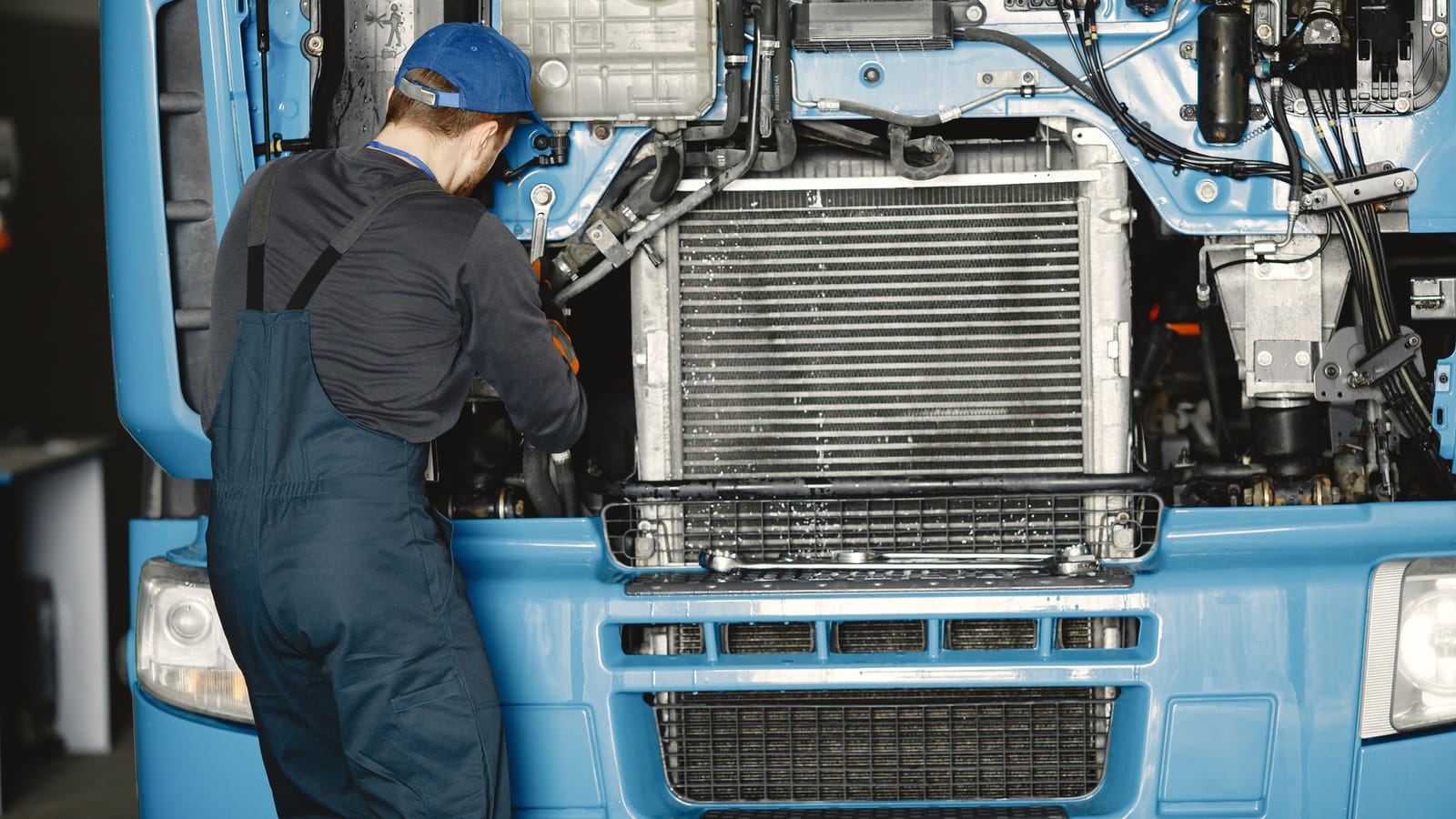
The money in this trade isn't in turning wrenches. It's in knowing which wrench to turn.
Any shop can find a guy who'll pull a starter. The tech who plugs a laptop into a Cummins X15, reads a derate code, and figures out in forty minutes that the problem is a chafed harness behind the DEF tank instead of a $2,400 sensor swap — that guy sets his own schedule. The Bureau of Labor Statistics puts the median for bus and truck mechanics and diesel engine specialists a little under $60,000 a year, with the top end north of $80,000. Those are national numbers and they lie to you in both directions. Look up your own state on the BLS occupational wage page before you plan anything, because a fleet tech in North Dakota and a school bus tech in rural Alabama aren't living in the same economy.
Flat rate is where the ceiling moves. A dealership tech billing flat rate who knows his book times and doesn't fight the same job twice can beat the hourly guy next to him by a wide margin. He can also have a terrible February when nothing but diagnostic work rolls in and the book pays four-tenths for an hour of thinking.
The credentials, and which ones are actually required
There's no universal state license to be a diesel mechanic. That surprises people. What you need depends on what you touch.
EPA Section 609 certification is federal and it's required to buy refrigerant or service a motor vehicle A/C system. It's an open-book test, usually under $30, and you can knock it out online in an afternoon.
Brake inspector qualification under FMCSA rules (49 CFR 396.25) is required if you're inspecting or certifying brakes on commercial vehicles. Your employer documents your training and experience. Take it seriously. Air brakes are the system most likely to put your name in a crash report.
ASE certifications aren't legally required, but they're the currency. The T-series runs T1 through T8 for medium and heavy trucks, plus the electrical/electronic one everybody should have. Hit all eight and you're a Master Medium/Heavy Truck Technician. Many shops pay a per-cert bump and cover the test fees. Some states also run their own commercial vehicle inspection licensing — New York, Pennsylvania and Texas all have inspection programs with their own certification steps. Check your state's DMV or DOT site, because this genuinely varies.
A CDL isn't required to be a mechanic, but it's required to road-test what you fixed. A tech who can drive the truck out the gate is more valuable than one who needs a babysitter. Since 2022, new CDL applicants have to complete entry-level driver training from a registered provider before they can take the skills test.
Ways in, ranked by how little debt you finish with
Registered apprenticeship. Earn while you learn, and you come out the other side with no tuition balance. Search apprenticeship.gov by ZIP code. Heavy equipment mechanic apprenticeships through the Operating Engineers are some of the best-kept secrets in the trades, and big municipal fleets, transit authorities and utilities run their own programs.
Manufacturer dealer programs. Caterpillar's ThinkBIG, John Deere Tech, Cummins and the truck OEM programs all partner with community colleges. You split time between class and a sponsoring dealer, and you typically walk into a job at that dealer. The catch: you're learning one brand's architecture deeply and everything else shallowly.
Community college diesel technology. Usually two years, usually cheap, usually broad. Fine foundation. It won't make you a tech. Your first eighteen months in a real shop will.
Start as a lube tech or a trailer guy. Least glamorous, and it works. You learn the shop, the paperwork, and who actually knows things. Plenty of the best heavy-duty techs in the country started by greasing fifth wheels.
What to buy first, and what to refuse to buy
Your first-year tool spend should be a couple thousand dollars, not ten. The guys who go broke in year one do it on the tool truck.
Start with a good digital multimeter. Not a $19 one. You want min/max recording and a decent build; a Fluke in the 80-series runs a few hundred dollars and it will outlive your truck. Modern diesel work is electrical work with grease on it. Buy the meter before the chrome.
Then:
- 1/2-inch impact, cordless or air. A high-torque cordless from one of the big battery platforms is around $400 for the bare tool, and it's worth it for road calls.
- 3/8-inch stubby impact. You'll use it more than anything else you own.
- Deep impact sockets in metric and SAE. Heavy trucks mix them shamelessly. You'll need 33mm for wheel nuts and you'll need a 3/4-drive setup for wheel torque, because spec is commonly in the 450 to 500 ft-lb range.
- A real torque wrench, click-type, and a second one for the big stuff. Mid-priced brands do fine here. Get it calibrated.
- Flare nut wrenches and long combination wrenches up through 1-1/4 inch.
- A pry bar set, brass drift, dead blow, air hammer.
The scan side is the expensive part. A universal heavy-duty adapter like a Nexiq USB Link runs over a thousand dollars, and OEM software subscriptions — Cummins INSITE, Detroit Diesel Diagnostic Link — run into four figures per year. Most shops provide this. Ask in the interview. A shop that expects you to buy your own OEM licenses is telling you something.
Never finance hand tools. Tool truck payment plans feel painless at $40 a week and quietly cost you a fortune. Buy the box used. Buy sockets on sale. If the credit slip is longer than your arm before your first ASE test, you've made a mistake other men have made before you.
The things that actually hurt people
High-pressure common rail runs past 25,000 psi. A pinhole leak in a fuel line puts out a stream you can't see that will inject diesel straight through your skin. It doesn't hurt much at first. It's a surgical emergency, and the ER has to know it was a high-pressure injection injury, not a cut. Never run your hand along a line looking for a leak. Use cardboard.
Spring brake chambers hold enough stored energy to kill a man across a shop bay. Cage them before you touch them, and don't cut one open because you're curious.
Split rims belong in a cage. Every time. No exceptions, no "it's just a top-off."
Add the boring ones that get people anyway: chock the wheels, use rated stands and not the jack, prop the dump body, lock out the power before you stick a hand near a fan that can kick on during an active regen. DPF regeneration puts exhaust components north of 1,000°F, and nothing about a hot pipe looks hot.
The honest downside
It's cold in January and it's 110 degrees in the bay in July. Road calls come at 3 a.m. on the shoulder of an interstate with trucks going by at seventy. Your knees and your shoulders will file complaints by forty-five, and the guys who ignore ear protection at thirty regret it at fifty. If you hate reading wiring diagrams, you'll top out early and stay there.
If that doesn't scare you off, understand what you're buying. Freight moves or the country stops. Nobody has figured out how to offshore the man who fixes the truck that brings the bread, and nobody is going to.
Keep your tools sharp, keep your certs current, and don't let anybody tell you the four-year degree was the smart money.
Dean Shaw
Gear & Garage
Reads the warranty, the parts list and the long-term owner reviews before anything else. Trucks, tools, watches, and the cheap version that costs more.

Watch
Watch how it's done
Picked for this article.
From channels we rate. Plays on YouTube.
Adept Ape
Tips For Getting Started In The Diesel Mechanic Field.
RCGdiesel
So you wanna be a Diesel Mechanic! PROS & CONS
Read next