Pack the car by category, not by person
Five people, one trunk, and a system that loads in twenty minutes instead of two arguments.
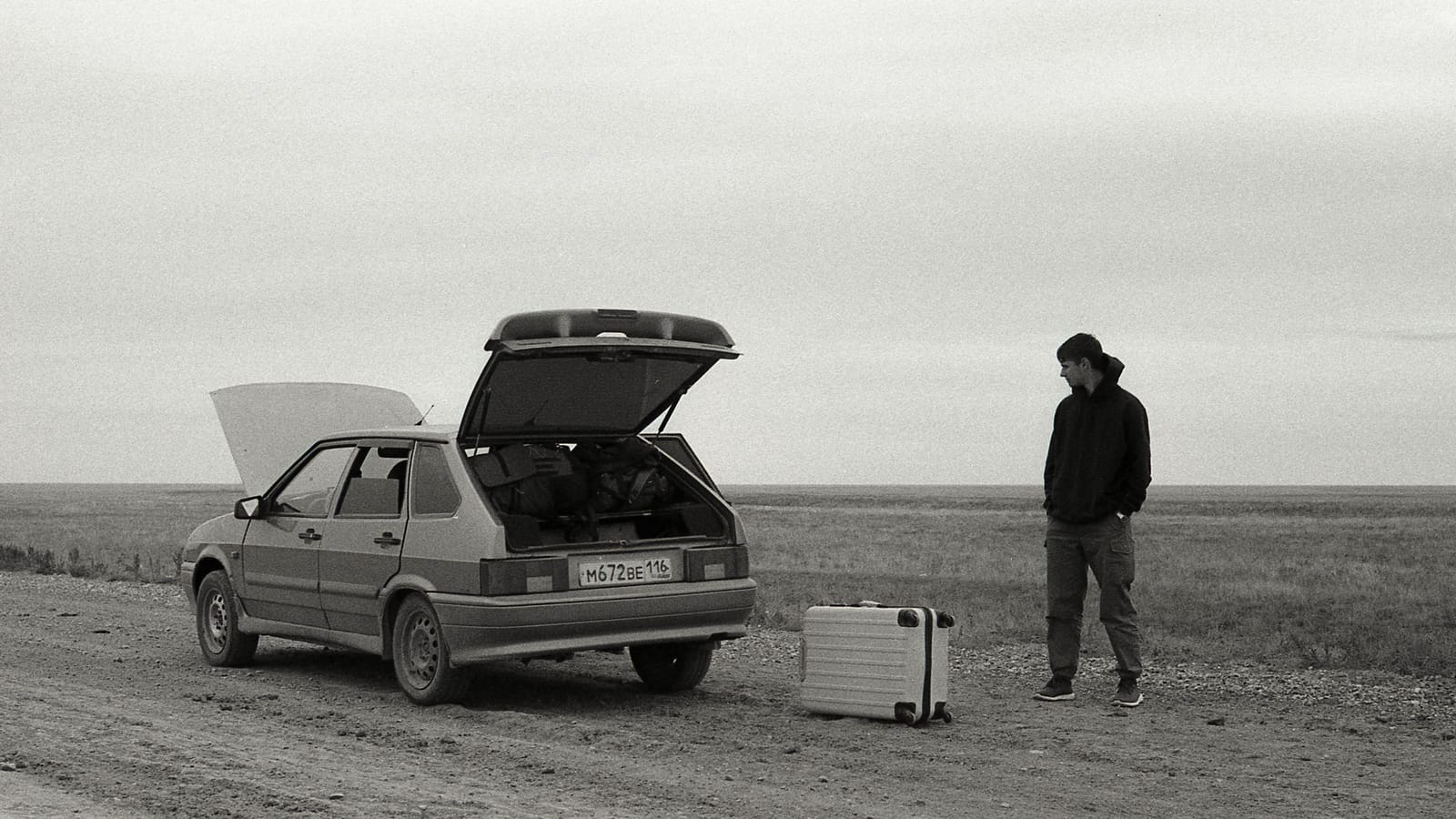
Five suitcases don't fit. Not in a midsize SUV with the third row up, not in most minivans once the cooler and the stroller are in, and definitely not once somebody's pillow gets a vote. The fix isn't a bigger car. It's giving up the idea that each person owns a bag.
Pack by category. All the clothes go in two large duffels. All the bathroom stuff goes in one bin. All the gear goes in another. Shoes get their own bag because shoes ruin everything. You end up with four or five large soft items instead of nine rigid ones, and soft items squash into the shape of your trunk. Hard-shell rollers don't squash. They dictate terms.
Measure the hole before you fill it
Open the back and actually look at it. Behind a raised third row you're working with something closer to a grocery run than a vacation. Behind two rows you've got real space, but you've also got a kid sitting on the floor, so that's not the trip.
Take a tape measure to the width between the wheel wells and the height from the floor to the bottom of the rear window. That second number is the one people ignore, and it's the one that matters. Anything stacked above the seat backs blocks your mirror and becomes a projectile in a hard stop. A seventy-pound pile of luggage at 60 mph doesn't stay put because you asked it to. Load to the seat-back line and stop.
Write those two numbers in your phone. When you're standing in the garage at 10 p.m. wondering if the big cooler fits, you'll have the answer instead of a theory.
The clothes math
Pack four days of clothes. That's it, no matter how long the trip is.
Four days for five people is twenty outfits, and twenty outfits in packing cubes fits in two duffels with room to breathe. Somewhere on day three or four you find a laundromat, a hotel machine, or a relative with a washer, and you spend ninety minutes and a roll of quarters. That ninety minutes buys you back half your trunk for the entire trip.
The objection is real: nobody wants to spend vacation time doing laundry. Fine. But you're going to spend that time anyway, either at a laundromat with a book or in a parking lot repacking a car that won't close. One of those has air conditioning.
Kids under about six get one extra full outfit each, sealed in a gallon zip bag, riding in the cabin. Not in the trunk. In the cabin, where you can reach it without unloading anything, because the reason you need it will happen forty miles from the next exit.
Cubes, and one cube per kid
Packing cubes aren't a gadget, they're a filing system. One cube per person inside the shared duffel, color-coded or labeled with a Sharpie. The nine-year-old grabs the blue one out of the duffel and takes it to the room. Nobody digs. Nobody unpacks the whole bag on a hotel bed at 11 p.m. looking for pajamas.
Roll everything. Rolled clothes fill the corners of a cube; folded clothes leave air pockets. You'll get maybe a third more in, and the wrinkles are about the same either way.
Underwear and socks go in one separate small cube for the whole family, sorted by size. It sounds odd until the first morning you don't have to open four cubes.
What rides up front
Build a cabin kit and protect it. A soft tote in the footwell or between the middle-row seats, holding:
- Wipes, paper towels, a full roll
- One contractor-grade trash bag plus a small one for the daily garbage
- Snacks that aren't melty or crumbly. Pretzels, jerky, apples, cheese sticks in a small soft cooler
- Water bottles, filled, one per person, refilled at every stop
- Motion sickness bags. Gallon zip bags work and seal
- Phone cables, a multi-port charger, headphones
- A paper map of the route. Yes, paper. Cell service dies in the places you most want to know where you're
- A small first aid kit with children's fever reducer, bandages, tweezers
Everything else in the cabin should be soft or stowed. No hard cases on the seats, no loose thermoses. If it's heavy and it's loose, it's a hazard.
The one bin you'll be glad about
A 27-gallon tote with a snap lid, the kind stacked by the door at any hardware store for about twenty bucks. That's your gear box: sunscreen, bug spray, a roll of duct tape, a headlamp, work gloves, jumper cables if they're not already in the car, a tire gauge, zip ties, a couple of microfiber towels, a small tarp. Any SPF 30 or higher beats none, but make it a mineral one (zinc oxide), like Blue Lizard Sensitive Mineral SPF 30 or Thinksport SPF 50, which are gentler on sensitive skin.
The lid is the point. It stacks. You can put a duffel on top of a snap-lid tote and it won't crush, which is how you use the vertical space without piling soft bags into an avalanche.
If you carry a firearm, it travels locked, secured, and legal for every state on your route, and you look up those laws before you leave, not at a gas station in a state you didn't plan to enter. Reciprocity maps change. Check yours the week of the trip.
Load it in the right order
Heavy and low and forward, against the seat backs. Coolers on the floor, never stacked. The bag you need first goes in last, right at the tailgate, and there's only one of those: the overnight bag.
The overnight bag is the whole trick to multi-night drives. One duffel with pajamas, toothbrushes, and tomorrow's clothes for all five people. At a hotel you carry in one bag and one cooler instead of unloading the car and reloading it at 7 a.m. in the rain. Repack it each morning from the main duffels while the kids are eating the free waffles.
Shoes go in a drawstring bag, wedged in a wheel well gap. Wheel wells are dead space otherwise.
The roof box question
A roof box adds real volume and costs you real fuel economy, noise at highway speed, and about four inches of height you'll forget about until you're at a parking garage entrance with a 6'8" bar. It's also the worst place to put anything you might want during the day, because retrieving it means standing on a running board in a parking lot.
Use one for bulky, light, once-a-day items. Sleeping bags, pillows, beach chairs, coats. Never the cooler, never the medicine, never the overnight bag.
If you're taking one trip a year, rent or borrow before you buy.
Leave these home
The full-size stroller if the kids can walk more than a mile. A carrier or an umbrella stroller covers most of it. Beach towels, if the rental has towels, and read the listing to find out. The pack-n-play if you're staying somewhere that provides a crib, and call and ask instead of assuming. More than two pairs of shoes per person. Books you won't read. A second cooler.
And the "just in case" pile by the garage door. Everything in it's available at a Walmart within twenty miles of wherever you're going.
The car that closes on the first try is the car that leaves on time. Everything after that's just driving.
Nina Castellan
BRO for Her
Runs the women-facing desk. Same standard, same tools, written for a different reader — not a softer one.

Watch
Watch how it's done
Picked for this article.
From channels we rate. Plays on YouTube.
Consumer Reports
How to Pack Your Car Like a Pro | Consumer Reports
Skogman Family
Family Road Trip Planning - How to Pack and Organize a Mini-Van
Read next