

The cabin's cheaper in October. Ask these questions first
Shoulder season can cut the nightly rate hard, but the cabin was built for the other months. Pick the week by the nights and vet the place before you pay.
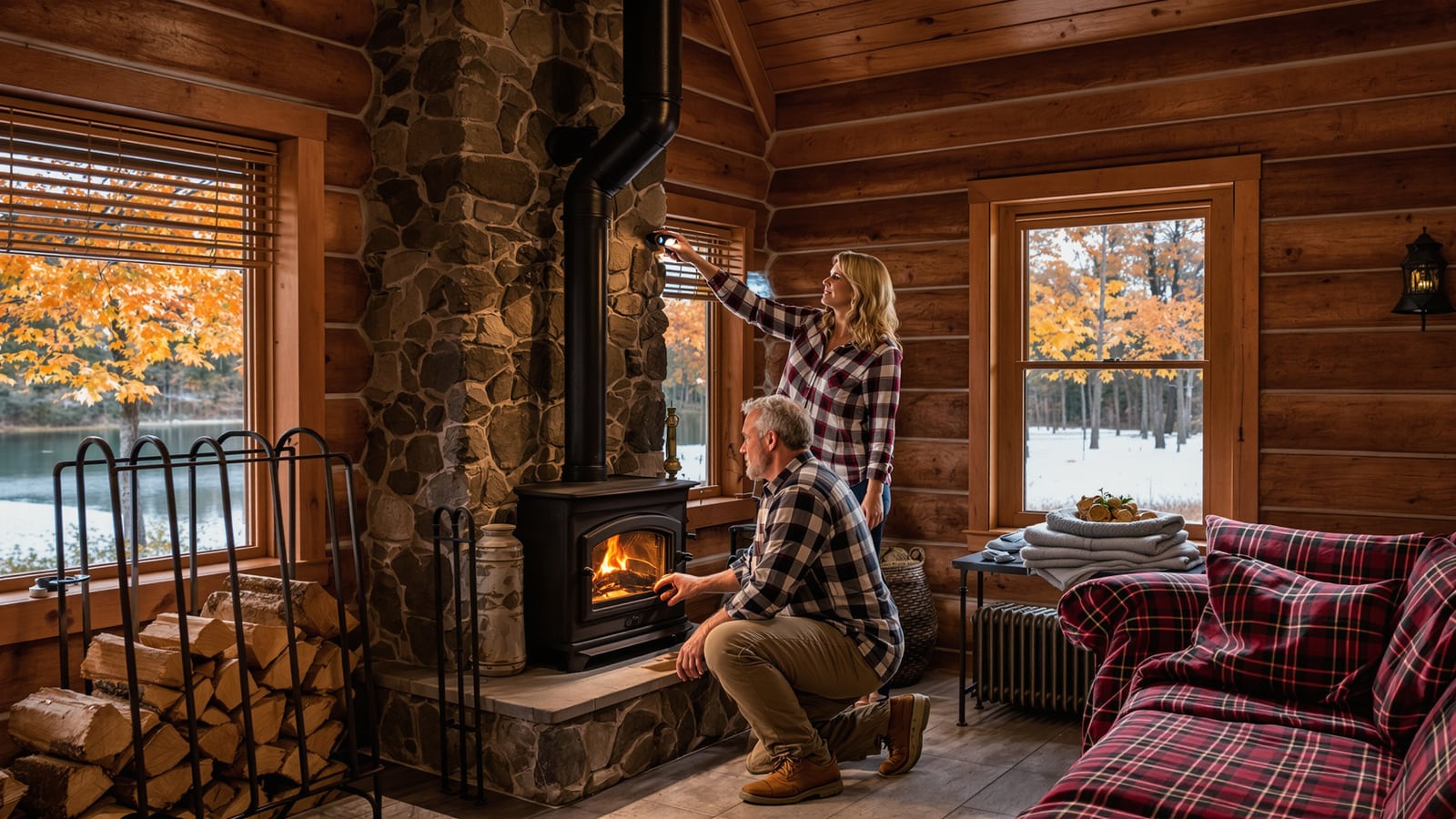
Quick answer: Book the two or three weeks on either side of a destination's peak, and choose the exact dates by overnight lows and sunset time, not daytime highs. Then message the host six questions before you pay a dollar. The discount is only a deal if the cabin works in that season.
The discount is real. So is the catch.
Say a cabin lists at $300 a night in July and $190 in the third week of October. That's a real drop, and over four nights it pays for the groceries, the firewood and a decent steak dinner out. Hosts drop rates because the demand is gone, not because the place got worse.
But the cabin was designed, furnished and marketed for summer. The deck photos were shot in June. The "short walk to the lake" is a short walk to a lake you won't swim in. The hot tub may be drained. The water line may be shut off to keep pipes from freezing.
So the question isn't "how much is it?" It's "what am I actually getting for that number in the week I'm going?"
Pick the week by the nights
Daytime highs flatter you. Fifty-eight degrees and sun feels great on a trail at noon. At 9 p.m. around a fire it's thirty-four, and the cabin's heat source decides whether your trip is cozy or a lesson.
Check the forecast history, not just the forecast. Look at the typical overnight low for that town for the dates you want. If it dips near freezing, you need to know about the heat, the insulation and the water.
Then check sunset. The clocks go back the first Sunday in November, and after that it's dark before five in much of the northern U.S. A cabin weekend with a four-hour window of usable daylight is a different trip from one with eight. Plan the long hike for the morning, and make the evening the point: cards, a real dinner, a fire.
Mud season isn't fall
Late fall and early spring both get called shoulder season, and they aren't the same animal.
Fall is usually the easy one. Roads are dry, bugs are gone, the air is clean. Spring is where people get burned. Snowmelt turns dirt roads to soup, trails close to protect them, creeks run high and cold, and the mountains can still throw a late snowstorm at you in May. A rental at the end of a mile of unpaved road is a gamble in April that it never was in September.
If you book spring, pick lower elevation and a paved road. If you book fall, check whether the local hunting seasons overlap your dates. Lawful hunting is part of the character of these places, and you'll hear it at dawn. Put blaze orange on anybody hiking, kids and the dog included, and stick to trails you know.
Also ask about seasonal road and pass closures. Some close for winter on a date set by snow, not the calendar. If the quick route in is shut, your three-hour drive may be a five-hour one.
The six questions to send the host
Write them in one message. A good host answers in a few minutes and a lazy one tells you what you need to know about the stay.
- What heats the place, and who stocks it? Wood stove, propane, electric baseboard. If it's wood, is it split and dry, and how much comes with the rental?
- Is the water on, and is there hot water? Some owners winterize early. Ask outright.
- What's closed? Hot tub, boat dock, kayaks, the restaurant down the road, the general store. Many local places run reduced hours or shut entirely after Labor Day.
- How's the road in the last few miles? Paved, gravel, or dirt. Do you need all-wheel drive?
- What's the cell and internet situation? Matters if somebody has to work Monday morning, and matters more for a weather check.
- What happens if the weather or a road closure keeps us out? Get the refund policy in writing before you book.
Ask the sixth one even if it feels like bad luck to ask. It's the one that costs real money.
Read the listing for what it hides
Scroll the reviews and sort by newest. You want the people who stayed in the cold months. Their complaints are your forecast. "Was chilly at night" or "the road was rough after rain" is gold. Five-star summer reviews tell you almost nothing about October.
Look at the photos for a heat source. Look for a covered porch, a mudroom or a place to hang wet jackets. In shoulder season, you'll spend more time inside than the listing wants you to think about, so count the seats, the beds, the board games and whether the kitchen has real pots.
Ask for more than the sticker
Shoulder rates are soft. That gives you room.
Message the owner direct if the platform allows it. Ask whether a fifth night comes at a discount, or whether a midweek stay can start a day early. Owners with empty weekdays say yes more than you'd guess. Be polite and ask once. If the answer is no, book it anyway if the place is right. You're not trying to win a haggle, you're trying to get a fair deal and leave the host glad they had you.
Be firm on the other side too. If you arrive and the listing promised a working fireplace and the flue is blocked, or the heat is out, don't just grin and bear it. Take a photo, message the host and platform right away, and ask for a fix or a partial refund. You can be easy to deal with and still not get taken.
Pack for the season the cabin doesn't advertise
Bring wool socks, a real jacket for everyone, rain shells and a spare pair of boots. Bring a good flashlight or two, because rural dark is darker than you remember. Bring matches, a lighter and fire starter even if the host says wood is provided. Pack a first-night dinner that needs only one pan, since you'll arrive late and tired. If you're hauling kids, the rules in Three hundred miles a day, and other rules for driving with kids apply double on dark country roads.
Plan one anchor activity per day and leave the rest empty. A cabin trip falls apart when you schedule it like a theme park. If it's the family trip you've been promising, the advice in How to plan a trip your wife actually wants to be on is worth ten minutes before you click Book. And if you're doing a long drive to get there, Planning a road trip that's still fun on day four covers the stretches in between.
Leave it better than you found it
Cabins in off-season run on thin margins and one cleaner, so you're a guest in someone's livelihood. Run the dishwasher or wash up before you go. Strip the beds if the host asks. Replace any firewood you burned beyond what came with the stay, and stack what's left in a neat pile. Sweep the porch. Take your trash out to the bin instead of leaving it for the cleaner.
That bag of split oak you left on the porch is the reason you get invited back at the same rate next fall.
Dean Shaw
Gear & Garage
Reads the warranty, the parts list and the long-term owner reviews before anything else. Trucks, tools, watches, and the cheap version that costs more.

Watch
Worth an hour of your evening
More from Travel.
From channels we rate. Plays on YouTube.
Read next