What to fix yourself and what to put in writing
A running toilet, a dead outlet, a chirping smoke detector. Most of it takes ten minutes and a screwdriver. Some of it you should never touch.
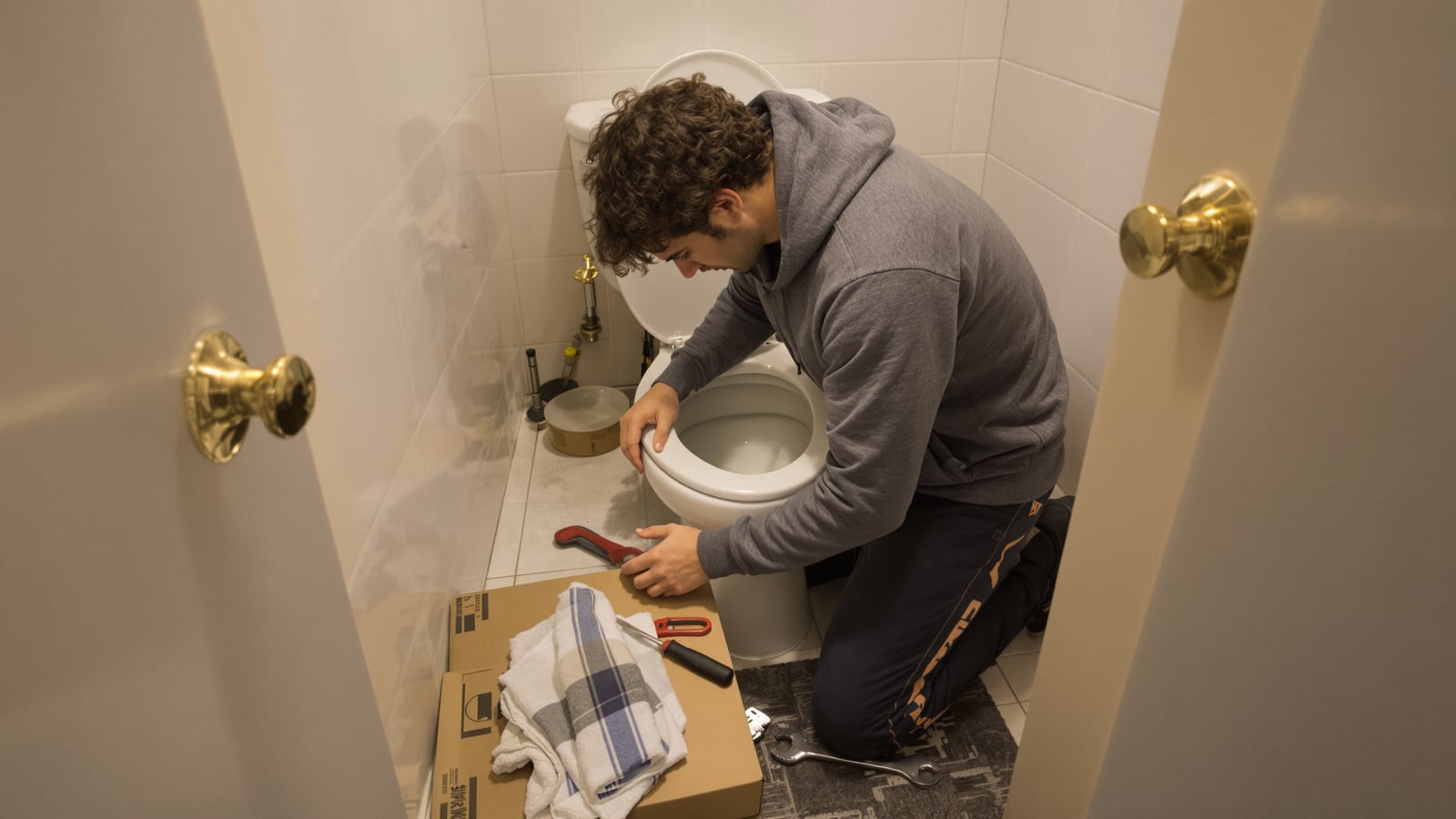
Quick answer: Fix what's cheap, reversible and inside the apartment. Report anything involving gas, the electrical panel, the roof or the heating system, and put it in writing with photos. Read your lease before you pick up a tool.
A toilet that runs all night sounds like a small problem until the water bill shows up. Or until you text the landlord at 11 p.m. and learn he'll get to it Thursday. The fix is a rubber part the size of your palm and about fifteen minutes of your time.
Most of what goes wrong in a rental is like that. It's small, it's boring, and it only becomes a problem when nobody does anything about it.
Read the lease first
Before you fix anything, find the section on maintenance and repairs. Some leases make you responsible for small stuff like bulbs, filters and drain clogs. Some forbid any alteration at all. Some say you must report problems within a set time.
The rules differ by state and by landlord, and I can't tell you what yours says. If it's unclear, ask. A short text works: "Toilet's running. I can swap the flapper myself if that's fine with you." Landlords tend to love that message. It tells them they have a tenant who handles things.
If you ever have a real dispute over repairs or your deposit, that's a question for a local tenant-rights office or an attorney. Don't wing it.
The kit that covers most of it
You don't need a garage full of tools. You need a small box that lives under the sink or in a closet:
- A #2 Phillips screwdriver and a medium flathead
- An adjustable wrench
- Slip-joint pliers
- A flange plunger (the kind with a fold-out rubber sleeve, not the flat cup)
- A tape measure
- A flashlight that isn't your phone
- A tub of spackle and a small putty knife
- A utility knife
That's the whole list. Buy decent versions once and they'll follow you through three apartments and your first house. Putting them back in the box after every job matters more than any single tool. The first time you can't find the screwdriver, you'll understand why.
Ten-minute fixes worth knowing
The running toilet. Take the tank lid off and drop in a little food coloring. Don't flush. If color shows up in the bowl after fifteen minutes, the flapper is leaking. Shut off the little valve behind the toilet, flush to empty the tank, unclip the old flapper and take it to a hardware store. Get one that matches. Clip it in, open the valve, done.
The clogged toilet. Use the flange plunger. Get the rubber sleeve seated in the drain, push down gently first to clear the air, then pull up hard. Repeat. Don't flush again until the bowl drains, or you'll flood the floor.
The slow sink. Pull the stopper and clean it. You'll be disgusted by what comes out, and the sink will drain fine afterward. Skip the chemical drain cleaners. They can burn your skin, and if they don't work, the plumber has to work in whatever's left in the pipe.
The dead outlet. Look for an outlet in the kitchen or bathroom with two small buttons on it. That's a GFCI, and one of them is a reset. Often it tripped and shut down every outlet downstream. Press reset. If it trips again right away, stop. Something's wrong, and it's not your project anymore.
The chirping smoke detector. A chirp every minute or so usually means a weak battery. Swap it. If it keeps chirping, tell the landlord, because the unit itself may be at the end of its life. Check the date printed on the back. Never pull the detector down and leave it down. You're sleeping under it.
The loose cabinet door. When a hinge screw spins without biting, the hole is stripped. Dip two or three toothpicks in wood glue, push them into the hole, snap them off flush and drive the screw back in. It holds better than the original.
The furnace filter. The size is printed on the edge of the old one. Slide the new one in with the arrow pointing toward the furnace. Write the date on the frame. Ask your landlord first who buys them, because in plenty of rentals he does.
The three questions before you start
You don't need to guess. Ask:
- Can I undo it? A flapper swap can be reversed. Cutting into a wall can't.
- What's the worst case? Water on a floor is annoying. A fire isn't.
- Could I explain it to the landlord without wincing? If the honest answer is no, don't.
If all three come out clean, go ahead.
What you leave alone
Anything with gas. If you smell it, walk out, leave the door open behind you and call the gas company or 911 from outside. Don't flip a light switch on the way.
Also leave these to the landlord and the licensed people he hires: the electrical panel, any outlet that sparks or smells hot, the water heater, the furnace or air conditioner internals, roof leaks, anything structural, and a mold patch bigger than a dinner plate.
It isn't that you couldn't learn these. Some people do, and they get paid well for it. If that sounds like you, look at the trades that can't find people and what they actually pay. But a rental isn't where you practice on a gas line.
Put it in writing either way
Whether you fix it or report it, leave a trail. Take a photo before you start and another when you're done. Send a short text or email with the date: "Replaced the flapper in the hall bathroom today, was running constantly. Old part's in the trash. Let me know if you want the receipt."
That one message protects you. If a small fix fails later, nobody can say you hid it. If the landlord drags his feet on something real, you've got a dated record that you reported it. Keep the receipts too.
And if you break something, say so. Fast. A cracked tile you mention on day two is a conversation. A cracked tile found at move-out is a deduction and a reputation. The man who tells you about his own mistake is a man you'd rent to again.
The side effect
This is where the habit starts paying. What moving out costs and what to do in the first month covers the money side. The repair side is quieter. Every time you handle something yourself, you stop being the guy who waits for someone else to fix his life. You get a little calmer, a little harder to rattle.
When you leave a place, leave it better than you found it. A drawer that closes right. A toilet that's quiet. A smoke detector with a fresh battery. The next guy won't know your name, but you will.
Sam Ortiz
Dads & Family
Father of three. Writes about presence, discipline and the long game, without pretending any of it's tidy.

Watch
Worth an hour of your evening
More from Young Men.
From channels we rate. Plays on YouTube.
Read next