How the Bible Came Together and Why You Can Trust It
Manuscripts, canon, councils and the two passages your Bible puts in brackets — an honest walk through how we got the book.
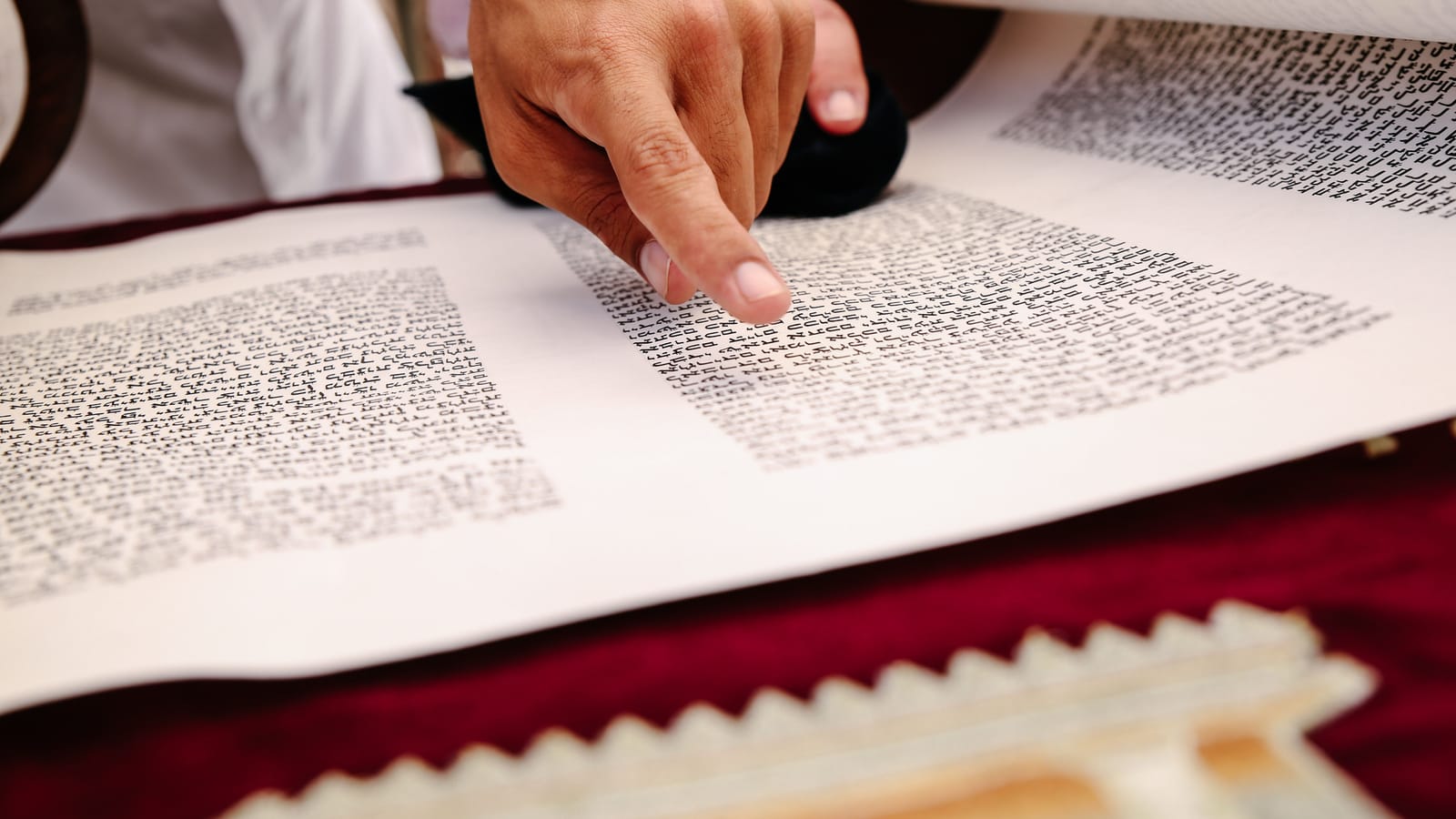
In a library in Manchester, England, there's a scrap of papyrus about the size of a credit card. It's catalogued as P52. Written on both sides, in Greek, is a piece of a conversation between Jesus and Pontius Pilate from John chapter 18, including the part where Pilate asks, "What is truth?" Scholars generally date it to the first half of the second century. That's a copy of John's Gospel circulating in Egypt within living memory of people who knew the apostles.
That fragment doesn't prove Christianity. But it kills a certain story you may have heard, the one where the Gospels got written centuries later by politicians who wanted control. The paper trail is older and messier and far more interesting than that.
If you've ever had a coworker say "the Bible's been copied and changed a thousand times," and you didn't have an answer, this is the answer. It takes about ten minutes to learn and you'll have it for life.
Two different questions, and people mix them up
Question one: is the text we have today the text that was originally written? That's a manuscript question. Ink, papyrus, copying, comparison. You can investigate it the way you'd investigate any ancient document.
Question two: which books belong in the Bible at all? That's the canon question. Different problem, different evidence.
Most arguments about Scripture go sideways because somebody answers question one when they were asked question two. Keep them separate and the fog clears fast.
The Old Testament was settled long before the councils
Jesus treated the Hebrew Scriptures as a closed, known collection. After the resurrection He tells the disciples, "These are my words that I spoke to you while I was still with you, that everything written about me in the Law of Moses and the Prophets and the Psalms must be fulfilled" (Luke 24:44, ESV). Law, Prophets, Writings. That's the threefold Hebrew Bible, referenced as a thing everyone in the room already recognized.
For centuries the oldest complete Hebrew manuscripts we had were medieval, copied by the Masoretes around the tenth and eleventh centuries. Skeptics had a fair question: how do you know a thousand years of scribes didn't drift?
Then in 1947 a Bedouin shepherd threw a rock into a cave near the Dead Sea. The Qumran discoveries gave us Hebrew manuscripts roughly a thousand years older than anything we had, including a complete scroll of Isaiah. Scholars compared it line by line with the medieval text.
It matched. Not letter-perfect. Spelling differences, some word order, a handful of readings worth a footnote. But the book was the same book. A thousand years of hand copying and the message never moved.
The church recognized the New Testament, it didn't manufacture it
Here's what actually happened, and it's slower and more organic than a committee vote.
The apostles wrote letters and the churches passed them around. Paul tells the Colossians to swap letters with the church in Laodicea. Within the New Testament itself you can watch the recognition happening in real time. Peter refers to Paul's letters and says people twist them "as they do the other Scriptures" (2 Peter 3:16, ESV). Paul quotes Deuteronomy and then quotes a line found in Luke's Gospel, and calls both of them "the Scripture" (1 Timothy 5:18, ESV).
Luke tells you his own method up front. "Inasmuch as many have undertaken to compile a narrative of the things that have been accomplished among us, just as those who from the beginning were eyewitnesses and ministers of the word have delivered them to us, it seemed good to me also, having followed all things closely for some time past, to write an orderly account for you, most excellent Theophilus, that you may have certainty concerning the things you have been taught" (Luke 1:1-4, ESV). Eyewitnesses, investigation, orderly account, certainty. That's a historian's prologue.
The churches applied rough tests without ever writing them on a wall. Was it apostolic, meaning written by an apostle or someone in his circle? Was it received and read publicly by the churches broadly, not just one corner? Did it agree with the faith already delivered?
By the late second century, a damaged Latin document called the Muratorian Fragment already lists most of the books we use. In AD 367, Athanasius of Alexandria wrote a festal letter naming exactly the 27 books of our New Testament. The councils at Hippo in 393 and Carthage in 397 affirmed the same list.
Notice the order. The list existed in practice, and the councils recognized what the churches had been reading for generations. No emperor picked your Bible.
The variants, said out loud
You deserve the uncomfortable part, because you'll find it yourself eventually.
Open your Bible to Mark 16. In most modern translations, verses 9 through 20 sit inside brackets with a note saying the earliest manuscripts don't include them. Do the same at John 7:53 through 8:11, the woman caught in adultery. Same brackets, same note. If you grew up on the King James, look up 1 John 5:7 and then check it in an ESV or NASB. It's shorter. That addition entered the Latin tradition late and isn't in the early Greek.
That's the honest picture, and the honest picture is the strong one. We have thousands of Greek New Testament manuscripts, plus early translations into Latin, Syriac and Coptic, plus mountains of quotations in the church fathers. Great fourth-century codices like Sinaiticus and Vaticanus survive nearly complete.
With that much evidence you can see where copyists slipped. Most differences are spelling, word order, or a scribe writing "Christ Jesus" where the original said "Jesus." The handful of genuinely substantial passages are printed right there in your Bible with a footnote telling you the situation. Nobody hid them. No Christian doctrine stands or falls on any of them.
A text with no variants would mean one controlled copy and no way to check it. Abundance is what lets you audit.
Where Christians in good faith differ
Catholics and Orthodox include books Protestants don't: Tobit, Judith, Wisdom, Sirach, 1 and 2 Maccabees, and additions to Daniel and Esther. These were in the Greek Septuagint and used widely in the early church. Jerome had reservations and distinguished them from the Hebrew canon. Trent affirmed them in 1546. Protestants follow the Hebrew canon and treat those books as valuable but not Scripture. Orthodox lists differ again.
Sincere believers have held these positions for centuries with full seriousness. Learn the actual argument before you take a side, and don't treat a brother as a fraud over it.
Translation is a second disagreement, and a calmer one. Word-for-word versions like the NASB and ESV, thought-for-thought like the NIV and CSB. Both are legitimate approaches with real trade-offs. The KJV-only position goes further, and while its defenders love the Word, the manuscript evidence doesn't support the claim that one 1611 English edition is uniquely preserved.
Do this, not just read about it
Pick up your Bible tonight and read the footnotes on one page. That's it. Learn what the little letters mean, learn what your translation is telling you about the manuscripts. Most Christians have never once looked.
Then buy a study Bible with a real textual apparatus and actually read the book introductions you've been skipping.
And understand what this evidence can and can't do. Manuscripts show you the text is the text. They can't make you believe it's God's Word. That conviction comes another way, which Scripture itself says plainly: "All Scripture is breathed out by God and profitable for teaching, for reproof, for correction, and for training in righteousness" (2 Timothy 3:16, ESV). Jesus put it simpler. "My sheep hear my voice" (John 10:27, ESV).
That Isaiah scroll from the Qumran cave has chapter 40 in it. Copied before Christ was born, buried in a jar, dug out of the dirt after two thousand years, and it still says this: "The grass withers, the flower fades, but the word of our God will stand forever."
It's still standing. You can go check.
Josh Halloran
Christian Bro
Leads a mid-week mens group and has done for eleven years. Writes about faith as a practice rather than a position.

Watch
Worth an hour of your evening
More from Bible.
From channels we rate. Plays on YouTube.