A garage gym for five hundred dollars, item by item
Spend it in this order and you'll be squatting by Saturday. Spend it in the wrong order and you'll own a very expensive coat rack.
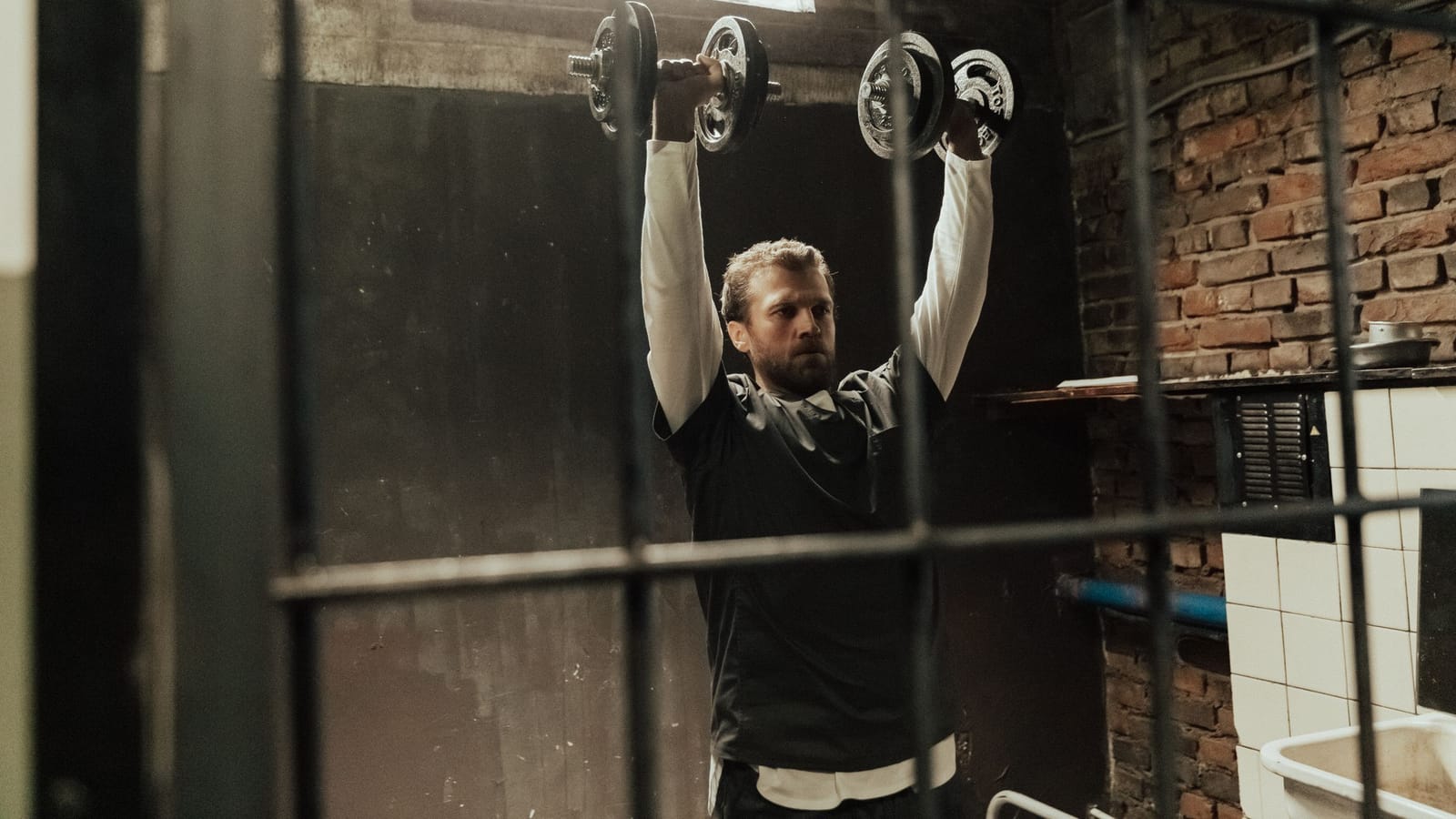
Spend it in this order: bar, weight, uprights, floor. That's the whole strategy. Everything else on the internet's list of essentials is something you can add in November when somebody asks what you want for Christmas.
Five hundred dollars won't buy you a powder-coated rack with a laser-engraved logo. It will buy you the ability to squat, press, deadlift and row in your own garage at 5:40 in the morning without putting on real pants. For a man with a job and small kids, that's the entire ballgame. The drive to the commercial gym is the reason you quit last time. Not motivation. Twenty-two minutes each way.
The bar comes first, and it's the one thing to be picky about
Budget around $150. This is the item where cheap actually costs you.
You want a 7-foot Olympic bar, 45 pounds, 2-inch sleeves, rated somewhere north of 1,000 pounds. The junk bars in the sporting goods aisle are often 6 feet, thin, and they take a permanent bend the first time you deadlift 275. A bent bar is garbage forever. You can't straighten it in your driveway, no matter what the video says.
Buying used? Three checks, in the seller's driveway, before money changes hands:
- Roll it on flat concrete. A bent bar wobbles like a dropped quarter. Walk away.
- Spin the sleeves. They should turn with a flick. Grinding means shot bushings.
- Run a thumb across the knurl. Surface rust wipes off with a nylon brush and 3-in-1 oil. Pitting that catches your nail is a bar that's been sitting in a flooded basement.
Skip anything advertised as a "300 lb weight set" at a suspiciously good price. Those are almost always 1-inch standard bars with 1-inch plates, and that hardware is a dead end. Measure the hole in the plate. Two inches or keep scrolling.
Weight is the part you buy used, always
Budget $200. You're shopping for old iron, and old iron doesn't go bad.
The rough rule of thumb most of the country runs on is about a dollar a pound for used plates, cheaper in farm towns, worse near a city. Prices climb in January when everybody's resolution kicks in, and they soften in the fall. If you're reading this in October, you're shopping at the right time.
Two hundred to two hundred and fifty pounds is enough to start. That's typically four 45s, a pair of 25s, a pair of 10s and a pair of 5s. If you've never trained seriously, that covers you for the better part of a year. When your deadlift outgrows it, buy two more 45s. Iron is a subscription you pay once a year for the rest of your life.
Buy bumper plates later or never. They're excellent, they cost two to three times what iron costs, and unless you're doing Olympic lifts you don't need to drop the bar. You need to set it down.
Bring a hand truck. I once loaded 315 pounds of plates into a sedan trunk in a stranger's driveway in Ohio and drove home with the rear bumper about four inches off the pavement, headlights pointed at the treetops. Take the truck. Take a friend. Take both.
Uprights, not a full rack
Budget $100. You want something that holds the bar at shoulder height and catches it if you miss.
A used pair of squat stands is the sweet spot at this number. A full four-post rack for a hundred dollars exists, but it's usually somebody's 1998 basement special with a wobbly weld, and you'll be moving fast to grab it.
Two things to check before you buy. First, ceiling height. Measure from the concrete to the lowest thing over your head, which is usually the garage door track or an opener rail, not the actual ceiling. You need to press a bar overhead standing up. Eight-foot ceilings work for most men. Six-foot-four and eight-foot ceilings is a conversation you should have before you buy, not after.
Second, safeties. Independent flat-footed stands can tip if you re-rack hard on one side, and stands without spotter arms mean you have no way out of a failed squat. If your setup has no catch, train the squat and press inside your ability to stand back up, and floor press instead of bench pressing. A floor press off the ground with the bar over your chest and nobody home is a genuinely bad idea. Don't.
Flooring, and the mistake everybody makes
Budget $50, and put it in one place.
Skip the gym-store rubber tiles. Go to a farm supply store and buy a horse stall mat. They're 4 by 6 feet, three-quarters of an inch thick, weigh about a hundred pounds each, and they're the same rubber every commercial gym in America uses. One mat under the bar is enough to start. Two is better.
They smell. For about a month, your garage will smell like a tire shop. Hose them, leave them in the sun a few days, and it fades.
Cutting them is the part nobody warns you about. A fresh utility knife blade, a metal straight edge, and about six passes per cut. Buy a ten-pack of blades. You'll use four on one mat, and a dull blade on wet rubber is how people end up in urgent care.
What's left, and what you skip
Collars, $15. Spring clips work fine. The pinch-lever plastic ones are better and still cheap.
That's five hundred dollars, more or less, and it doesn't include a bench. Correct. A bench is nice and you'll want one, but a used flat bench shows up on Marketplace for thirty or forty bucks constantly, and until then you can row, press overhead, squat, deadlift and floor press. That's a complete training program for a guy with two kids and a commute.
Also skipped: dumbbells, a mirror, a cable machine, a pull-up bar, and anything with the word "system" in the product name. A joist-mounted pull-up bar is the first upgrade worth making, and it's usually under forty dollars plus four lag bolts into an actual joist. Find the joist with a stud finder, then confirm with a nail. Drywall anchors won't hold you.
The part that decides whether this works
The garage gym doesn't fail because the equipment is cheap. It fails because it becomes a shelf. Bikes get parked on the platform. The plates end up under a tarp behind the lawn mower.
So keep a bar loaded. Sounds silly. It works. If 135 is already on the bar when you walk out there, the cost of starting drops to almost nothing, and on the mornings when you've got nine minutes and a toddler who just woke up, nine minutes of squats still counts. The perfect session you skipped counts for zero.
One honest caveat: if you've got a history with your back, shoulder or knees, get a physical therapist or your doctor to look at you before you load a bar in a room with no staff in it. That's a thirty-minute appointment, not a lifestyle.
Nobody has ever regretted buying the plates. They regret the eight months they spent pricing them.
Cal Brennan
Fitness
Strength coach. Trains fathers, tradesmen and desk workers, which means programs that survive a bad week.

Watch
Worth an hour of your evening
More from Fitness.
From channels we rate. Plays on YouTube.
Read next