Heartburn at 2 a.m. is usually a dinner problem
Three changes, in order of payoff: when you eat, how you sleep, and the few foods worth cutting first. Plus when to stop fixing it yourself.
Quick answer: Finish eating three hours before bed. Sleep on your left side with the head of the bed raised six to eight inches. Cut the biggest triggers for two weeks, then add them back one at a time. If it still happens more than twice a week, see a doctor.
This is general information, not medical advice.
The dad dinner problem
Here's how it usually goes. Kids get fed at 5:30. You eat at 8:45, standing at the counter or sitting on the couch, after bath time, homework and the third glass of water request. Then you watch half an episode, brush your teeth and lie flat at 10:30.
You've just put a full stomach in a horizontal position and asked a small valve to hold it all down. At 2 a.m. it quits, and you wake up with a burning chest and a sour taste in your throat.
The valve is the lower esophageal sphincter, a ring of muscle between your esophagus and your stomach. Standing up, gravity helps it. Lying down, gravity switches sides. A big meal, certain foods, extra belly weight and alcohol all make the valve looser or the pressure behind it higher.
So the fix starts with the clock.
Timing: the three-hour rule
Leave about three hours between your last real meal and lying down. That's the standard advice from gastroenterologists, and it works because most of the stomach has emptied by then.
If your schedule makes that impossible, don't give up on it. Change the shape of the day instead.
- Eat dinner with the kids. A 6:00 dinner with the family is better for your chest and better for your house. Take the second helping at 6:00, not 9:00.
- Move your calories earlier. A bigger breakfast and lunch make a small dinner easier to live with. The protein problem is breakfast, not dinner covers how to do that without cooking a production every morning.
- If you work late, eat small. A bowl of oatmeal or a plain turkey sandwich at 9:30 beats a full plate at the same hour.
- Train earlier, or leave a gap. A hard evening session on a full stomach, especially anything with crunches or heavy squats, can push contents upward. Give yourself two to three hours after a meal.
The downside is real. Eating at 6:00 means you may be hungry again at 9:00. Have a banana or a handful of plain almonds, then stop. Don't reopen the kitchen.
Position: left side, head up
Two things matter here, and one popular fix doesn't work.
Sleep on your left side. The research is modest, but it's consistent enough to try for a week. On your left, the junction between the esophagus and stomach sits above the pool of stomach contents. On your right, it tends to sit in it. Your back falls in between. If you roll onto your right at night out of habit, a body pillow wedged behind you on the left keeps you from drifting over.
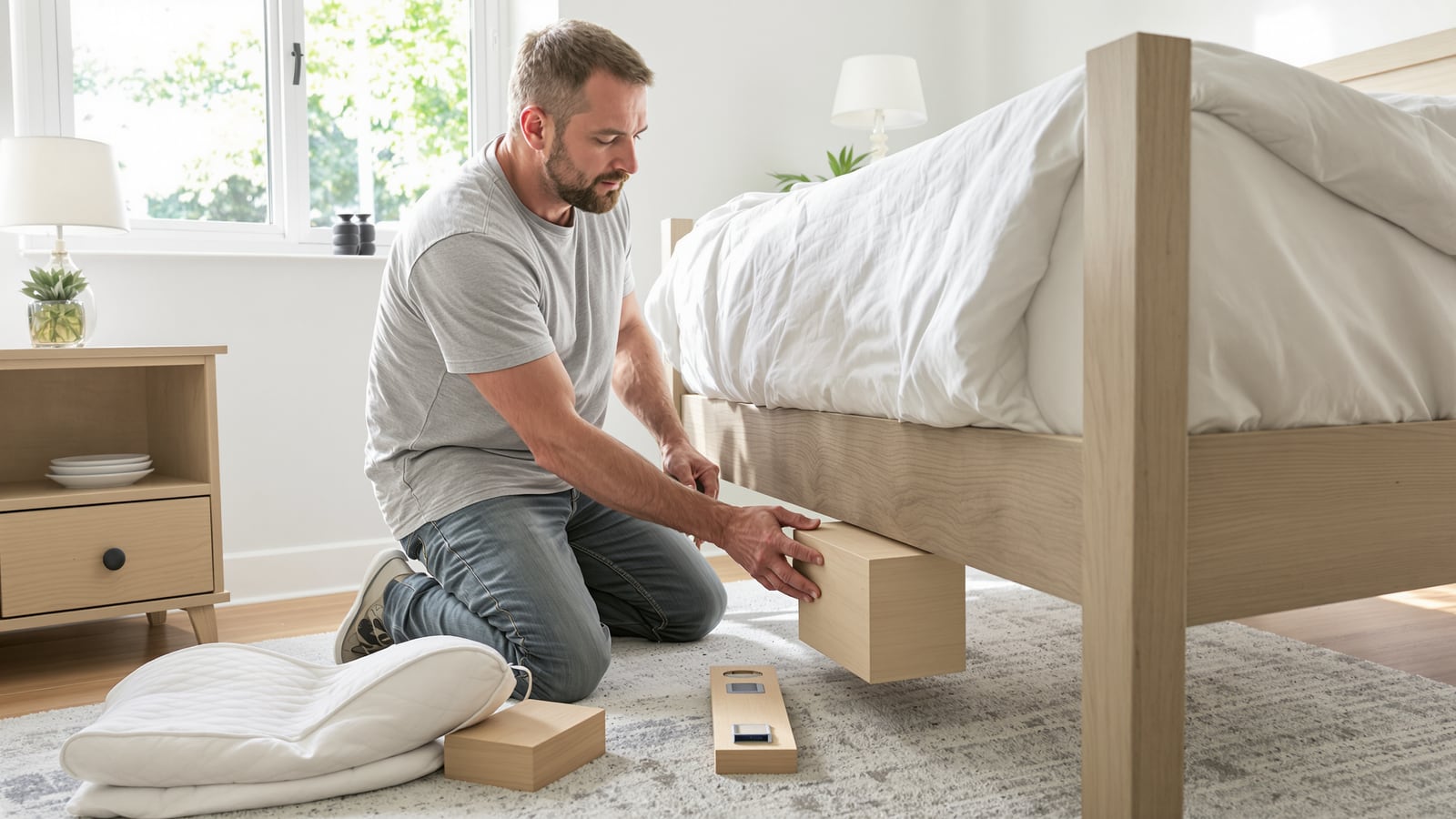
Raise the head of the bed, not your head. Six to eight inches is the usual recommendation. You have two ways to do it:
- Put sturdy risers or blocks under the two legs at the head of the bed. It costs a few dollars and nobody notices it.
- Buy a foam wedge that lifts your whole torso. Make sure it's long enough that your shoulders are on it, not just your head.
Skip the stack of pillows. Piling up three pillows bends you at the waist and increases pressure on your stomach. You also wake up with a stiff neck. If you already sit at a desk all day, you don't need to hand your neck a second job. See what eight hours at a screen does to your neck, eyes and sleep.
Give the new setup a full week. The first two nights feel strange, and that's normal.
The foods to cut first
The list of possible triggers is long. The evidence on any single food is mixed, and people differ. Here are the usual suspects, ranked by how often they show up.
- Large, fatty meals. Fried food, pizza, a burger with fries. Fat slows stomach emptying and relaxes the valve. This is the biggest one.
- Alcohol, especially within a few hours of bed. The nightcap that "helps you sleep" is often what wakes you at 2:00. Beer and wine are the usual offenders.
- Spicy food. Hot wings on a Friday night earn what comes later.
- Chocolate and mint. Both are known to relax the valve. Yes, the after-dinner mint.
- Coffee and carbonated drinks. Fine in the morning for most people. Not at 8:00 p.m.
- Tomato sauce, citrus and onions. These bother some people a great deal and others not at all.
Don't try to cut everything forever. That plan lasts nine days, and then you quit and eat a whole pizza. Sustainable beats optimal.
Instead, cut the first three for two weeks, which is the real test. If you're better, add one thing back at a time, at lunch, not before bed. You'll learn quickly which food is yours.
The other levers
A few things matter more than people want to hear.
Weight. If you've added a spare tire over the last few years, that pressure on your stomach is part of the problem. Even a modest loss often helps. Don't crash diet. Take the slow route you can hold for a year.
Clothes. A tight belt after dinner pushes upward. Loosen it, or change into sweatpants.
Tobacco. Smoking loosens the valve. If you use it, that's a good reason to quit.
Over-the-counter antacids. These can handle an occasional night. They're a bandage, not a plan. If you're buying them every week, you've got a pattern that needs attention.
When to stop fixing it yourself
Self-management has limits. See a doctor if:
- Symptoms hit more than twice a week, or last more than a couple of weeks despite changes.
- You have trouble or pain swallowing.
- You're losing weight without trying.
- You're vomiting repeatedly, or you notice black stools.
- You wake up choking or coughing.
- You've been taking antacids or acid reducers for a long time.
Chest pain deserves special caution. Reflux can feel like a heart problem, and a heart problem can feel like reflux. If the pain is severe, spreads to your arm, jaw or back, or comes with shortness of breath or sweating, call 911. Don't try to sort it out in the dark.
Ask your doctor, too, about anything you take regularly. Some common medications make reflux worse, and a pharmacist can check that in about two minutes.
Run it for two weeks
Pick three changes: dinner earlier, left side with the head raised, no alcohol after dinner. Change those and leave everything else alone. Tell your wife what you're doing, since she'll be the first to notice you've stopped groaning at 2 a.m.
Sleep is the base of all your training and recovery. If heartburn is eating into it, fix it before you buy another supplement. Why eight hours in bed doesn't feel like eight hours of sleep explains why a bad night costs more than the one night.
And put the fork down earlier. The couch will still be there at 9:00.
Cal Brennan
Fitness
Strength coach. Trains fathers, tradesmen and desk workers, which means programs that survive a bad week.

Watch
Worth an hour of your evening
More from Fitness.
From channels we rate. Plays on YouTube.
Read next