What eight hours at a screen does to your neck, eyes and sleep
You can't quit the desk job. You can stop letting it quietly wreck three things you need working properly.
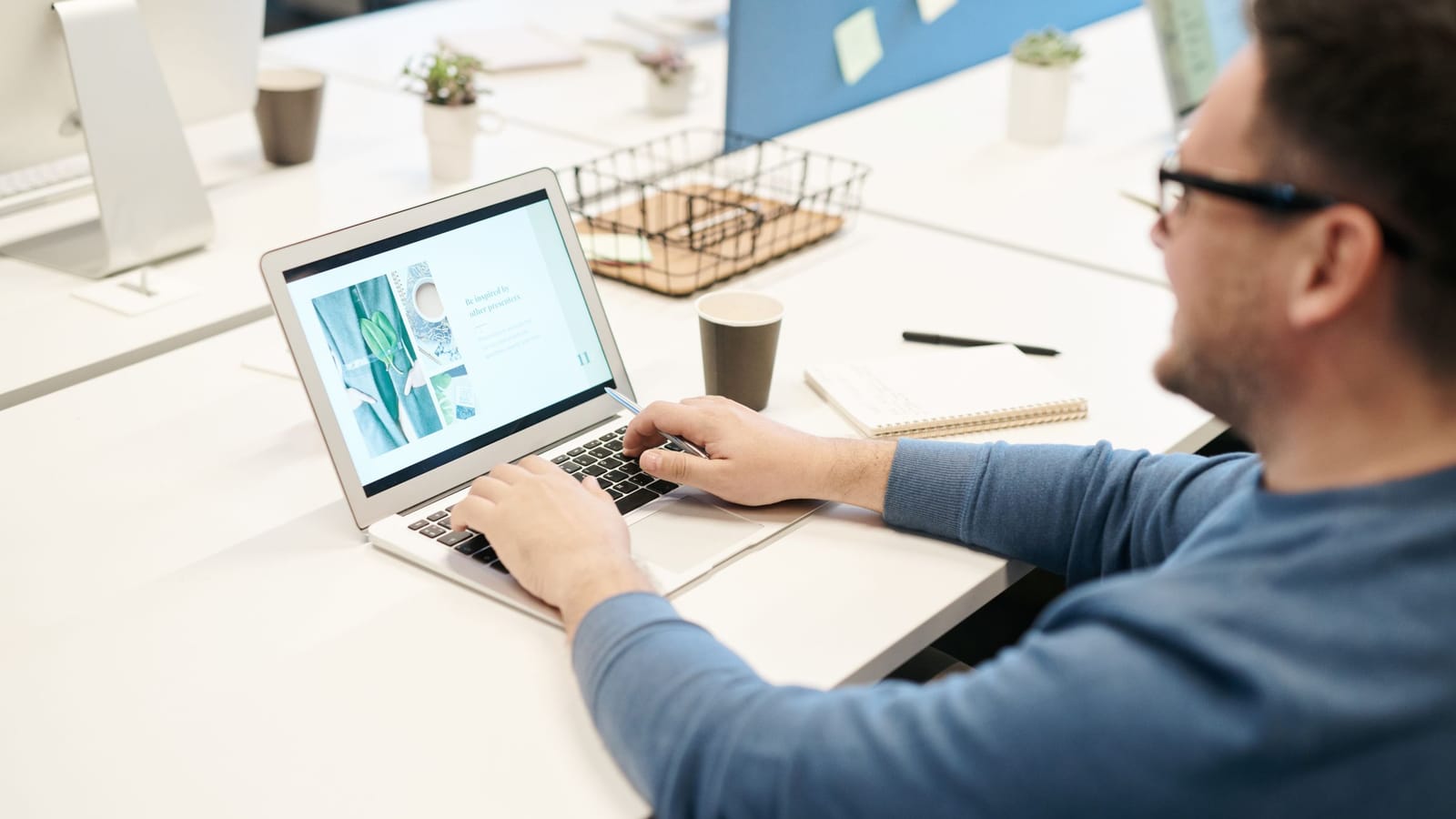
The single most useful change is this: stop sitting still for more than half an hour at a stretch. Not better posture. Not a new chair. Interruption.
Your neck doesn't hurt because you sat badly. It hurts because you sat in one position — any position — for four hours while your brain was somewhere else entirely. Tissue doesn't like stillness. It likes load that changes.
So the baseline is a timer. Every thirty minutes, stand up. That's it. Thirty seconds on your feet, a lap to the kettle, a look out of the window. You don't need a routine yet. You need the pattern of getting out of the shape.
Why your neck is the part that complains first
The weight of your head sits over your spine when you're upright. The further it drifts forward, the more the muscles running up the back of your neck have to pull to keep it from dropping onto your chest. They're not built for that. They're built for short bursts and quick corrections, not for holding a slow, endless isometric all morning while you answer email.
Add a laptop on a kitchen table and the drift is guaranteed. The screen is low, so your eyes go down, so your chin goes down, so your head goes forward. Every part of that chain is doing what it should. The setup is the problem.
Three things fix most of it, and only one of them costs money.
Raise the screen. Top of the display roughly level with your eyes, maybe slightly below. A stack of books under a laptop works perfectly. If you use a laptop all day, get a separate keyboard so you can lift the screen without your hands going up with it. That's the one purchase worth making.
Get the keyboard closer. Most people work with the keyboard too far away, which pulls the shoulders and head forward to reach it. Elbows should hang near your ribs, not out in front of you.
Drop the armrests or lose them. High armrests shove your shoulders up towards your ears for hours at a time. You'll feel that in your upper traps by four o'clock.
The three-minute set that actually gets done
Long mobility routines don't survive contact with a job and small children. A short one you do daily beats a good one you do on Sundays.
- Chin nods. Sit tall, look straight ahead, draw your chin back and slightly down like you're making a double chin. Hold three seconds. Ten reps. It feels ridiculous. It's the closest thing to a direct antidote to eight hours of forward drift.
- Doorway chest stretch. Forearm on the frame, elbow at shoulder height, step through. Thirty seconds each side. Tight chest muscles pull the shoulders forward, and rounded shoulders drag the head with them.
- Thoracic rotation. Sit, cross your arms over your chest, turn as far as you can each way. Ten each side. Your mid-back is meant to rotate. Desks convince it otherwise.
Attach it to something you already do every day. After the kettle boils. After the school run. Before you open the laptop. Habits that float free don't last a fortnight.
Your eyes are doing something you never asked them to
Near work is the unnatural bit. Human eyes evolved to switch focus constantly between things a foot away and things a mile away. A monitor sits at one fixed distance and holds your focusing muscles at one fixed tension for hours.
You also blink less when you're concentrating. Considerably less. That's why your eyes feel gritty by mid-afternoon — the tear film isn't getting spread across the surface often enough, and it evaporates.
The old optometrist's guideline still holds up: every twenty minutes, look at something about twenty feet away for twenty seconds. Out of a window is ideal. It gives the focusing muscles a genuine release, and you'll blink properly while you do it.
Then fix the room. Bright window directly behind your monitor means you're staring into a backlight all day; move the desk side-on to it. Screen brightness should roughly match the room, not blast out of it in a dark office. And check where the air is blowing. A heating vent or air-con outlet pointed at your face will dry your eyes out faster than anything on the screen.
If you wear glasses and you're over about forty, mention screen distance specifically when you next see an optometrist. Standard reading prescriptions are set for a book at book distance, not a monitor at arm's length, and a lot of people spend years squinting through the wrong bit of a lens. That's a conversation for the optometrist, not for an article.
The evening screen problem is mostly not blue light
Blue light gets all the blame, and it plays some part in shifting your body clock later. But the bigger issue is simpler and harder to admit: what you're doing on the screen keeps your brain switched on.
Email at nine at night is a stimulant. So is a comment thread, a work message, or anything with unresolved conflict in it. Your body can be tired and your nervous system still wide awake, and you lie there at midnight wondering why.
Practical version, for someone with a job and kids and about ninety minutes of adult time in the evening:
- Put a hard line on work messages. Pick a time. Nine o'clock, whatever suits. After that the laptop is shut and in another room, not on the sofa arm.
- Keep the last thirty minutes before bed low-stakes. A book, a conversation, tidying the kitchen. Nothing you'll still be thinking about with the light off.
- Drop the lights in the house in the evening. Big overhead lights signal daytime. Lamps signal otherwise. It's cheap and it works.
- Keep the phone off the bedside table. If it's your alarm, buy an alarm clock.
You won't get all four. Get two.
What goes wrong
People buy the chair. The chair arrives, feels great for a week, and then the neck comes back, because the chair never addressed the actual problem, which is four unbroken hours in the same shape.
People also go too hard too fast — an ambitious stretching program on a Monday, nothing by Thursday. Small and daily wins.
And people wait far too long. Stiffness and ache after a heavy week is normal and it responds to movement. Pain, numbness or pins and needles running down an arm isn't the same thing and it isn't something to manage with a stretching video. Nor are headaches that keep coming back, or changes in your vision. That's a GP, a physiotherapist or an optometrist, and sooner rather than after another six months of hoping.
The part nobody tells you
The single biggest variable isn't the desk at all. It's how much you move during the rest of the day. Someone who trains twice a week and walks after dinner can get away with a fairly mediocre workstation. Someone who sits for nine hours, drives home and sits for four more will have a sore neck in a thousand-pound chair.
Your setup is damage limitation. The walk is the actual medicine.
Ten minutes after dinner, with a child on a scooter beside you, does more for your neck, your eyes and your sleep than any gadget you can order tonight.
Cal Brennan
Fitness
Strength coach. Trains fathers, tradesmen and desk workers, which means programs that survive a bad week.

Watch
Worth an hour of your evening
More from Fitness.
From channels we rate. Plays on YouTube.
Read next