What Nicoya does all day beats what you do for an hour
A Costa Rican peninsula where men in their eighties still swing a machete has something useful for a guy with two kids and forty minutes.
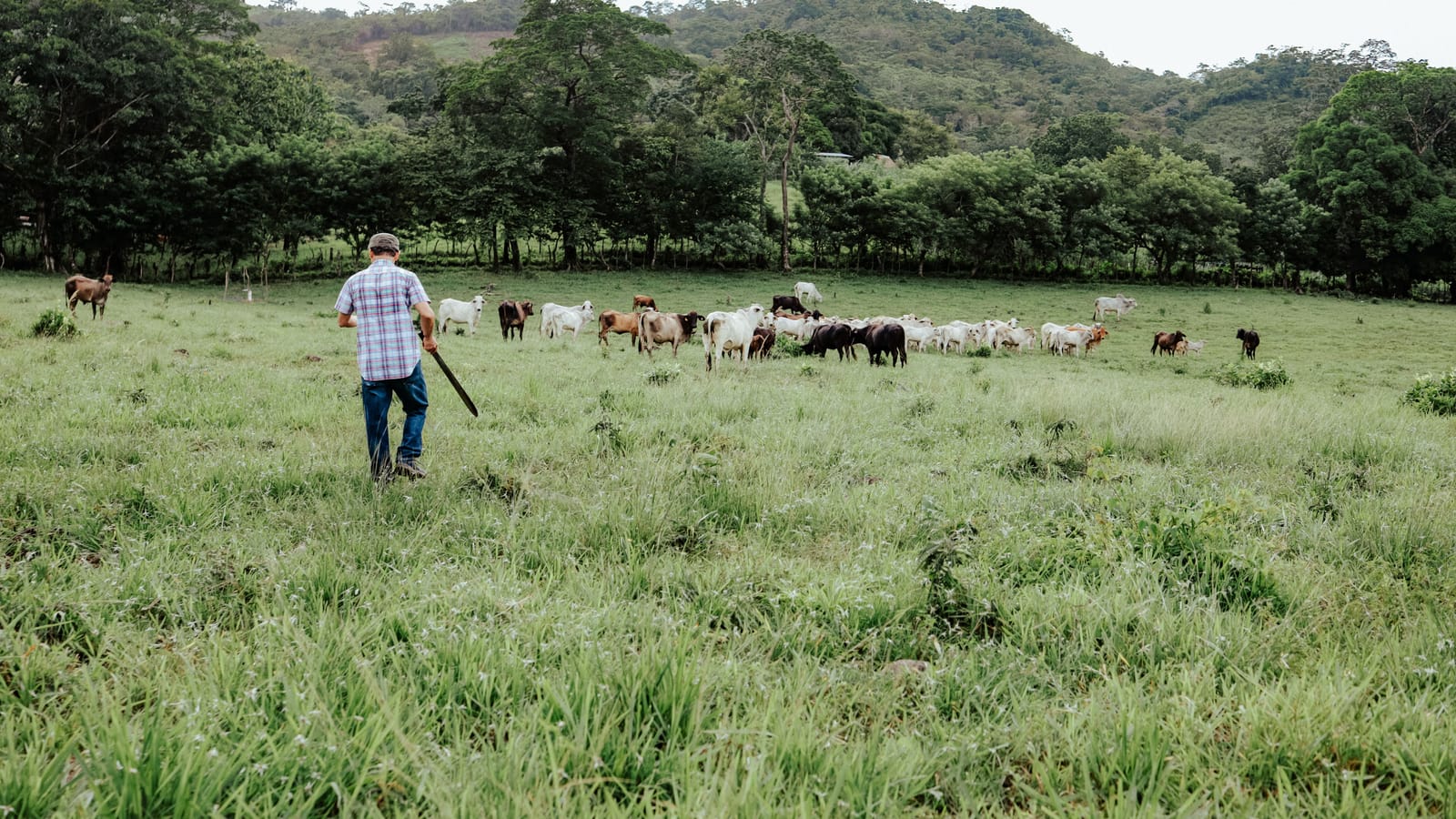
The farmers on the Nicoya Peninsula aren't doing anything you'd pay for. No split routine, no zone two, no recovery boots, no sled. They get up before the sun, they walk to the work, they do the work, they eat beans, they sit down with people they're related to, and they go to bed when it gets dark. Which on that part of the map, ten degrees north of the equator in Guanacaste province, is around six o'clock every single night of the year.
That's the whole thing. Dan Buettner put Nicoya on the map for American readers with The Blue Zones in 2008, and ever since, people have been trying to bottle it. You can't bottle it. But you can steal from it, and the parts worth stealing are exactly the parts that survive a job and a school run.
The work is the program, and that's the problem
A Nicoyan smallholder isn't exercising. He's moving for six or eight hours because the alternative is that nothing gets done. Fence posts, machete work, hauling, walking to a neighbor's place because that's how you see a neighbor. It's low intensity, it's constant, and it never gets skipped, because you can't skip your own farm.
Your day is the photographic negative of that. You sit for nine hours, you drive, you sit again, and then you try to buy it all back in forty-five minutes at 6 a.m. with a barbell. That's not a moral failure. It's just a bad trade, and it's why you're sore and still stiff.
So run two separate accounts. One is movement volume, which has to be cheap and constant and requires no motivation. The other is load, which has to be deliberate, because your life contains none.
Cheap movement, bought in five-minute pieces
Stop trying to find an hour. Find eight chances.
- Park at the far end. Every time. It's ninety seconds and it's free.
- Take the stairs with whatever you're already carrying. Groceries count as loaded carries. Nobody told you that because nobody can sell it.
- Walk after dinner. Fifteen minutes, with a kid, no phone in your hand. This is the single highest-return habit in this entire article.
- Do the yard work by hand when the powered option would take eight minutes and the hand option takes twenty. Rake instead of blow. Push mower on a small lot.
- Stand up every time you're on a call you don't have to type through.
None of that's training. All of it is why the guy in Nicoya can still get up off the floor at eighty without putting a hand down.
Your job took the load out, so put it back
The one thing farm work has that walking doesn't is resistance. A machete swing, a fifty-pound sack, a post going into hard ground. If your work is a chair, you have to buy that back on purpose, and it takes less time than the internet claims.
Two sessions a week. Thirty to forty minutes. Five movements: squat something, hinge something, push something, pull something, carry something. Three sets of five to eight on the first four, and then pick up two heavy objects and walk sixty feet with them, three times.
That's it. Two days, not five. Five days is the optimal plan that dies in week three when your daughter gets an ear infection. Two days survives a bad month, and a plan that survives a bad month beats a plan that wins a good one.
If something in you says two days is too little, notice that the eighty-year-olds you're jealous of have never once done a chest day.
Beans on Sunday, and why they keep showing up
Gallo pinto in the morning. Beans and rice again at noon. Corn tortillas made from corn cooked in lime water, squash, whatever fruit fell off the tree that week. Meat shows up, but it shows up as a guest, not the host.
The useful part isn't the romance of it. It's the logistics. A pot of black beans costs almost nothing, takes almost no attention, and gives you five dinners of something with protein and fiber in it that a seven-year-old will actually eat. Sunday afternoon, one pot, onion, garlic, a bay leaf, salt at the end. Refrigerate. You've just bought back four weeknight decisions, and weeknight decisions are where every eating plan in America goes to die.
Note what Nicoya doesn't have: a protein target, a macro app, a supplement drawer. Just a food that's cheap, that reheats, and that people there have eaten three times a day for four hundred years without getting bored, because they season it properly. Bland is a choice. Don't make it.
Recovery is mostly the absence of options
Here's the part nobody wants, because it can't be purchased. They go to bed early because when the sun goes down at six and the light is poor, staying up isn't interesting. Sleep isn't a protocol there. It's what's left.
You have a television, a phone and a second wind at 9:40 p.m. So you have to do on purpose what geography does to them for free. Pick a bedtime and defend it like it's a dentist appointment. One hour before it, the screens go on the counter, plural, including yours. The kids' bedtime routine is a good hour of your own if you let the wind-down carry through instead of firing the laptop back up at 8:45.
Everything else called recovery is downstream of that. Cold plunge on five hours of sleep is a costume.
The part that isn't fitness at all
Buettner's word for it in Nicoya was plan de vida. A reason to get up. Grandparents live in the house, not down the interstate. The old man still has jobs that belong to him specifically, and when he stops, the family notices, because something doesn't get done.
We built the opposite. We retire people out of usefulness at sixty-five and then wonder why they decline at sixty-seven. If you want one takeaway with no reps attached: stay needed, and keep the people you love inside arm's reach. Sunday dinner at one table, phones in a basket. Give your father-in-law a job at your house that's actually his. Let your ten-year-old carry the smaller bag instead of carrying it for him.
Where the story gets oversold
Be honest about the research. The very old ages in the blue zones lean on birth records from places and eras where records were thin, and Saul Newman's work on that won an Ig Nobel in 2024 for arguing the pattern tracks with poor documentation and pension incentives more than with diet. Maybe the headline numbers shrink. Probably they do.
It doesn't touch a thing above. Walking daily, lifting twice a week, eating beans, sleeping eight hours and living near your family were never going to be bad ideas if the census was sloppy.
And none of this is medical advice. If you've got a heart condition, a bad back or you haven't done anything in five years, talk to your doctor before you go pick up heavy objects and walk around with them.
Start with the fifteen minutes after dinner. Tonight, with one kid, before anybody turns a TV on.
Cal Brennan
Fitness
Strength coach. Trains fathers, tradesmen and desk workers, which means programs that survive a bad week.

Watch
Watch how it's done
Picked for this article.
From channels we rate. Plays on YouTube.
The Whole Physician
Ep 113 | Blue Zones Secrets of Longevity Part 2: Nicoya, Costa Rica
Read next