

Swollen ankles after fifty: what elevation fixes and what it doesn't
Most swollen ankles are a long day on your feet. A few aren't. Here's how to tell which you've got before your sock line tells you.
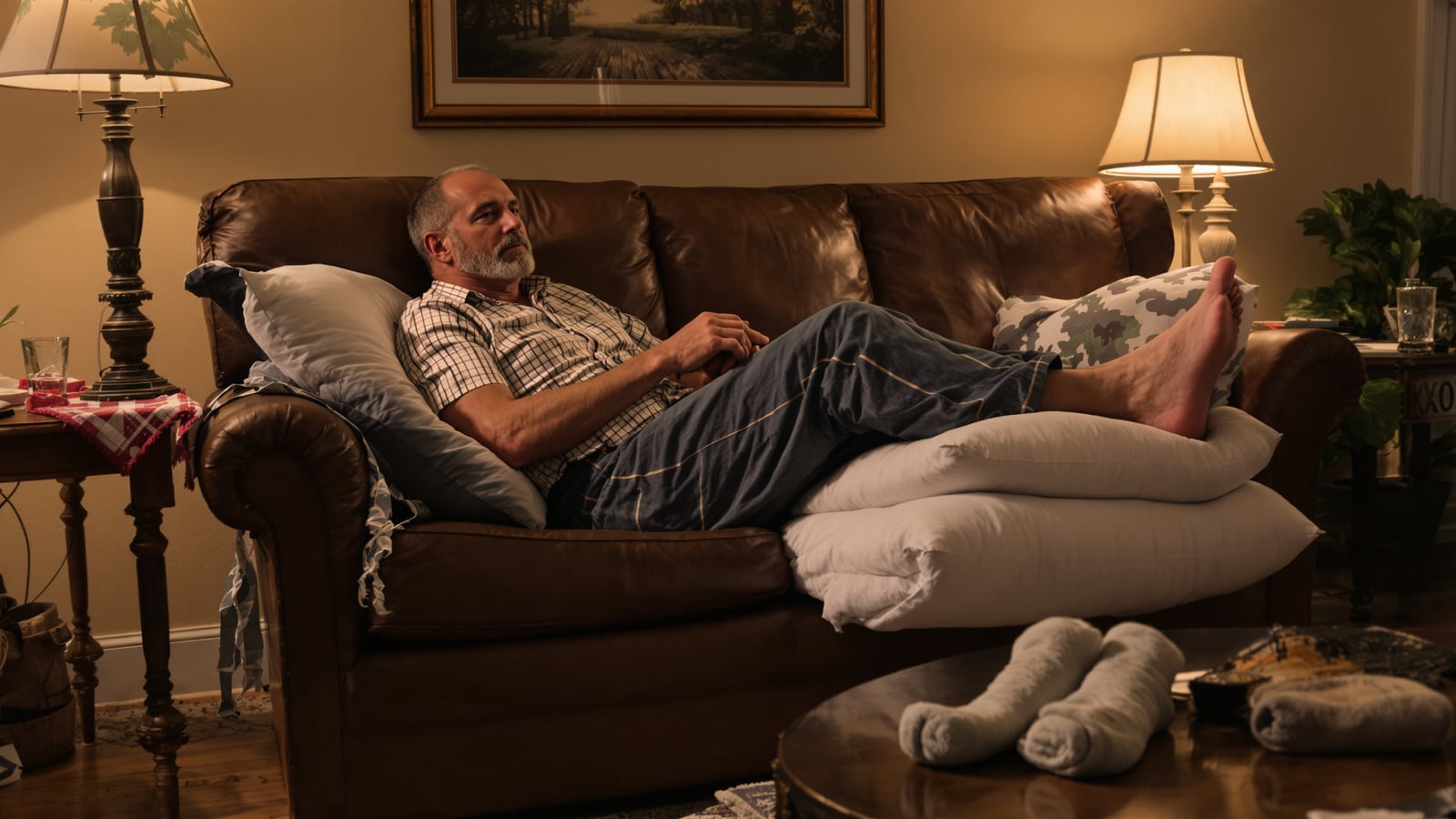
Quick answer: Both ankles, worse by evening, better after a night flat in bed: that's usually gravity and habits, and elevation, walking and less salt are fair first moves. One leg only, sudden swelling, pain, or any trouble breathing: that's not a pillow problem. Get seen, and if breathing or chest pain is involved, get emergency care right away.
This is general education, not medical advice. Your doctor knows your history. Use this to walk in with better questions.
The sock-line test
Take your socks off at night and look at the skin. A deep groove around the ankle means fluid has pooled. That alone is common after fifty, and it's especially common if you stood through a ten-hour shift, sat through a four-hour drive to your kid's tournament, or spent the day wedged at a desk.
Now press a thumb into your shin for five seconds and let go. If a dent stays for a few seconds, that's called pitting. It's a sign worth mentioning to a doctor, even if everything else on this page says you're fine.
Do both checks at the same time every evening for a week. A week of notes beats a vague memory in an exam room, and it costs you nothing.
What elevation actually fixes
Gravity pulls fluid down. Veins in the legs have one-way valves and rely on your calf muscles to squeeze blood back up. After fifty, the valves and the muscles don't work like they did at thirty. Sit or stand still for hours and fluid settles.
Elevation reverses that, but only if you do it right. Propping your feet on an ottoman while you sit in a recliner doesn't count. Your feet need to be above your heart.
- Lie on your back with your calves on a couch cushion or a stack of pillows.
- Stay there 20 to 30 minutes. Do it once after work and once before bed if the swelling is stubborn.
- Do it before you start dinner, not after. Nobody has ever gotten up from the couch after dinner and gone back to being useful.
Movement works better than most people expect. Thirty calf raises at the kitchen sink while the coffee brews, or while you're brushing your teeth, run the muscle pump the way it was built to run. Ten minutes of walking after a long stretch of sitting does more than any gadget. Set a timer if you have to. If you work at a desk, the habits in Undoing ten years at a desk cover the standing and moving side of this.
The boring fixes that count
Salt. Deli meat, canned soup, frozen dinners, restaurant food and pizza carry far more sodium than anything from your own salt shaker. If your ankles balloon the day after a restaurant weekend, that's your answer. Cook more at home for two weeks and see if the sock line fades.
Shoes and socks. Elastic that bites into the calf makes things worse. Shoes that fit in the morning and pinch by 4 p.m. are telling you something about your feet.
Compression socks. Over-the-counter pairs are sold in mild strengths, and plenty of men and women over fifty wear them on flights and long workdays. Put them on in the morning before the swelling starts, not at night when it's already happened. One catch: if you have heart disease, poor circulation in your legs or diabetes, ask your doctor first. Compression can hurt people with reduced blood flow.
Weight. Extra pounds put extra pressure on leg veins. You don't need a transformation. Ten pounds off is felt in the ankles.
Check your medicine cabinet
This one gets missed. Some common prescriptions list ankle swelling as a side effect, including certain blood pressure drugs and some diabetes medications. Anti-inflammatory painkillers like ibuprofen can make your body hold fluid too.
Ask your pharmacist. It takes two minutes and they've heard the question before. Don't stop a prescription on your own because of what you read on a website, this one included. Ask first, then adjust.
The signs that mean get seen
Elevation won't solve these, and waiting could cost you.
Get emergency care right away if swelling comes with:
- Shortness of breath that's new or sudden
- Chest pain or pressure
- Coughing up blood
- A pounding or racing heartbeat you can't explain
Make a doctor's appointment this week if you have:
- Swelling in one leg only. Especially if the calf is sore, warm, or red. A blood clot in a leg vein can look like exactly this, and it needs to be ruled out quickly.
- Swelling that comes on fast, over a day or two, instead of building across a long week.
- Swelling that doesn't go down overnight. If you wake up and the dent in your shin is still there, the fluid isn't just from standing.
- Swelling that's climbing from ankles to calves, knees or thighs.
- Puffiness in your face or around your eyes, or a swollen belly.
- Trouble lying flat, needing extra pillows to breathe at night, or waking up short of breath.
- A jump on the bathroom scale: several pounds in a couple of days with no change in how you eat.
- Red, hot, tight, shiny skin, especially with a fever. That can be infection.
- Skin that weeps, cracks or breaks open, or any sore on the foot of someone with diabetes.
The heart, kidneys, liver, thyroid and the veins themselves can all show up first as swollen ankles. That doesn't mean yours are failing. It means a quick exam and some basic blood work can rule out the serious causes while they're still easy to manage. Men over fifty are famous for skipping this appointment because the problem "isn't that bad yet." That's the reason it's the one to book.
What to bring to the appointment
Your week of notes. Which ankle, what time of day, whether it was gone by morning. A list of everything you take, including supplements and the ibuprofen you didn't think counted. A rough idea of your sodium intake and how long you sit or stand at work.
Tell the doctor what the swelling stops you from doing. A man who says "my shoes don't fit" gets a different conversation than the man who says "I can't coach my daughter's practice anymore without my legs aching for two days." Be the second guy. Be specific.
A plan that survives a busy week
You don't need a protocol. You need three habits you'll actually keep:
- Calf raises at the sink, twice a day.
- Twenty minutes with your feet above your heart after work, before you start the evening's chores.
- One less restaurant meal a week for a month.
If the swelling is gone in two weeks, you've learned something useful about your body. If it isn't, you've also learned something useful, and now the doctor has real information to work with.
Ankles are a gauge. When the needle moves, read it. Most of the time it says you stood too long. Once in a while it says something else, and the sooner you hear that, the better your odds.
Cal Brennan
Fitness
Strength coach. Trains fathers, tradesmen and desk workers, which means programs that survive a bad week.

Watch
Worth an hour of your evening
More from Fitness.
From channels we rate. Plays on YouTube.
Read next