What GLP-1 shots actually do, and what to ask before you start
These drugs work on appetite, not fat. Know the side effects, the muscle problem and the exit plan before the first dose.
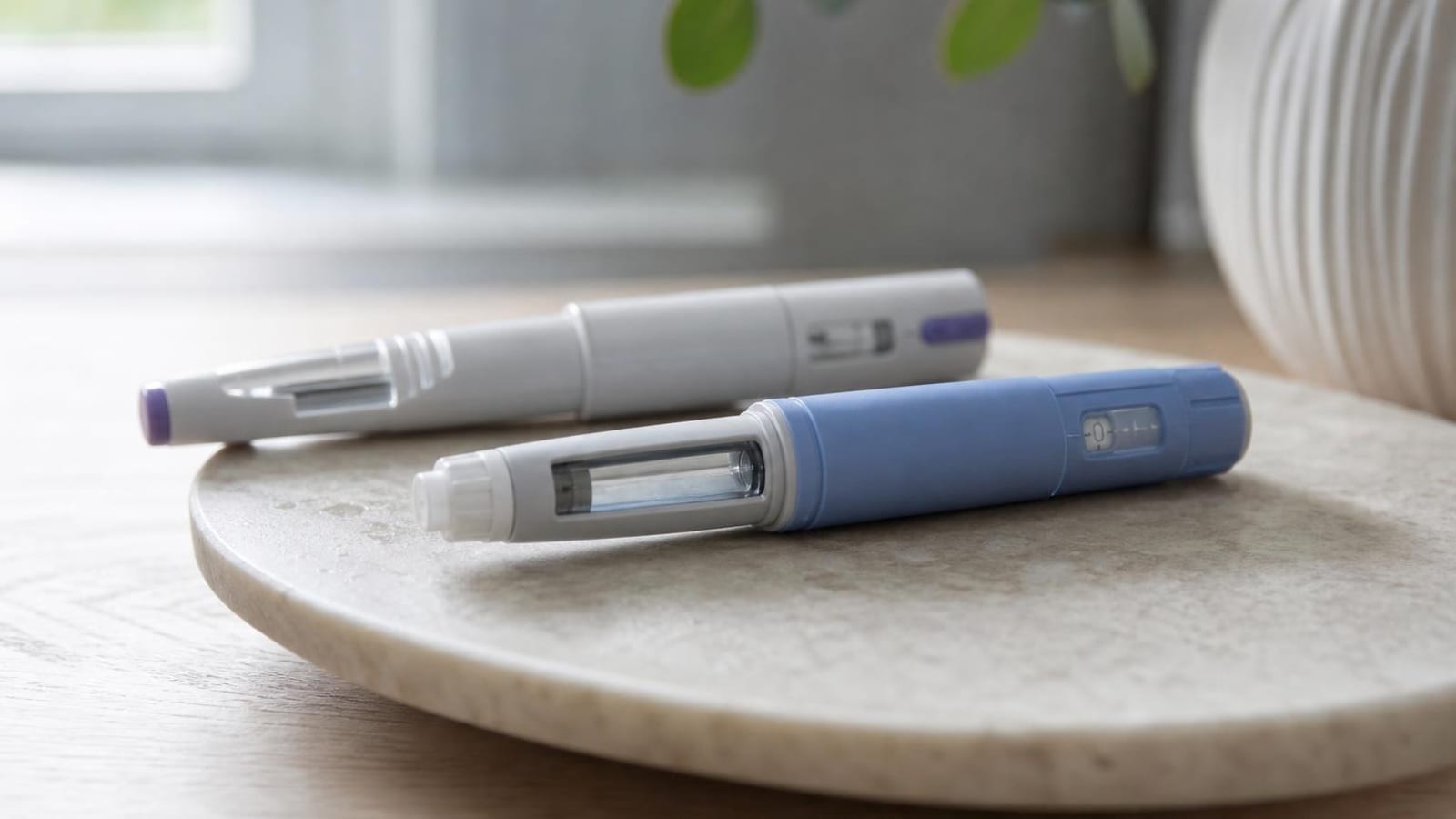
Semaglutide doesn't burn fat. Neither does tirzepatide. What they do is turn down hunger and slow your stomach, and then you eat less without white-knuckling it. That's the whole trick. Everything else people say about these drugs is downstream of that one fact, and if you understand it going in, you'll make better decisions than most of the people currently jabbing themselves on a Sunday night.
This isn't medical advice and it can't be. Doses, interactions and whether you're a candidate at all are between you and a physician who's seen your labs. What follows is the stuff that doesn't fit in a twelve-minute appointment.
The mechanism, in plain language
GLP-1 is a hormone your gut releases when food shows up. It tells your pancreas to release insulin, tells your stomach to empty slower, and talks to the part of your brain that decides you're done eating. The natural version breaks down in minutes. The drug version hangs around for a week.
So you get the "I'm full" signal from half a plate, and the food already in your stomach sits there longer. Tirzepatide adds a second hormone receptor, GIP, to the same idea. That's why the numbers on it tend to run higher.
The trial averages are real and they're large by the standards of anything else in this category. Roughly fifteen percent of body weight for semaglutide at the obesity dose, higher for tirzepatide. Averages hide people. Some lose a third of their body weight. Some lose eight pounds and quit.
It's a slow ramp, on purpose
You don't start at the dose that makes headlines. Semaglutide typically begins at 0.25 mg weekly and steps up every four weeks. That's four months of climbing before you reach the top end, assuming your gut tolerates each step.
People hate this part. They feel great on week three, ask to jump ahead, and spend the next ten days apologizing to their family from the bathroom floor. The ramp exists because the side effects are dose-dependent and your stomach needs the runway.
If a given step is rough, staying there an extra month is a legitimate move. Ask about it. A lot of people find a dose in the middle that kills the food noise without wrecking them, and there's no prize for reaching the maximum.
The side effects nobody sugarcoats at the pharmacy
Nausea is the headline. Also constipation, diarrhea, burping that tastes like whatever you ate six hours ago, and reflux that shows up when you lie down. Most of it fades after the first few weeks at each dose. Some of it doesn't.
Rapid weight loss of any kind raises gallstone risk, and these drugs cause rapid weight loss. Right-upper-belly pain that comes in waves after a fatty meal is a call-your-doctor situation, not a tough-it-out situation. Severe, boring-through-to-your-back abdominal pain with vomiting is a same-day problem — pancreatitis is rare but it's on the label for a reason.
There's a boxed warning about thyroid C-cell tumors from rodent studies. If you or a close relative has had medullary thyroid carcinoma or MEN2, these drugs are off the table. Your doctor should ask. If they don't, tell them anyway.
Two more that get missed. Tell any surgeon and anesthesiologist that you're on it, because a stomach that empties slowly is a real anesthesia concern. And if you're a woman who might become pregnant, this is a conversation to have before you start, not after.
The muscle problem is the actual problem
When you lose weight fast on very little food, a meaningful chunk of what leaves is lean tissue. That's true of any aggressive diet. It's just that these drugs make aggressive dieting effortless, so more people do it and more people do it for longer.
You won't notice this in the mirror. You'll notice it at fifty-five when you can't get off the floor without a hand.
So the training isn't optional here, and it isn't cardio. Two full-body lifting sessions a week is enough to hold most of what you've got. Three is better. Forty minutes, five or six movements, something heavy for the legs, a press, a pull, something for the hips.
If you've got a job and kids, the realistic version looks like Tuesday and Saturday, or 6 a.m. before anybody's awake, or a squat rack in the garage that you use in gym shorts and a work shirt. Sustainable beats optimal every single time. A mediocre program you actually run for two years will preserve more muscle than a perfect one you abandon in March.
Eating when you're not hungry
This is the part that surprises people. You have to work at food now.
Protein first, every meal, before anything else on the plate hits your fork. A common target is around 0.7 grams per pound of your goal body weight, and on a small appetite you'll have to be deliberate about it. Eggs, Greek yogurt, chicken thighs, cottage cheese, a shake when the day gets away from you.
Fiber and water, because constipation is the complaint that outlasts the nausea. Fluids especially — you're not thirsty either, and dehydration on top of a slow gut is a bad combination.
Alcohol tends to lose its appeal on these drugs, which most people find they don't mind at all.
The family table is where it gets weird. Spaghetti night, you take a quarter of what you used to, and a nine-year-old notices everything. Stay at the table the same length of time. Eat the food everybody else is eating, just less of it. Kids read a parent's relationship with food long before they can explain what they're reading, and "Dad's on a special diet and eats a separate sad meal" is a lesson you don't want to teach.
The exit is the whole game
Stop the drug and hunger comes back. Not as a moral failing. As pharmacology. The appetite signal you'd been suppressing returns, and most people regain a large share of what they lost.
Which means the honest framing is a maintenance medication, like a blood pressure pill, unless you and your doctor have a specific plan to taper. Ask what that plan is at the first appointment, not the twelfth. Some people hold their loss on a lower dose or a longer injection interval. Some don't.
The habits you build in months one through six are the only thing that travels with you. Lifting. Protein. Sleep. A walk after dinner. Build them while the drug is doing the hard part.
What to ask before the first shot
- Am I a candidate based on my BMI, my labs and my history, and what would make you say no?
- What's the plan if I'm on this for five years? Ten?
- Which side effects mean call you, and which mean go to the ER?
- Do any of my current medications interact with this?
- What are we doing to protect muscle, and do you want me to see a dietitian?
- Brand or compounded, and what exactly am I being sold?
That last one matters. Compounded versions from wellness clinics and websites aren't the same product under the same oversight as what comes from a pharmacy, and the difference shows up in dosing errors. If the price seems impossible, it's worth asking the manufacturer's own self-pay program and your insurer before you trust a website with a stock photo of a stethoscope.
These drugs are the most effective tool for obesity that's ever been commercially available. They're also a tool, which means somebody still has to hold the handle.
Cal Brennan
Fitness
Strength coach. Trains fathers, tradesmen and desk workers, which means programs that survive a bad week.

Watch
Watch how it's done
Picked for this article.
From channels we rate. Plays on YouTube.
Stanford Medicine
GLP-1 weight-loss drugs: What the science says | 90 Seconds w/ Lisa Kim
Harvard Medical School Continuing Education
Role of GLP-1 Receptor Agonists for Weight Loss
Read next