Your cholesterol panel has five numbers. Read them in this order.
The red flag in your patient portal is probably the least useful line on the page. Start with triglycerides and work down.
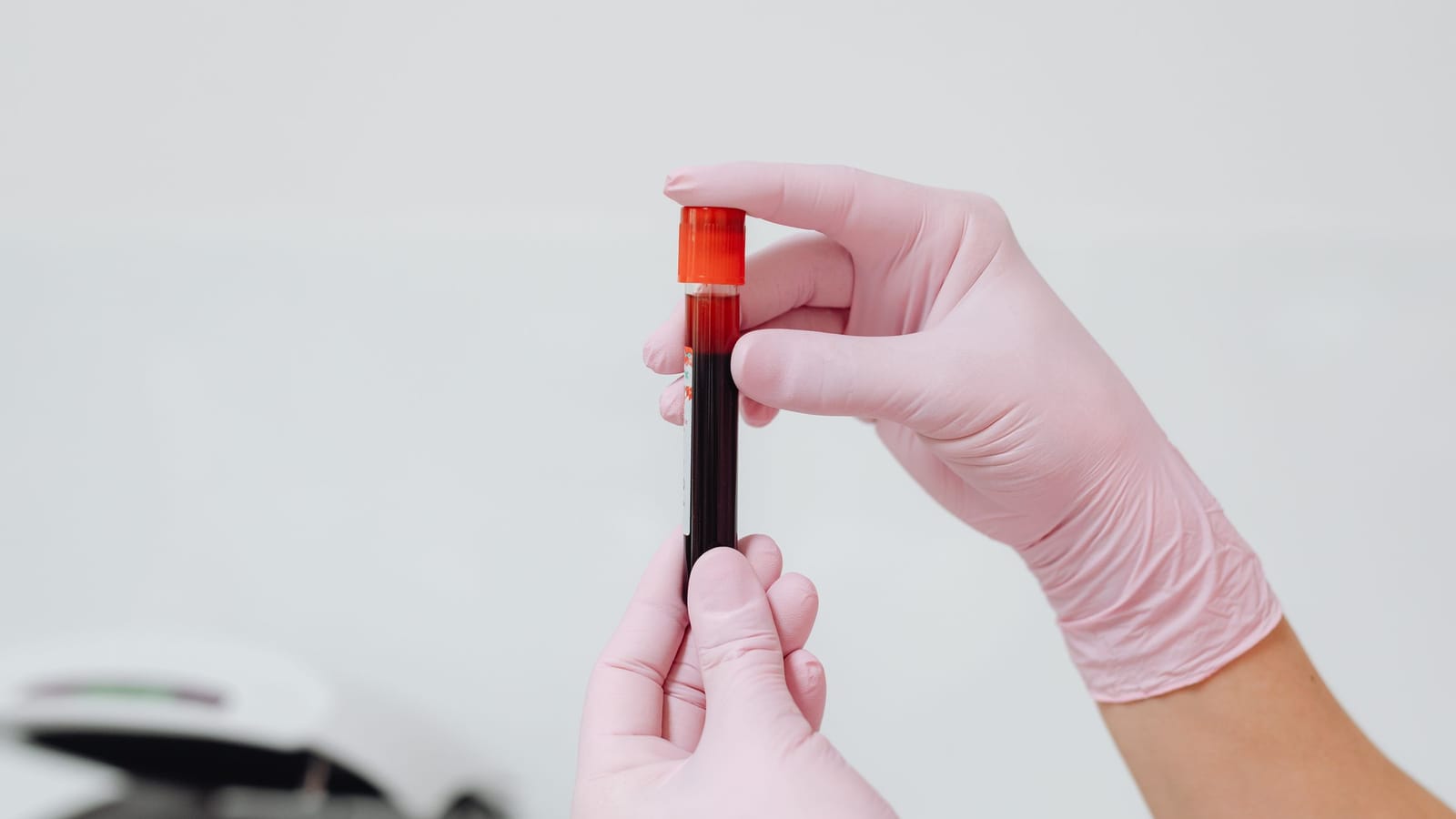
The lab results hit your phone at 9:40 on a Tuesday night, three days before anybody will talk to you about them. There's a little red "H" next to LDL. You Google it, land in a forum argument between a guy eating sixteen eggs a day and a guy who hasn't had butter since 2011, and go to bed worse off than when you started.
So let's make the page readable. Five numbers, in the order that actually tells you something, plus the two tests most people never think to ask for.
None of this is medical advice and none of it replaces the appointment. It's so you walk into the appointment with better questions than "is this bad?"
Start at the bottom of the panel: triglycerides
Everybody reads top to bottom, which means everybody reads total cholesterol first. Total cholesterol is the least informative line on the sheet. It's HDL and LDL and a slice of triglycerides all thrown in a blender, and a high number can come from something good.
Read triglycerides first instead. Under 150 mg/dL is the usual cut point. This one moves fast and it moves with your habits. Alcohol, refined carbs, fried food, extra weight around the middle, a weekend that got away from you. It also moves if you ate before the draw, which is why the number matters most when it's fasting.
High triglycerides matter for another reason nobody tells you. Most labs don't measure your LDL. They calculate it, using a formula that subtracts triglycerides divided by five. When triglycerides are high, that math gets sloppy and your LDL comes back looking better than it is. Above 400 mg/dL the calculation is considered unusable.
If your triglycerides are 300 and your LDL "looks fine," that fine is doing a lot of lifting.
Do the subtraction yourself: non-HDL cholesterol
Take total cholesterol. Subtract HDL. That's your non-HDL cholesterol, and it's on some panels and missing from others, which is strange, because it's arguably the most useful line you can get from a standard draw.
Non-HDL captures everything carrying cholesterol into your artery walls, not just LDL. The rough convention is that your non-HDL target sits about 30 points above whatever your LDL target is. If somebody's aiming you at an LDL under 100, non-HDL under 130.
It costs you ten seconds and a calculator app. Do it before the appointment.
LDL, and the thing LDL doesn't tell you
Now read LDL. Under 100 mg/dL is the general reference, lower if you've already had a cardiac event or you're carrying diabetes or a stack of other risk factors. Your doctor sets that target based on your whole picture, not the lab's default range.
But LDL-C measures the cholesterol cargo, not the number of trucks hauling it. Two men can post an identical LDL of 110 while one is carrying it in a few large particles and the other in a fleet of small ones. The second man has more particles bumping into artery walls, and his panel doesn't say so.
Which brings us to the test to ask for by name.
Ask for ApoB
Apolipoprotein B is one protein per atherogenic particle. Count the ApoB, count the trucks. It's a standard blood test, it's widely available, it doesn't require anything exotic, and a lot of cardiologists now consider it the better marker when it disagrees with LDL.
It usually agrees. When it doesn't, that's exactly the person who needed it.
Say this to your doctor: "Can we add ApoB to the next panel?" If your LDL is borderline, your triglycerides are up, your waist is up, or you've got a family history of early heart attacks, that's a reasonable ask. Some insurers cover it without a fight and some don't. Ask what it runs cash-pay before you assume.
Ask for Lp(a) exactly once
Lipoprotein(a) is genetic. It barely budges with diet, it barely budges with exercise, and it's largely set by the parents you were issued. Elevated Lp(a) is an independent driver of cardiovascular risk, and you can have a picture-perfect lipid panel and still be carrying it.
You test it once in your life. That's the whole protocol. Once.
If it comes back high, it doesn't mean you're doomed. It means every other lever you control matters more, and it means your kids and your siblings should know, because this one runs in families. That's not a scary conversation. That's a useful one to have at Thanksgiving.
The scan that settles arguments
If you're over 40 and the numbers are ambiguous, ask about a coronary artery calcium scan. It's a fast CT, no IV, no dye, no fasting. It gives you a score for the calcified plaque actually sitting in your coronary arteries right now.
A score of zero is genuinely reassuring. A high score in a guy who thought he was fine changes the conversation immediately, and it changes it based on his own arteries rather than a risk estimate built from population averages.
Insurance coverage is inconsistent. Many imaging centers run a cash-pay price and you can call and ask for it in about ninety seconds. Do call around, because the spread between two hospitals in the same city can be embarrassing.
It's not for everybody. If you're 32 with no family history, it'll probably show nothing and you'll have bought a CT for peace of mind. Ask whether you're the right candidate before you book.
What actually moves the needle, honestly
Here's the trade-off nobody likes. Triglycerides respond beautifully to the boring stuff. Cut the liquid sugar, pull back the alcohol, drop ten pounds, walk after dinner, and you can watch that number fall on the next draw. It feels great.
LDL is stubborn. Exercise barely touches it. Losing weight helps some. Soluble fiber helps some, and it's the most underrated thing on this list. Oats, beans, lentils, apples, psyllium. Real amounts, most days, not a sprinkle of chia on a Tuesday.
And some men do everything right and still post an LDL of 190, because they inherited familial hypercholesterolemia and their liver clears cholesterol poorly no matter how clean the plate is. That isn't a discipline failure. Treating it like one has killed people who thought they just needed to try harder.
If your untreated LDL is very high and your dad or your uncle had a heart attack before 55, say the words "familial hypercholesterolemia" out loud in the exam room. It's diagnosed more slowly than it should be.
The four questions
Bring these written down. Doctors move faster than you want them to, and you'll forget the third one.
- "What's my ten-year risk estimate, and what's driving it?" Not just the score. The inputs.
- "What's my target for LDL and non-HDL specifically, given my risk?" Targets are personal. The lab's range isn't.
- "Can we add ApoB, and should I get Lp(a) once?"
- "If we change something, when do we recheck?" Three months is common. Get it on the calendar before you leave.
Then go home and pick one thing. Not six. The men who fix their triglycerides are almost never the ones who rebuilt their entire life on a Sunday night. They're the ones who stopped drinking their calories and kept walking after dinner for a year.
Your panel isn't a report card. It's a weather report, and you've got time to get the roof fixed.
Cal Brennan
Fitness
Strength coach. Trains fathers, tradesmen and desk workers, which means programs that survive a bad week.

Watch
Watch how it's done
Picked for this article.
From channels we rate. Plays on YouTube.
Dr Mike MacDonald Cardiologist
Cholesterol blood test: What do the numbers mean? Your lipid panel results explained.
Med Man
Cholesterol Tests explained by GP - the LDL/HDL traffic jam🚦
Read next