
A rough idle usually has a cheap cause. Check these first.
Before you approve a $900 repair, spend an hour with a code reader, a flashlight and your own two ears. Here's the order that saves the most money.
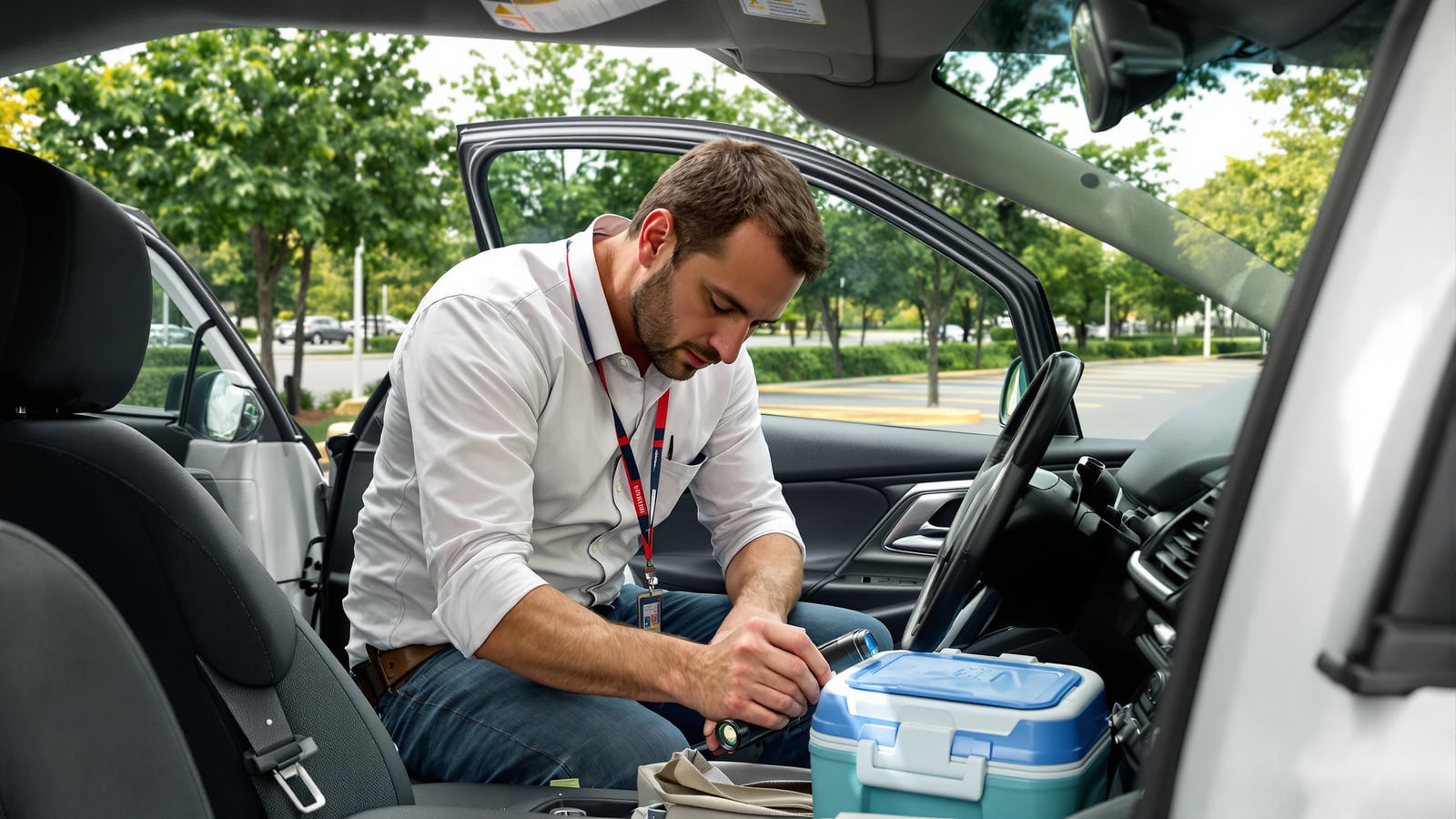
Quick answer: Plug in a code reader first. Then check the air filter, the spark plugs and every rubber hose on top of the engine. Note exactly when the idle gets rough. Most rough idles come from a worn ignition part, a leak in the air intake, or a dirty sensor, and all three cost far less than the repair a shop will quote you if you walk in with "it shakes."
Start with the light
If the check engine light is flashing, stop reading and slow down. A flashing light means the engine is misfiring right now, and raw fuel is going into the exhaust. Drive gently, keep the revs down, and get it looked at soon. A catalytic converter is the most expensive thing that misfire can ruin.
A steady light gives you time. Either way, buy a basic OBD-II code reader. Plenty of them run under fifty dollars, and the port is under your dashboard on the driver's side, usually within reach of your left knee. Plug it in, read the codes, and write them down exactly.
Codes in the P0300 family are misfires. P0300 means random. P0301 means cylinder one, P0302 means cylinder two, and so on. That last number is a gift. If you get a single cylinder, the problem is almost certainly in that cylinder's spark, fuel or compression, and not in the whole engine.
A code doesn't name a part, though. It tells you where to look. Shops know this, which is why "the computer says it needs a sensor" deserves a follow-up question.
Pay attention to when it happens
This is the free diagnostic, and most people skip it. Before you touch anything, spend a few days noticing:
- Only on a cold start, smooths out after a minute or two. Think worn plugs, a sensor reading wrong, or a small intake leak.
- Only when fully warm, usually at a red light. Think dirty throttle body, a sticky idle control, or a failing coil that heats up.
- Worse with the AC on. The compressor adds load. A weak idle can't carry it.
- Rough in Drive, fine in Park. Look hard at the engine and transmission mounts. A collapsed mount makes a healthy engine feel sick.
- Rough all the time, with a high or hunting idle. That's the classic vacuum leak.
Write it down. When you do talk to a mechanic, "rough only when warm, worse with the AC, code P0302" gets a very different conversation than "it's running funny."
The cheap checks, in order of cost
Work from the lowest price up. Each step is thirty minutes or less with basic tools, and the engine should be off and cool for all of them.
Air filter. Pull it and hold it to the light. If you can't see light through it, replace it. A clogged one rarely causes a rough idle on its own, but it takes two minutes and rules out the dumbest answer.
Spark plugs. This is the most common cause on a car with real mileage. Worn plugs misfire, and the engine shudders at idle because there's nothing smoothing out the revs. Check your manual for the interval. Some plugs are good for 100,000 miles and some aren't. If you're past it, or you don't know when they were last changed, replace them as a set with the exact type your engine calls for. Pull one at a time so the wires and coils go back where they came from.
If you have a single-cylinder misfire code, swap that cylinder's ignition coil with its neighbor and clear the code. Drive it. If the code follows the coil to the new cylinder, you've just diagnosed a bad coil for free. If it stays put, the plug is next, then the injector.
Hoses and the intake tube. Look at every rubber vacuum line and the big air tube between the filter box and the engine. You're looking for cracks, splits, a hose that's popped off its nipple, or a clamp that's come loose. Old rubber goes brittle and splits where nobody looks, usually at a bend. Squeeze the hoses. A hard, crunchy one is done.
A vacuum leak sometimes hisses. With the engine idling, listen carefully, keeping hands, hair and loose clothing well clear of the belts and fan. Don't spray flammable carb cleaner around a hot engine hunting for leaks. That trick is everywhere online, and it's also how people start engine fires.
Dirty sensors and throttle bodies
Two parts clog up and throw the idle off: the mass airflow sensor and the throttle body.
The airflow sensor sits in the intake tube just after the filter. It's delicate. Use only a spray labeled for mass airflow sensors, never brake cleaner or carb cleaner, and never touch the element with a rag or a finger. Spray it, let it dry fully, and put it back.
The throttle body is the valve at the end of that tube. Carbon builds up around the edge of the plate and the engine can't idle cleanly. Wipe it with throttle body cleaner on a rag. On many newer cars the plate is electronically controlled, so don't force it open with your fingers. Check your manual or a model-specific forum for the right way to do it.
These two fixes cost the price of a can of cleaner. They're also not magic. If the engine hasn't been neglected, you may clean everything and change nothing. That's still useful, because now you know.
Know when it's time to go to the shop
Some problems aren't a driveway job. If you've checked the basics and the rough idle is still there, the cause may be a leaking fuel injector, low compression, a failing sensor you can't test without the right tools, or a head gasket. Compression tests and smoke tests for hidden vacuum leaks are the work of a shop with the right equipment, and the fee for them is fair. A diagnosis is a real service. Paying for one isn't getting ripped off.
Going in with your homework done lets you hold the line without being a jerk about it.
- Tell them what you've already done. Codes, symptoms, what you replaced.
- Ask for the diagnostic fee up front, and ask whether it's credited if you approve the repair.
- Ask which test led to the conclusion. A good mechanic can tell you in a sentence. If the answer is "the computer said so," press a little.
- Say no to parts-cannon repairs. If the plan is to replace three things and see what happens, you can decline and ask for them to test one thing at a time.
- Ask for the old parts back. An honest shop doesn't mind. It's your part, and you paid for it.
A mechanic who respects you will respect the questions. One who gets defensive has told you something too.
If the engine is running rough and the mileage is high, it's also worth reading what it really takes to get a car past 250,000 miles, and sorting out the servicing that can't wait from the kind that can. Both help you decide whether the repair is worth the car. And if the rough idle came with a car you just bought, twenty minutes with the engine off is how you catch the next problem before it costs you.
Fix what you can fix. Pay fairly for what you can't. And never hand over the keys without knowing what you're asking for.
Dean Shaw
Gear & Garage
Reads the warranty, the parts list and the long-term owner reviews before anything else. Trucks, tools, watches, and the cheap version that costs more.

Watch
Worth an hour of your evening
More from Cars.
From channels we rate. Plays on YouTube.
Read next