
Replace the serpentine belt when it's worn, not when you're told
A shop writes "belt recommended" on the invoice at 50,000 miles. Sometimes they're right. Here's how to check for yourself in five minutes.
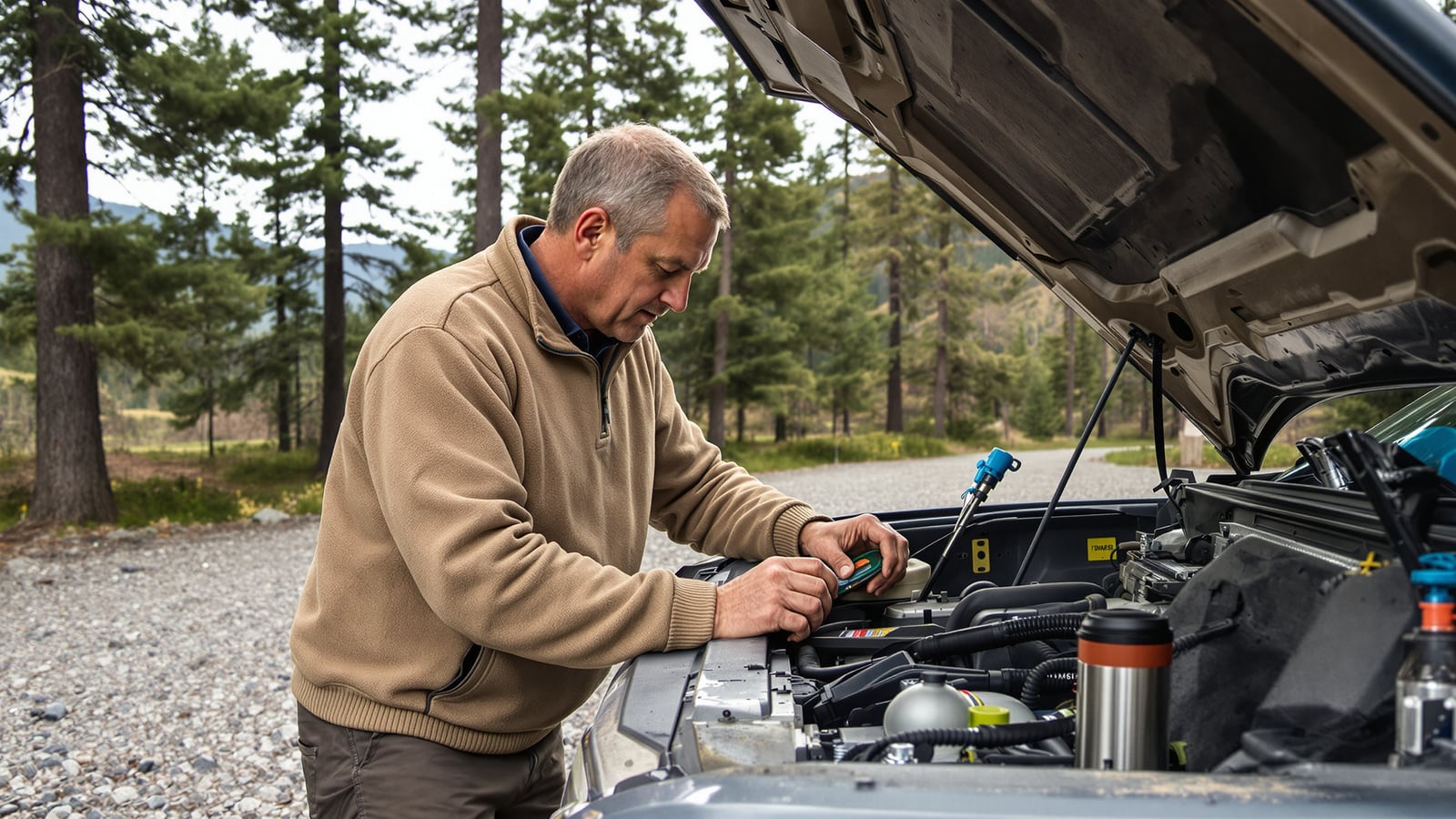
Quick answer: Check the belt with the engine off, twice a year. Replace it when the ribs are worn, glazed, chunking or contaminated, or when it squeals and stays squealing. Mileage alone isn't a reason, and a "recommended" line on an invoice isn't a diagnosis.
What the belt actually does
One belt, snaking around a handful of pulleys. It turns the alternator, which charges your battery. On most cars it also drives the A/C compressor, and on many it drives the water pump and a hydraulic power steering pump.
That last part is why this cheap rubber loop deserves respect. When it snaps, the battery light comes on first. Then the temperature needle climbs, and on a car with a belt-driven water pump you've got minutes, not miles, before you're cooking the engine. Pull over the second you see that light.
So yes, it matters. It just doesn't matter on a schedule somebody else made up.
Why the schedule is mush
Ask three mechanics when to replace a serpentine belt and you'll hear three numbers. That's because the real answer depends on the belt, and belts changed.
Older belts were neoprene. They dried out and cracked, and cracks told you the end was near. Most belts made for the last couple of decades are EPDM rubber, which holds up much better. They rarely crack in any obvious way. They wear instead, shedding rubber from the ribs until the grooves go shallow and the belt starts to slip.
So the old "look for cracks" advice can mislead you. A modern belt can look fine to a casual glance and be nearly finished. And the reverse: a hairline crack or two on a belt with plenty of rib left isn't an emergency.
Check your owner's manual. Many list an inspection interval instead of a hard replacement mileage. That's the manufacturer telling you the same thing: look at it, then decide.
The five-minute inspection
Engine off, key out, engine cool. Never put a hand near a belt on a running engine. Loose sleeves and long hair have no business there either.
- Find the belt. Pop the hood and look at the front or side of the engine. You'll see a ribbed belt on a series of pulleys.
- Check the ribs. Look at the grooved side. You want clean, evenly spaced ribs with sharp edges. Bad signs are missing chunks, ribs peeling apart, rubber crumbs collected in the grooves, or edges that look frayed.
- Check for glaze. A shiny, hardened surface on the belt means it's been slipping. It'll squeal again no matter how many times you quiet it down.
- Check the back. The smooth side shouldn't be cracked, split or fraying at the edges.
- Check for oil or coolant. A belt that's soaked in either is done, and you've got a leak to chase too. Replacing the belt without fixing the leak just ruins a fresh belt.
- Press and twist. Find the longest straight stretch between two pulleys. A rule of thumb: you should be able to twist the belt about a quarter turn, no more, with your fingers. If it twists much further or flops around, tension is off.
A belt wear gauge is cheap at any parts store and tells you in seconds whether the ribs are past their limit. It's the single best tool for this job, and it settles arguments with a service advisor.
What the noises mean
A squeal at cold start that fades in a minute or two is often a belt that's damp, slightly glazed or a little loose. Annoying, not urgent. A squeal that sticks around, or one that shows up when you turn the wheel or switch on the A/C, means the belt is slipping under load. Look at it this week, not next month.
A common test: with the engine running, a short squirt of water on the ribbed side. If the noise quiets for a moment, the belt itself is likely the problem. If it gets louder, suspect alignment or a pulley. It's a rule of thumb, not a verdict, and you'll want to keep your hands and the spray bottle clear of the moving parts. Stand well back.
A chirp that comes and goes at a steady beat, matching engine speed, points elsewhere. That's usually a pulley, a misaligned one, or a bearing going bad. A new belt won't fix it.
And a grinding or rumbling from the front of the engine isn't a belt. Stop guessing and have somebody look.
The part everybody skips: the tensioner
Most serpentine systems have an automatic tensioner. It's a spring-loaded arm with a pulley that keeps the belt tight. They wear out. When one's weak, it lets the belt slap and slip, and a new belt on a tired tensioner will chew itself up early.
Watch the belt with the engine running, from a safe distance. If the tensioner arm bounces or jitters, that's a problem. Spin each idler pulley by hand with the belt off, if you're doing the job yourself. Any roughness, wobble or grit means replace it.
On a high-mileage car, replacing the belt and tensioner together is often smart. You're already in there, and the labor overlaps. On a car with 40,000 miles, it's usually not needed unless something is visibly wrong.
When "they say" and the facts agree
Sometimes the shop is right, and you should listen. If they show you the belt with ribs gone shiny or chunked, or point out the tensioner jittering, say thank you and approve it.
Here's the line to watch for. "Your belt is at the recommended interval" with nothing else is a mileage sales pitch. "Your belt has glazing and missing ribs, here, look" is a finding. Ask to see the belt. A good shop will walk you out to the car without any attitude at all.
If they can't show you anything, you can politely say no. You don't owe anyone a yes at the counter. Take the car, check the belt yourself with a gauge, and decide in your own driveway. Being the guy who serves his family by keeping the car safe doesn't mean being the guy who says yes to every line item.
Doing it yourself, or not
Replacing a belt is within reach for most people with basic tools and patience, on most cars. You'll want a serpentine belt tool or a long breaker bar to release the tensioner. Before you take anything off, snap a photo of the belt routing. Every owner who's skipped that step has stood in the driveway for an hour with a loop of rubber and a lot of regret.
Some engines are tight enough that it's a job for a shop. If you can't see how the belt comes off, or the routing involves a hard-to-reach pulley, pay the labor and move on.
Don't confuse this belt with the timing belt, either. That's a different part with a hard replacement interval, and it can wreck an engine if it goes. If your manual lists one, follow it to the letter. Our piece on the car servicing that can't wait, and the kind that can sorts out which jobs fall on which side.
Make it a habit
Twice a year is enough. Spring and fall, a flashlight, the gauge. Work it into the same twenty minutes with the engine off you're already giving the rest of the car. Check the one your wife drives, and the one your kid just inherited. They won't think to look.
If you're aiming for the long haul, what it really takes to get a car past 250,000 miles is mostly this kind of thing: small parts, looked at before they fail.
Keep a spare belt in the trunk if you've got a long road trip ahead and a car that's due. Know where you'd pull over. A belt costs little. A tow and a cooked engine don't.
Dean Shaw
Gear & Garage
Reads the warranty, the parts list and the long-term owner reviews before anything else. Trucks, tools, watches, and the cheap version that costs more.

Watch
Watch how it's done
Picked for this article.
From channels we rate. Plays on YouTube.
HumbleMechanic
How To Properly Check A Serpentine Belt
1A Auto: Repair Tips & Secrets Only Mechanics Know
How to Properly Inspect your Engine Belts
Read next