
Frame damage hides from cameras, not from a flashlight and a gap check
Listing photos are shot to flatter. Twenty minutes with a flashlight, a magnet and a straight road will show you what the seller's camera left out.
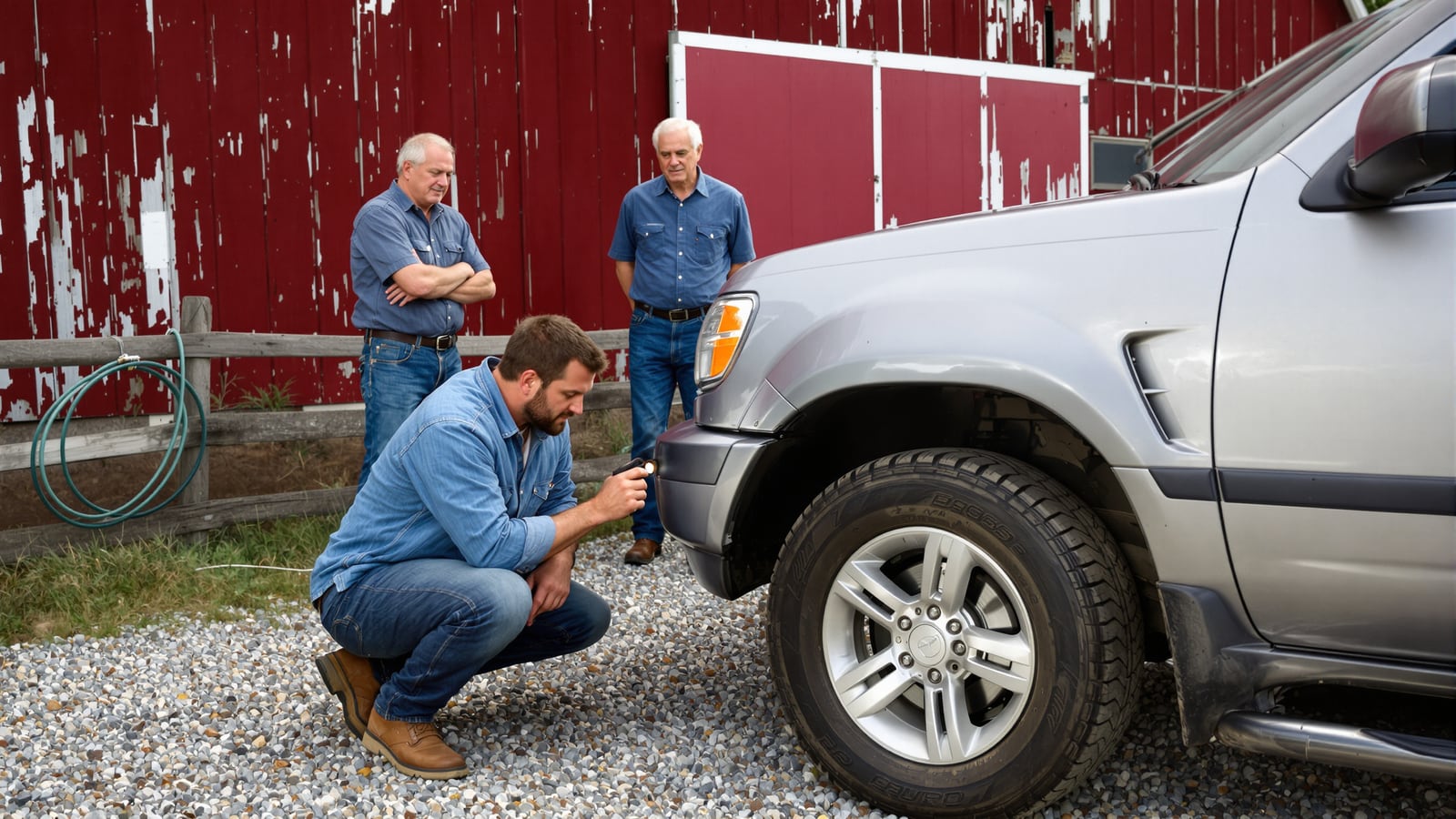
Quick answer: Check the panel gaps, the bolts, the seams and the rubber. Then drive it straight on a flat road with your hands loose. If two things look off, walk. If a seller won't let an independent shop put it on a lift, walk faster.
Why the photos lie
Every listing photo is taken in good light, at a flattering angle, on a freshly washed car. Fresh paint, new undercoating and a detailed engine bay all photograph beautifully. None of them tell you what happened to the metal underneath.
Most cars built in the last few decades are unibody. The frame and the body are one welded structure, so "frame damage" means the structure itself got bent, and that's what a hard hit does. Trucks and some big SUVs still ride on a separate frame. Either way, a car that took a serious hit and was fixed cheaply will drive, look fine at a distance and sell well online.
It won't look fine up close. A factory builds a car with robots and jigs, and the result is consistent down to the last bead of sealer. A repair shop does it by hand. Your whole job is spotting where the consistency stops.
Start with the gaps
Walk around the car slowly and look at the seams between the panels. Hood to fender. Fender to door. Door to door. Trunk to quarter panel.
On a car that's never been hit, those gaps are even. Not perfect, since some brands run looser than others, but even, and the same left to right. Stand at the front corner and sight down the side. Compare the driver's side to the passenger's side.
A gap that's tight at the top and wide at the bottom is a bad sign. So is a fender that sits proud of the door by the thickness of a nickel. Panels get bolted back on slightly wrong when the structure behind them has moved.
Then crouch and look down the length of the body at a low angle. Straight panels reflect straight lines. Ripples and waves in the reflection mean filler or a poor repaint.
Look at the bolts and the rubber
Open the hood and look at the bolts that hold the fenders on. Factory bolts are painted along with the body, so the paint covers the heads evenly. If you see bare wrench marks, chipped paint around the heads or bolts that don't match, those panels have come off at some point. One removed fender could mean a parking-lot fix. All of them means something more.
Many cars also carry small factory stickers on the doors, fenders, hood and trunk lid. A panel with no sticker, in a row of panels that have one, was probably replaced. This varies by maker, so it's a clue, not a verdict.
Then check the rubber. Run a flashlight along the door seals, the window gaskets and the edge of the hood. Paint overspray on black rubber is the classic giveaway. A good body shop masks everything. A rushed one doesn't. Overspray on a wiring harness or inside a door jamb tells the same story.
Check the radiator support and the welds
Look at the panel behind the front bumper that holds the radiator, the radiator support. It's hard to see in a photo and expensive to fix right. On many cars it's a bolt-on piece, and on a front-end hit it's often replaced. Look for mismatched bolts, bright new metal, a different texture of paint or sealer that's messy.
Factory seams are sealed with a neat, uniform bead. Repaired ones look like somebody piped toothpaste with a shaky hand. Factory spot welds are a regular row of small round dimples. Replacement sections are often joined with a continuous weld or a different pattern.
Open the trunk and lift the carpet. Look at the floor around the spare tire well and the rear corners. Ripples, creases, flaking seam sealer or fresh paint in one spot and old paint everywhere else all point to a rear hit.
Use the magnet, but know its limit
A small refrigerator-type magnet wrapped in a thin cloth, so it doesn't scratch, helps on steel panels. It sticks firmly to metal and weakly or not at all where body filler is thick. Slide it along the lower doors, the fenders and the rear quarters.
The limit is real. Aluminum panels don't attract a magnet, and some fenders and hoods are aluminum. So are plastic bumper covers. If it doesn't stick anywhere on a given panel, check whether the car was built with that panel in aluminum before you accuse anyone of anything.
Get under it
This is where the flashlight earns its keep. Get down and look at the frame rails or the structural members behind the front wheels and ahead of the rear wheels.
You want straight, uniform metal. You don't want kinks, waves, torch marks or a rail that's been welded and painted black in one spot. A patch of new undercoating on an otherwise dusty underside is suspicious. Sellers don't spray one corner for fun.
A car that's been cleaned too well underneath is its own warning. Ask yourself why somebody pressure-washed the underbody of a ten-year-old commuter.
Let the road tell you the rest
Find a flat, empty, straight stretch. Hold the wheel lightly at a steady 40 or 50 mph. A car that drifts to one side, or needs the wheel turned off-center to go straight, may be bent. Check the front tires for wear on one edge only. Look at the car from behind while someone else drives it past you. If the rear wheels don't track in line with the front, that's called dog tracking, and it's one of the clearer signs of a structural problem.
Pay attention to the doors. They should close with the same solid sound on both sides. Wind noise at highway speed that wasn't there on the test drive's first mile can mean seals that don't sit right.
Where the history report falls short
Run the VIN. A report like Carfax or AutoCheck is worth the money, but it only shows what was reported. A fender-bender paid in cash at a corner shop never made it into any database. A clean report is a starting point. Your eyes and a lift do the rest.
If the title is branded salvage or rebuilt, that's a different car with a different price. Rules vary by state, so check yours. Ask a lawyer or your insurance agent about coverage and resale on a branded title. Don't guess.
Pay the shop, not the seller's word
When the car passes your walk-around and you still like it, take it to an independent body shop or a frame shop for a pre-purchase inspection. Not the seller's cousin. Not the dealer's service bay. A shop with a frame measuring system can compare the car to factory specs in millimeters. Expect to pay for an hour or two of the shop's time. It's the cheapest insurance in the deal.
A seller who says "sure, take it" is usually telling you something good. A seller who suddenly can't spare it for an hour has told you something else.
Our pre-purchase checklist for strangers' cars covers the paperwork side, and buying a car from a stranger without getting burned covers the handshake. For the first look at a car cold, twenty minutes with the engine off is where I'd start.
One more thing. Bring a rag. Wipe your hands, close the hood gently, and leave the seller's driveway the way you found it. If the car's a keeper, you'll want to be the buyer they remember well.
Walk away from the deal, if it comes to that, with a nod and a thanks. You don't owe anyone an argument. You owe your family a car that holds together in a crash.
Dean Shaw
Gear & Garage
Reads the warranty, the parts list and the long-term owner reviews before anything else. Trucks, tools, watches, and the cheap version that costs more.

Watch
Watch how it's done
Picked for this article.
From channels we rate. Plays on YouTube.
Lakeside Autobody
How to Check for Frame Damage on a Car, Truck or SUV
Buy-Pros
How to Inspect Aprons & Frame for Accident Damage
Read next