Topping off with the hose is how coolant quietly stops working
Antifreeze also stops boil-over, and the mix only works at the right ratio. Water from the tap, added a little at a time, wrecks it.
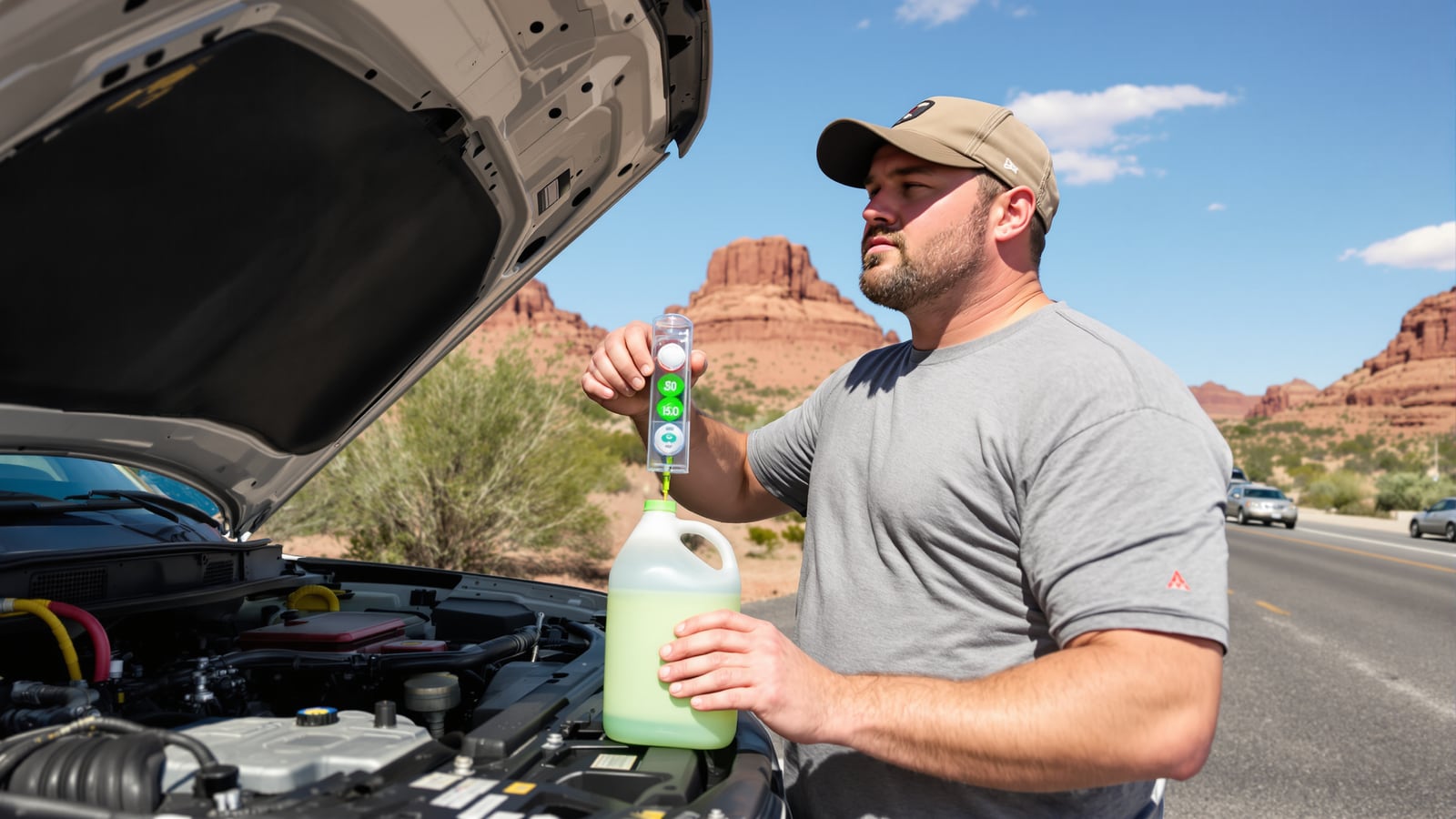
Quick answer: Most cars want a 50/50 mix of the right coolant and distilled water. Plain tap water in the reservoir thins that mix, rusts the system from the inside, and leaves the engine closer to boiling over in July and freezing in January than you'd guess. Check the mix with a cheap tester. Top off with premixed coolant. Keep the hose for the driveway.
The name is only half the job
"Antifreeze" undersells it. The glycol in your radiator also raises the boiling point, and that matters more to most drivers than the cold does.
A 50/50 mix of ethylene glycol and water protects to roughly 34 below zero. It also boils at about 223°F in an open container. Your cooling system isn't open. The radiator cap holds pressure, around 15 psi on many cars, and that pushes the boiling point of a good mix up toward 265°F. Check the number stamped on your cap.
Plain water under the same pressure boils well short of that. Your engine runs around 200°F on a normal day. The margin between normal and trouble is smaller than most people think, and the mix is what makes it wider.
Why the hose isn't the answer
You see the reservoir sitting low and you've got a hose forty feet away. It feels like a harmless fix. Three things go wrong.
Dilution. Every pint of water you add drags the mix further from 50/50. Do it a few times over a couple of years and you can be sitting at 30 percent glycol without ever having made one dramatic mistake. Freeze protection drops. Boil protection drops. Nothing on the dash tells you.
Minerals. Tap water carries calcium and magnesium. Heated over and over inside a radiator, they come out of solution as scale. Scale coats the passages and insulates the metal you're trying to cool. Radiators and heater cores have narrow channels, and scale clogs them first.
Corrosion. Coolant isn't just glycol. It carries inhibitors that protect aluminum, iron and the water pump seal from eating themselves. Dilute the coolant and you dilute the inhibitors. Chlorides in some tap water make it worse. The damage doesn't show up on your schedule. It shows up as a heater that blows cold or a water pump that weeps at 90,000 miles.
If you're topping off, use distilled water. A gallon is cheap and sits on the shelf with the windshield washer fluid. Better still, use a premixed 50/50 jug made for your car. Then the ratio holds no matter how many times you add.
More isn't better either
The instinct that says "if some is good, more is good" doesn't work here. Pure glycol carries heat worse than water does. It also freezes at a much warmer temperature than a mix, around single digits Fahrenheit. Freeze protection peaks near 70 percent glycol and falls off past that.
So 50/50 isn't a compromise. For most climates it's the sweet spot. Some manufacturers specify other ratios, and extreme cold country sometimes runs closer to 60/40. Read the owner's manual before you decide you know better.
Check it in five minutes
Do this with the engine cold. Never open a radiator or reservoir cap on a hot engine. The system is under pressure, and scalding coolant can come out fast.
- Pop the hood and find the overflow reservoir. The level should sit between the MIN and MAX lines when cold.
- Look at the coolant itself. It should be clean and bright. Rust-brown, oily or full of floating specks is a flush-and-diagnose problem.
- Pull a sample or dip a tester. A hydrometer or test strip from any parts store tells you the freeze point. A refractometer is more accurate and still not expensive. Match the reading to your climate.
- If the freeze point reads warmer than you want, the mix is too weak.
A weak mix isn't an emergency in June. It becomes one the first hard freeze of the year, when the water in the block turns to ice and expands.
Fixing a weak mix
You have two honest options.
The easy one is to drain some from the reservoir and radiator and refill with the correct strength. That only gets you partway, because you can't drain the whole system this way.
The right one is a full drain and refill, sometimes called a flush. Once you know how, it's an afternoon job on many cars. On others it's a fight with a bleeder valve and trapped air, and a shop will do it properly for a reasonable price. Either is fine. Skipping it for another five years isn't.
For servicing that actually can't wait, here's how to tell it from the stuff that can.
Buy the right stuff
Coolant colors don't mean what they used to. Green, orange, pink, blue and yellow aren't reliable indicators of chemistry, and different makers use different dyes for the same formula. Don't buy by color.
Buy by specification. Your owner's manual lists the standard your engine needs. The jug will list the standards it meets. Match them. Mixing incompatible chemistries can gel, and a gelled cooling system is an expensive lesson.
Universal coolants exist and plenty of people run them without trouble. If your car is under warranty or has a specific requirement, stick to what the manual says.
When water is the right call
A hose hiss on the side of the highway, the gauge climbing, and the nearest parts store 30 miles back. Water is better than nothing. Add it, nurse the car to a safe place, and let the engine cool before opening anything.
Then fix it properly. Get the mix tested, correct it, and find out why you were low. Coolant doesn't vanish. If the level keeps dropping, you've got a leak in a hose, a radiator seam, a water pump, a head gasket, or some other piece that's going to get worse. Small drips become big ones at the worst possible time.
Clean up the spill, and bring a jug
Ethylene glycol tastes sweet. It's also poisonous. Dogs lap it off driveways. If you spill any, rinse the spot thoroughly and wipe it up. If a pet or a child swallows any, get veterinary or medical help right away. Don't wait to see how they feel.
And if you borrow a buddy's truck or help a neighbor with a car, leave it better than you found it. If the reservoir is low, bring a jug of the correct premix and top it off. Return the vehicle with the level where it should be, not where you found it. That's what a man who knows his way around an engine does.
A premixed jug costs about what you'd spend on lunch. Replacing a cooked engine costs thousands. If you're aiming for a car that lasts, what it really takes to get a car past 250,000 miles is mostly stuff like this. And if you want to catch a weeping hose or crusty fittings before they leave you stranded, twenty minutes with the engine off will find most of it.
Check the mix before the first cold snap. The hose can wait.
Dean Shaw
Gear & Garage
Reads the warranty, the parts list and the long-term owner reviews before anything else. Trucks, tools, watches, and the cheap version that costs more.

Watch
Worth an hour of your evening
More from Cars.
From channels we rate. Plays on YouTube.
Read next