

Find a tailor who knows your name, and keep him
One good neighborhood tailor makes every suit and shirt you own look better. Here's how to find him, how to be worth his time, and what to ask for.
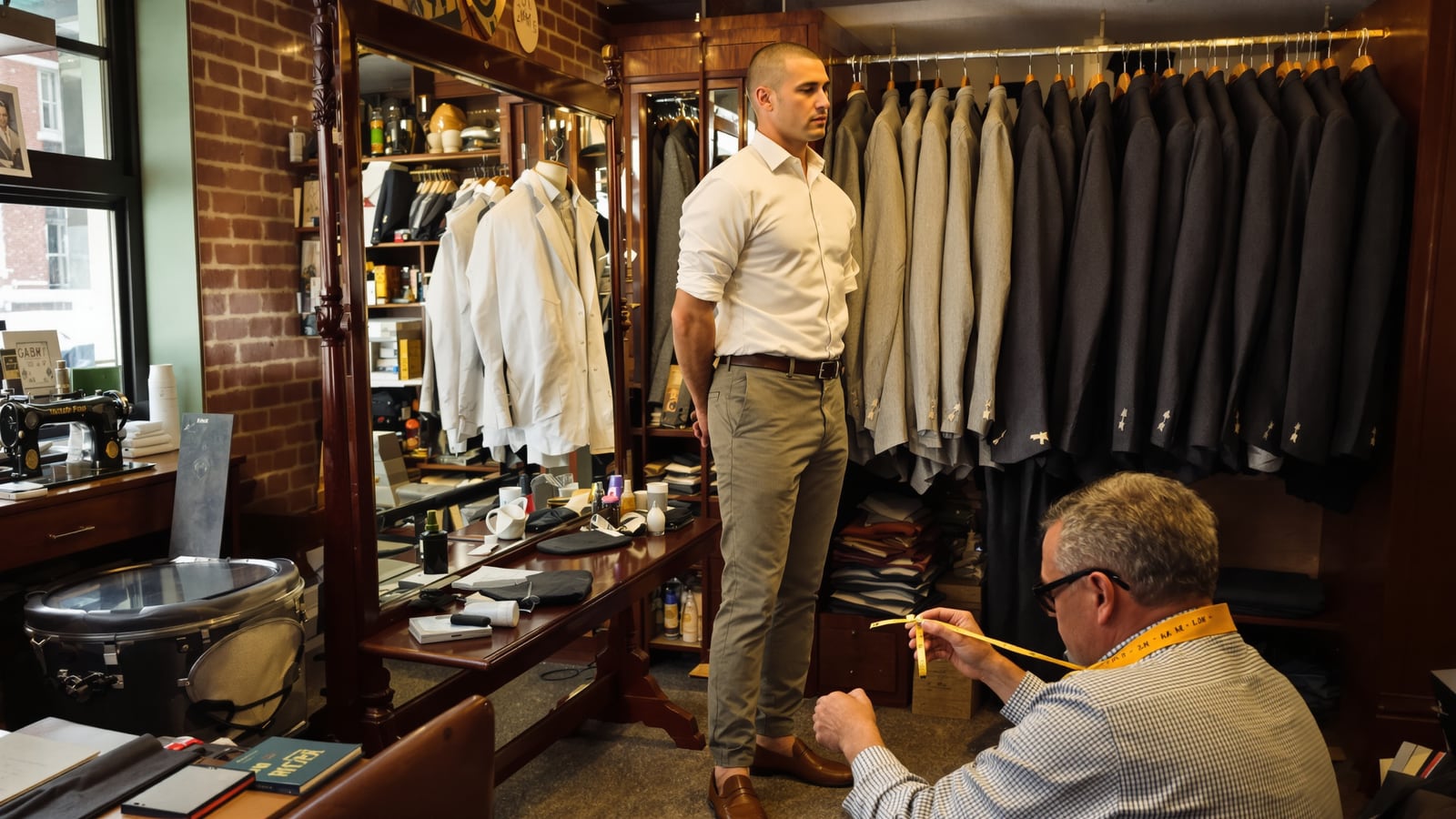
Quick answer: Pick one independent tailor near your home or office. Take him a single small job first. Be on time, pay without fuss, and go back. The value isn't in any one hem. It's in a man who has your measurements, your shoes and your habits on file.
You walk in with a pair of gray wool trousers. The tailor looks at the pants, then at your feet. "Still the brown loafers?" he asks. "Same break as last time?"
You say yes. That's the whole appointment. He chalks the cuff, pins it, and you're out the door in four minutes with a pickup date.
That's what you're buying. A sharp pair of trousers is a side effect.
The second visit is the real product
The first visit is a stranger's visit. The tailor has to guess how you stand, how you move, how much room you like in a sleeve and whether you actually wear a jacket buttoned. He'll do honest work, but it's an educated guess.
By the third visit, none of that's a guess. He knows you carry your weight a little forward, which changes how trousers hang in back. He knows one shoulder sits lower. He knows you hate a cuff that flaps, and he's stopped asking about it.
Nothing in a department store does that for you. You can't get it online, either. And in a city where you pay a premium for everything, it's one of the few things where paying a local actually gets you more than the money.
Go in ready, not hopeful
Most men waste their first appointment by arriving unprepared. A few fixes:
- Wear or bring the shoes. Trouser length is set against the shoe. Dress shoes for dress trousers, sneakers for chinos you'll wear with sneakers. Bring both if you'll wear both.
- Wear the right shirt under a jacket. A tailor can't judge sleeve length over a T-shirt. Put on a dress shirt with a proper cuff.
- Bring one or two items. Not a laundry bag. You're starting a relationship, not dumping a pile on him.
- Know what bugs you. Pulling across the back, too much fabric at the waist, trousers that bunch at the ankle. A tailor can work with "this bothers me here." He can't do much with "make it look good."
- Ask about timing before you hand it over. Some jobs take a couple of days. Some take two weeks. Don't discover that the day before a wedding.
Then let him work. If he pins something and you hate it, say so while the pins are in. That's the cheapest moment in the whole process to change your mind.
What's worth fixing and what isn't
A good tailor will tell you when to stop. A bad one will take your money for a job that can't come out right. Know the difference before you walk in.
Worth it, almost every time:
- Hemming trousers. This is the fix that changes the most for the least.
- Taking in the waist of trousers, or tapering the legs a bit.
- Shortening jacket sleeves. You want a little shirt cuff showing, about half an inch.
- Taking in a shirt through the sides so it doesn't balloon at your belt.
- Shortening a jacket or taking in its waist, within reason.
Be careful:
- Jacket shoulders. This is the one thing most tailors won't touch, because moving a shoulder means rebuilding the jacket. If the shoulders are wrong on the rack, put it back.
- Letting out. You can only let out as much fabric as was left in the seam. Sometimes that's half an inch. Ask before you buy, not after.
- Cheap clothes. If the alteration costs more than the garment, you've bought an expensive lesson. Spend on the fix when the cloth is worth fixing.
One more thing. A tailor can make a good garment fit. He can't make a bad garment good. Buy the best cloth you can reasonably afford, then bring it to him. For more on the buying side, see the thirty pieces that cover almost everything when you're building the closet he'll be working on.
How to find the right one
Skip the search engine for a minute. Look around.
Ask the best-dressed man at your office where he goes. Don't ask the one who spends the most. Ask the one whose trousers always break right. He'll tell you, and he'll probably feel good that you asked.
Check the dry cleaners near you. Plenty of them have a tailor in the back who's been there for years. Bridal and formalwear shops often know the best independent in the area, because they can't afford to send a wedding party to a hack.
Then judge the shop. A good one has pins on the counter, garments hanging with tags, and an owner who's been there long enough that the rent on that block doesn't scare him. Surviving in an expensive postcode for ten years means customers keep coming back. That's a better review than any star rating.
Test him cheaply. Hand over a plain hem on trousers you own. If the line is straight, the cuff sits right and it's ready when promised, you've found him. If it's crooked, you've lost a small amount and learned a lot.
Be the customer he's glad to see
This is where most men lose the relationship before it starts.
- Pick up when you said you would. Garments sitting on a rack for three weeks tells him you don't respect his space.
- Pay on pickup, no haggling. You wouldn't haggle with a plumber while he's standing in your kitchen. A tailor's price reflects years of skill. If it's too high, find someone else next time.
- Bring something now and then. Coffee around the holidays. A thank-you after a rush job. It costs you almost nothing and he will remember it.
- Don't ask for rush work unless you need it. Rush jobs come with a price, and the tailor remembers who asks for them every time.
And hold your ground when the work is off. If a hem comes back crooked or a sleeve is half an inch too short, say so, politely and right there at the counter. "This isn't quite right. Can you take another look?" A good tailor will fix it without a word. A tailor who gets defensive tells you what you need to know.
Being a good customer is about respect, not being a pushover. You can be generous and still expect the work to be right.
What it adds up to
A man in an expensive city is always paying someone for something. Rent, lunch, the subscription he forgot about. Most of it is a transaction that vanishes the minute you walk out.
A tailor is different. He's one of the few people in your neighborhood who gets better at serving you every time you show up. He knows you. He catches the thing you'd have missed. And one day you'll walk in the week before an interview or a wedding, and he'll say "bring it in, I'll get to it tonight."
That's worth more than the hem. It's also the same habit behind being useful in a room and living in your city like you plan to stay: show up, be decent, come back. The city starts to feel like yours.
So take the trousers in this week. Wear the shoes.
Marcus Vale
Editor-in-Chief
Twenty years in magazines, most of it deciding what to cut. Writes about work, discipline and the decisions that compound.

Watch
Worth an hour of your evening
More from City Bro.
From channels we rate. Plays on YouTube.
Read next