

Make friends with the guy behind the fish counter
He knows what landed this morning, what's tired, and what to do with it Tuesday night. Asking the right question gets you the good stuff.
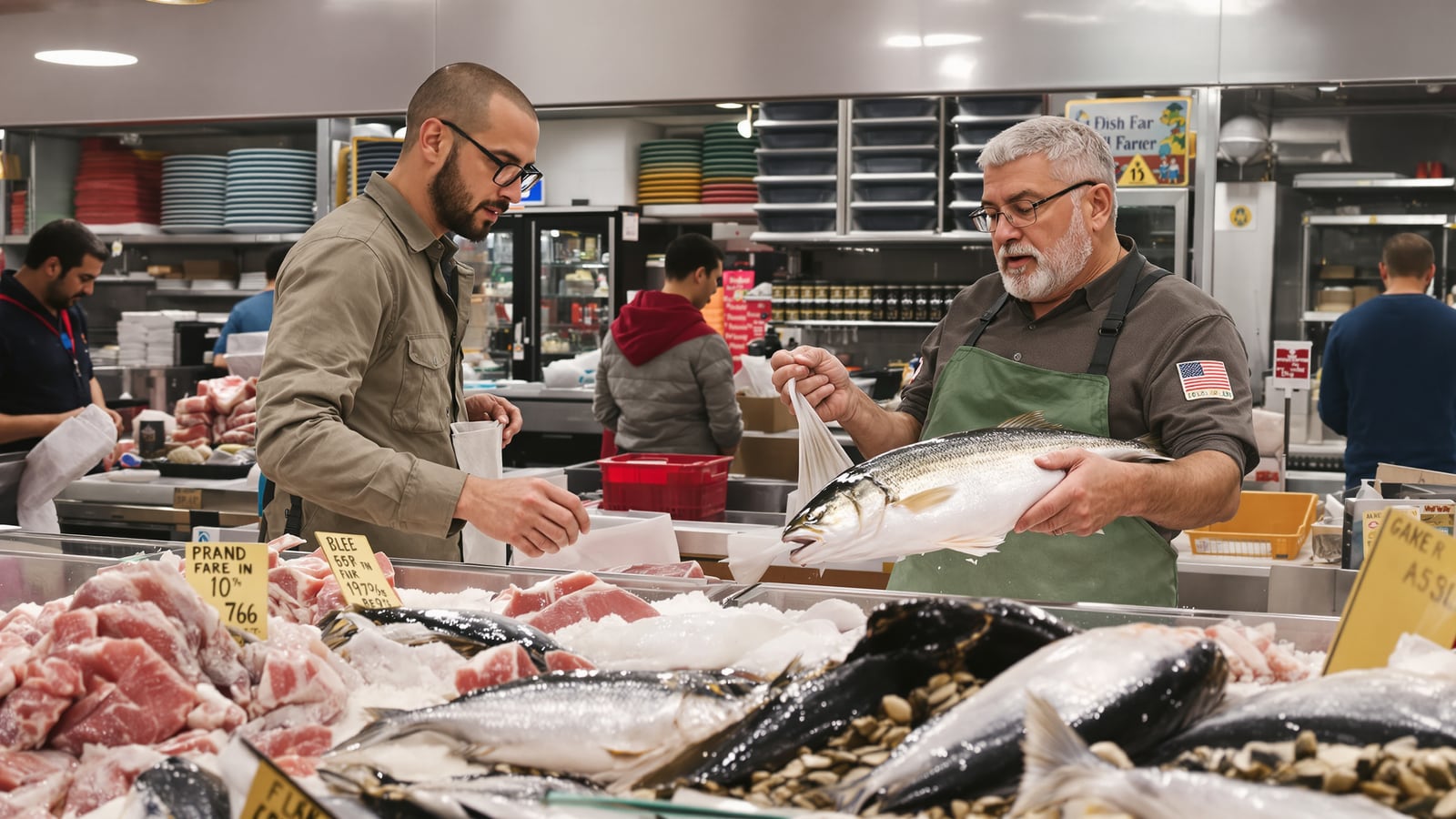
Quick answer: Stop asking "do you have salmon?" Ask "what's best today?" and buy whatever he points at. Then ask how he'd cook it. That's the whole trick, and it's free.
The question that changes the transaction
Saturday, 8:40 a.m. A guy in a quarter-zip stands at the counter and says, "Two salmon fillets." He gets two salmon fillets. They're fine. They're what he asked for.
The man behind him says, "What looks good?" The counter guy glances at a tray of striped bass, says it came in at six, and tells him to buy it, skin on, hot pan, four minutes a side. The second customer pays less and eats better.
You're paying rent in a place where the best food sits ten blocks from your door. Most people never use the one person who can tell them what's worth buying today. He's not selling you something. He's standing there all day, handling the product, and he'd rather talk about it than ring up another order for the same thing.
What to ask, in order
- "What came in today?" Not "is it fresh?" Everybody says yes to that.
- "What would you take home tonight?" People tell the truth about their own dinner.
- "Was this ever frozen?" Say it plainly. It isn't an insult. Fish frozen at sea can easily beat "fresh" fish that's been traveling and sitting for days. A good counter will tell you straight, and the answer teaches you something either way.
- "How would you cook it?" You'll get a method, a time, and usually a warning about the mistake everyone makes.
- "What's good that people skip?" This is where the bargains live. Mackerel, whiting, and sardines often cost far less than the fish everybody asks for, and they cook fast.
Check his answer with your own eyes
You don't have to take anyone's word. A few things you can verify in ten seconds.
- Whole fish: Eyes should be clear and bulging, not sunken or cloudy. Gills should be red or pink, not brown or gray.
- Fillets: The flesh should look moist and tight. Gaps, browning edges, or a milky liquid pooled in the tray mean it's been there a while.
- The smell: It should smell like cold ocean, or like nothing much. Strong fishy or ammonia smell means walk away.
- The press test: If he'll let you, or if he does it for you, good flesh springs back. A dent that stays is a bad sign.
- Shellfish: Live mussels and clams should close when tapped. Ask to see the tag on oysters and clams, which tells you where and when they were harvested. A shop that's proud of its stock will show you without fuss.
Now the concession. If every answer you get is "it's all fresh, everything's great," you're at the wrong counter. A supermarket case of pre-wrapped trays with nobody to talk to isn't a fish counter, it's a refrigerator. Find a real shop, even if it's a fifteen-minute walk. And yes, it'll cost more per pound than the chain. You'll waste less of it.
What to do with it when you get home
The counter guy gives you the plan. These are the moves that cover most of what he'll hand you.
Firm fillets with skin (bass, snapper, salmon): Pat the skin completely dry with paper towels. Salt it. Get a heavy pan hot, add a thin film of oil, and lay the fish in skin side down. Press it flat for ten seconds so it doesn't curl. Then leave it alone. Don't nudge it. When the skin releases from the pan on its own, it's ready to flip. Most people ruin it by moving it too early.
Thin, delicate fish (flounder, sole): Quick and gentle. A little butter, a few minutes, a squeeze of lemon. It overcooks if you look away to check your phone.
Oily fish (mackerel, sardines): Hot oven or a very hot grill, salt, nothing else. Lemon at the table. These fish are forgiving and cheap, and they're the best way to find out whether you actually like fish.
Mussels: Rinse them, toss any that stay open after a tap, then steam in a covered pot with a splash of white wine or just water, garlic, and butter. Five to six minutes. Pull them when they open, and throw out any that don't. Buy bread. That's dinner for two and it takes less time than waiting on delivery.
Ask him for the extras too. He'll scale a fish, take out the pin bones, or fillet it for you, usually without charging. Ask for the heads and bones for stock, which many shops will happily give you for next to nothing. If you're building a weeknight routine, this fits right into the city kitchen that beats delivery four nights a week.
Be a customer worth talking to
This part matters more than the questions. Good counter people save the best for people they know.
Go at roughly the same time each week. Learn when the deliveries come in, and ask him directly. Buy fish the day you eat it, because that's the point of the place. Know what you want before you reach the front of a long line, and don't poke every fillet with your finger.
Then come back and tell him how it went. "That bass was great, the skin was perfect." Two sentences. By the third visit he's holding something back for you, or steering you away from the tray that's had a long weekend. That's the same principle behind being useful instead of working the room. Show up, be decent, be specific, and people take care of you.
It's also one of the quiet ways to stop treating your neighborhood like a hotel. The man at the fish counter, the baker, the butcher, and the guy who runs the hardware store are the ones who make a big city feel like a place you live. Stop living in your city like it's a long business trip makes the larger case, and this is the cheapest way to start.
What it costs
A few dollars more per pound on a good night, maybe. A fifteen-minute walk. Five minutes of conversation you'd otherwise spend scrolling in line.
What you get back is a man who knows your name, a dinner that tastes like you paid a restaurant for it, and a reason to be home on a Tuesday.
Next Saturday, walk past the pre-wrapped trays. Say "What's best today?" and then do what he says.
Marcus Vale
Editor-in-Chief
Twenty years in magazines, most of it deciding what to cut. Writes about work, discipline and the decisions that compound.

Watch
Worth an hour of your evening
More from City Bro.
From channels we rate. Plays on YouTube.
Read next