

Pick one coffee shop and be boring there for a month
Regulars aren't made by charm. They're made by showing up at the same time, ordering the same thing and not being a problem.
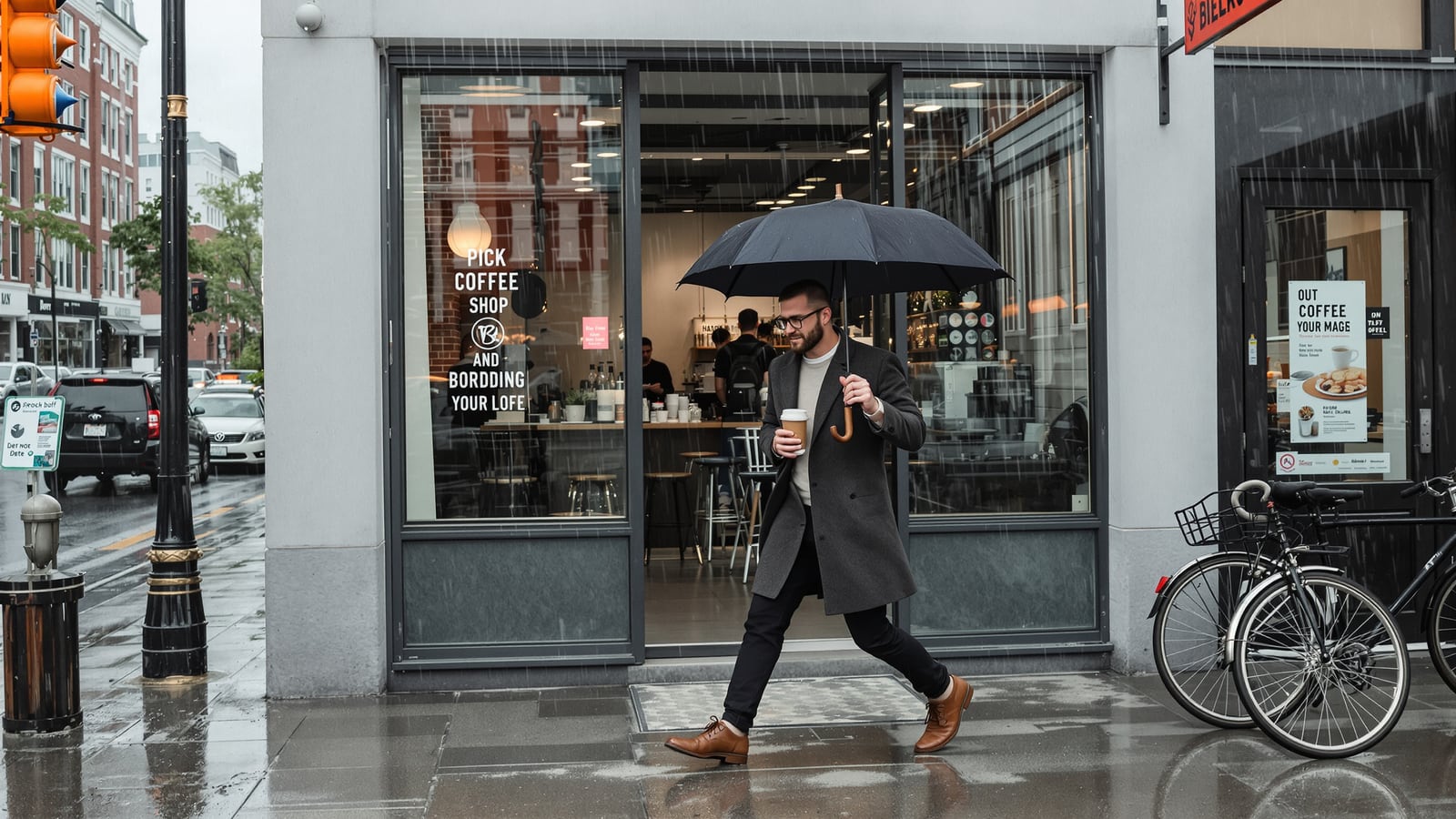
Quick answer: Choose one shop within a ten-minute walk. Go the same mornings at the same time. Order the same drink, learn the barista's name, tip, and clean up after yourself. In about three weeks, someone will start your order when you walk in.
The contrarian part: don't shop around
Most people in an expensive zip code treat coffee like a tasting menu. Monday it's the place with the neon sign, Wednesday it's the one with the oat-milk flight, and Friday it's whatever has the shortest line.
You'll never be a regular anywhere that way. A regular is a pattern, and a pattern needs repetition. Pick one shop and be dull about it. Dull is the whole strategy.
Choosing the shop
You're looking for a few specific things:
- People who stay. If the barista changes every month, you're building a relationship with a revolving door. Owner-run shops and small local ones usually keep staff longer than chains do. Not always, but usually.
- A counter or a bar. Somewhere to stand for two minutes beats a place that's all laptops and headphones.
- A line you can live with at your hour. If seven people are always ahead of you at 8:10, nobody has time to know your name. Try 7:30 or 9:15 and see how the room changes.
- Close enough that you'll go in the rain. Ten minutes on foot is the limit. Farther than that and you'll skip it the first cold Tuesday.
Visit three shops once each, then commit. Don't agonize. The shop matters less than the habit.
Weeks one through three
Week one. Go at least three mornings, same window each time. Order the same thing. Not the seasonal special, not something with a sub-menu. A medium drip or a flat white, whatever you'd actually drink every day.
Read the name tag. If there isn't one, ask once, "I'm Dave, by the way. You are?", and then use the name the next day. People can tell when you remember.
Week two. Take out your earbuds before you reach the counter, and put the phone in your pocket. That alone puts you in the top few percent of customers by manners. Ask one real question, something specific. "What do you drink when you're off the clock?" works. So does "Which of these beans is actually good, and which one is just pretty?" Let them be the expert. They are.
Week three. Somebody will start your order before you finish saying hello. That's the moment. Don't make a speech about it. Say thanks and mean it.
What it costs, and why it's worth it
Run the math once so you can stop feeling guilty about it. At five dollars a drink, three mornings a week, you're spending about $780 a year. That's the price of a decent gym membership. For it you get a place to be that isn't your apartment or your office, where somebody knows your face and nobody needs anything from you.
In a city where you can go a week without anyone using your first name, that's a bargain. It's also a head start on what Making friends after thirty is a logistics problem lays out: repeated, low-pressure contact in the same place does more than any mixer will.
Be the customer they hope walks in
This is where the old code applies. Leave it better than you found it.
- Bus your own table. Carry the mug to the bin. Wipe up the ring. It takes eleven seconds.
- Don't squat. If you're camping with a laptop for three hours, buy something every hour or so. Skip the four-top during the rush. Take the bar stool.
- Tip every time. A dollar in the jar, or round up on the app. Not a show, just a habit. The staff notice the people who do it consistently, and they notice the ones who don't.
- Hold the door. Yes, really. Somebody always has a stroller or two cups of something hot.
- Stay for the last five minutes sometimes. If a barista is stacking chairs, ask if they need a hand. They'll say no. They'll also remember you asked.
What not to do
Don't ask for a discount, a free refill or a "regular's price." If the shop wants to comp you something, they'll do it on their own, and when they do, put the difference in the tip jar.
Don't pitch your side business at the counter. Don't hand out your card. Don't hijack the conversation with the guy next to you to tell him about your startup. This is the same mistake Stop working the room and start being useful warns about: the person who's working you can feel it, and nobody enjoys it.
And don't mistake a friendly shop for a captive audience. You're a guest. Act like one, and the welcome gets warmer on its own.
What you get back, slowly
Nothing happens in week one. By month two, a few things start to turn up.
The barista nods at you on the street on a Saturday. The owner tells you which dry cleaner on the block is actually good. A guy you've seen at the end of the bar for weeks finally says something, and it turns out he's lived in the building two doors down for nine years and knows exactly which landlord to avoid. Neighbors are a better source than any listing site, a point that sits right alongside What to read twice before you sign a city lease.
You don't need any of that to happen. But a place where you're known changes how a city feels. It stops being a series of transactions and starts being a neighborhood, which is the whole point of Stop living in your city like it's a long business trip.
One honest caveat
Some shops just won't warm up. The staff is overworked, the line never ends, the owner's never there. If you've gone consistently for six weeks, been polite, tipped, and still get a blank stare, move on. You didn't fail. Pick the next place and start the clock again.
Otherwise, order the same thing for a month. One morning you'll walk in and the drink will already be on the counter. You can't rush that, and you can't fake it. You just have to keep showing up.
Marcus Vale
Editor-in-Chief
Twenty years in magazines, most of it deciding what to cut. Writes about work, discipline and the decisions that compound.

Watch
Worth an hour of your evening
More from City Bro.
From channels we rate. Plays on YouTube.
Read next