Rain Off the Shop Roof Will Water More Than You Think
One inch of rain on a 1,000-square-foot roof is 623 gallons. Here's how to catch it, store it, and get it to the garden without a pump.
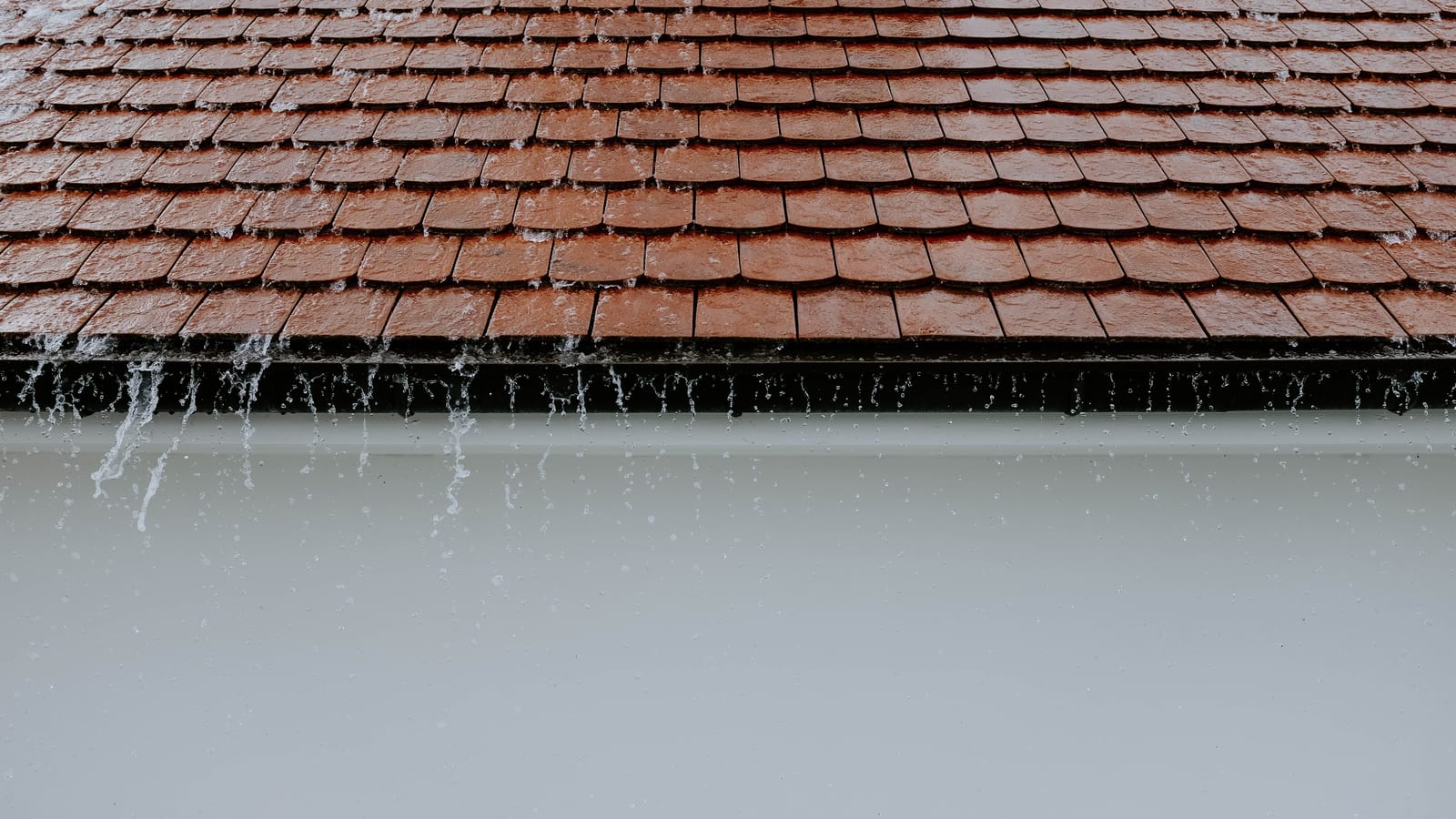
One inch of rain on 1,000 square feet of roof is 623 gallons. That's the number that makes the whole thing worth doing, and most people never run it.
Do it for your own buildings. Measure the footprint of the roof, not the slope, because a 40x30 shop catches the same water whether it's a 4/12 pitch or flat. That's 1,200 square feet, which is 748 gallons per inch of rain. Get four inches in a wet month and that roof threw away roughly 3,000 gallons while you paid the power company to pull the same water out of the ground.
Knock 15 to 20 percent off for splash, wind, gutter overshoot and the water that evaporates off hot metal before it ever runs. Use that number when you size a tank, not the theoretical one.
Check your state before you buy anything
Water law in the West is older and touchier than most people expect, and rain that lands on your roof isn't automatically yours to keep. Colorado caps residential collection at two barrels with a combined 110 gallons. Utah requires registration above a certain volume. Most states east of the Mississippi don't care at all, and several offer rebates.
Call your state water resources department or the county extension office and ask a plain question: what can I legally store off a roof at this address. Five minutes on the phone beats finding out after you've set two totes on a gravel pad.
Gutters do more work than the tank
The storage is the fun part. The collection is the part that decides whether your water smells like a pond by August.
You need gutter screens, and you need to actually clean them. Leaf litter in a downspout becomes tea, and tea grows things. A simple aluminum mesh over the gutter and a basket strainer at the downspout inlet will catch most of it.
Then build a first-flush diverter. It's a vertical length of 4-inch PVC standing next to the downspout, capped at the bottom with a small drilled hole or a ball valve. The first rain off the roof carries the dust, the pollen, the shingle grit and whatever the birds left. It fills the standpipe first. Once that's full, the water backs up and flows on to the tank. The standpipe drains slowly through the drilled hole and resets itself.
Rule of thumb people use is about 10 gallons of diversion per 1,000 square feet of roof. A 6-foot stick of 4-inch PVC holds a little under 4 gallons, so you're stacking a couple of them for a big shop roof. Forty dollars of pipe and fittings. It's the highest-value part of the whole system and the part everybody skips.
Metal roofs are the good ones. Painted steel sheds water clean and fast. Asphalt shingles work but shed granules and oils, especially when new. Treated wood shakes and anything with copper or zinc flashing upstream is for landscape use only.
What to hold it in
Used IBC totes are the default for a reason. 275 gallons, a cage that stacks, a 2-inch valve already in the bottom, and they turn up on local classifieds for around a hundred bucks in farm country. Ask what was in it. Food-grade totes that held syrup or vinegar are fine after a rinse. The ones that held herbicide or industrial solvent aren't, no matter what the guy tells you. If the label's been scrubbed off, walk away.
Totes have one flaw: they're translucent. Light plus water plus nutrients equals algae. Paint them, wrap them, or build a simple lean-to over them. Black is better than clear, every time.
Vertical poly tanks in the 500 to 1,500 gallon range cost real money new but last decades, come UV-stabilized in dark green or black, and take up less pad. If you're going to keep the place, that's the buy.
Whatever you use, plumb an overflow at the top that's at least as big as the inlet, and route it away from your foundation. A full tank in a hard rain will find a way out. Better it's a pipe you chose.
The pad is the part people underbuild
275 gallons weighs 2,293 pounds. A 1,000-gallon tank pushing 8,340 pounds sitting on soft ground will tip, and a tipping tank is a genuinely dangerous thing to be standing next to.
Level it, compact it, and put 4 to 6 inches of packed gravel under it, or set it on solid concrete. Level matters more than you think, because a tote listing two degrees puts all that load on one corner of the cage.
If you want elevation for pressure, build a platform out of 6x6s and doubled 2x10s with a real footing, or set it on the uphill side of the property and let the dirt do the work. Don't stack pallets. Don't stack cinder blocks dry.
Getting it to the garden without a pump
Water gives you 0.433 psi per foot of drop. That's the whole physics lesson.
A tote sitting on the ground with a garden hose off the bottom valve is running about 2 psi. It'll fill a bucket and trickle a soaker line. It won't run a sprinkler, ever, and no amount of wishing changes it.
Raise the tank 8 feet and you've got about 3.5 psi. Site the tank uphill from the garden with 20 feet of fall and you're at roughly 8.6 psi, which is enough to run a real drip system. Every foot counts, so measure the actual elevation difference between the tank outlet and the far end of your drip line.
For gravity systems, use low-pressure drip tape or pressure-compensating emitters rated to start at 5 to 10 psi. Standard emitters expect 25 psi and will barely weep. Go up a size on the main line too: 1-inch poly instead of half-inch, because friction loss eats low-pressure systems alive. Short runs. Keep the lines as level as you can once you're out in the rows.
Put a 150 or 200 mesh screen filter right after the valve. Rainwater carries fine sediment even with a first-flush, and a plugged emitter is invisible until the plant's dead.
If you don't have the fall, a 12-volt RV demand pump on a small solar panel and a marine battery will give you 45 psi for a garden-sized system and costs less than a weekend of your time.
The honest part
If you're on a good well with cheap power, rainwater isn't going to save you money. It's going to save your well during a drought, water your garden while the county's restricting outdoor use, and give you 1,000 gallons on the property when the power's out. That's the actual case. A payback spreadsheet won't get you there.
And a single 55-gallon barrel under one downspout is mostly decorative. It fills in four minutes of hard rain and waters a couple of tomato plants. Go bigger or don't bother.
Don't drink it. Not without a real filtration and disinfection setup and a lab test, which is a different project with different rules. Garden, livestock, dust control on the driveway, washing equipment, fire reserve. That's the job.
Before the first freeze
Water expands when it freezes and it doesn't care what your tank cost. In November, drain the lines, open the drip valves, and drop the tank level below the outlet fitting so the ice has somewhere to go. Pull the first-flush cap. Disconnect the downspout and let the winter rain run out on the ground.
Then in March, hook it all back up and watch a free 700 gallons show up in an afternoon while your neighbor's still waiting on his hydrant to thaw.
Wes Dunbar
Country & Skills
Grew up on an acreage and never quite left. Covers trucks, trades, land, and how to do the thing yourself.

Watch
Watch how it's done
Picked for this article.
From channels we rate. Plays on YouTube.
Central Texas Gardening
Guide for Creating a Homemade First Flush Diverter - Rain Harvesting
Rain Brothers LLC
MISTAKES with first flush rain harvesting filters!
Read next