Roll your sleeves flat and they'll stay put all day
Spiral rolls slide, tight rolls pinch, and loose cuffs find every moving part. Fold them flat, set them below the elbow, and get back to work.
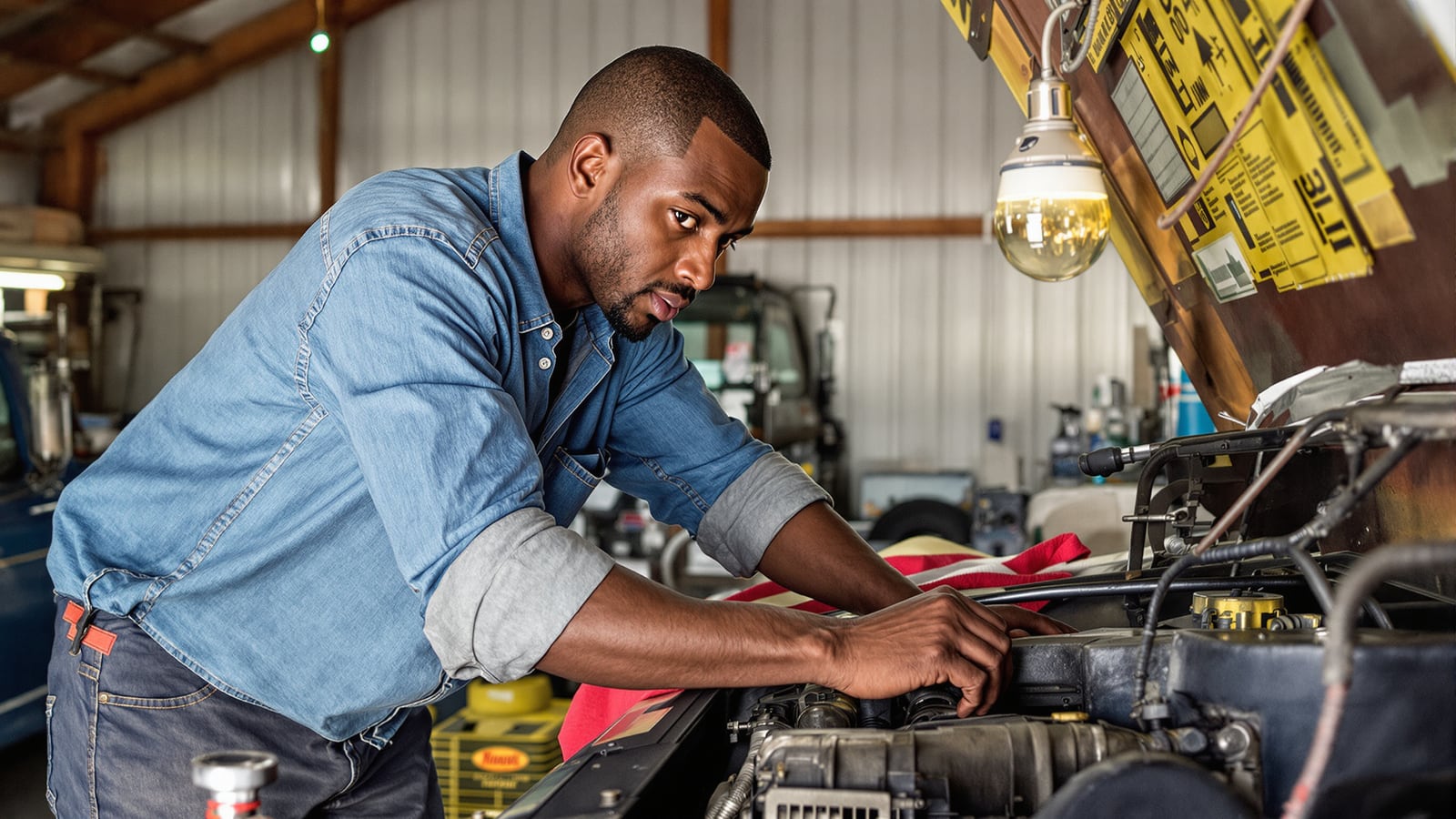
Quick answer: Unbutton the cuff and the placket. Fold the cuff back once, then fold the sleeve up in flat, even folds of about two inches until it sits just below the elbow. Don't twist it. Keep it snug enough to hold, loose enough that your hand stays warm.
It's ninety-five degrees and you're elbow-deep in a stock tank, fishing for a float valve that quit on you. Your left sleeve, rolled in a hurry about twenty minutes ago, lets go and drops into the water. Now you're working with a wet cuff slapping at your wrist. You push it up. It falls. You push it up again, and you've now done that fourteen times today.
Most men roll a sleeve the same way they tie their boots: however they learned at fifteen, and never again. It's worth fixing, because a sleeve that stays up is one less thing to think about, and one that doesn't can get you hurt.
Why your sleeves keep falling
Two mistakes cause nearly all of it.
The first is the spiral. You grab the cuff and roll it over and over toward your elbow like a sleeping bag. Every turn adds a little twist, and a twisted roll is a spring. The moment you flex your arm, it starts to unwind.
The second is rolling too tight, too low. A roll that clamps your forearm just above the wrist pinches, so you loosen it, so it slides. You're back where you started.
A shirt sleeve is also a cone. It's narrow at the wrist and wide at the shoulder. Every fold you take moves a wider part of the sleeve down onto a narrower part of your arm, which is why the roll creeps. Work with that. Park the roll where your forearm is thickest, which is just below the elbow, and the arm itself holds it in place.
The fold that holds
- Unbutton the cuff and the little placket above it. Skip this and you'll fight a stiff, bunched cuff all day.
- Fold the cuff back over itself once. It should lie flat against the sleeve, cuff edge up, with the buttons hidden underneath. This first fold sets the width for everything after it.
- Fold the sleeve up in flat folds, each about two inches. Fold, don't roll. Smooth each one with your thumb before the next. Two folds is usually enough. Three if the sleeve runs long.
- Stop just below the elbow. Roughly two inches under the bend is the sweet spot. Too high and the fold gets bulky when you bend your arm.
- Check it by bending. Make a fist, curl your arm, then reach out. If it holds, you're done. If it creeps, take it down one fold and tighten the last one slightly.
The result looks sharp, too. A flat, even fold has a clean edge, and a spiral roll looks like a wadded-up napkin.
Shirt choice matters more than you'd think
Not every fabric cooperates. Heavy twill and chambray grip your arm and hold a crease. Thin poplin slides. Thick flannel holds, but it's bulky and wants to unfold, so give it extra care and keep the fold narrower. If you work in flannel a lot, this piece on why it isn't keeping you as warm as you think covers what to look for in the fabric.
Some work shirts have a tab with a button sewn inside the sleeve. It's there for rolling. Fold the sleeve up, loop the tab over, button it, and the thing won't move. If your shirt has one, use it. It's the closest thing to a cheat code in workwear.
Sleeve length is the other variable. A sleeve that comes down past your knuckles makes a fat, heavy roll, and a fat roll sags. If the shirt fits everywhere else, a tailor can shorten the sleeves for the price of a decent lunch. Sizing for work is a bigger topic, and the jeans piece makes the same case for pants: fit for the job first, looks second.
The annoying part: a fold is a shelf
Say the quiet part out loud. A rolled cuff has a lip, and the lip catches things. Sawdust, hay chaff, grinding dust and wood shavings all pile up in that fold. When you pull your arm out of a bale or a pile of lumber, you carry half of it with you. Flick the fold out before you go inside.
Worse, it catches sparks. Anything that throws hot metal, like a cutting torch, a welder or an angle grinder, will drop slag into that shelf, and you won't feel it until it's burning a hole through your shirt. Rolled sleeves and sparks don't mix.
When the sleeves come down
A rolled sleeve beats a loose one around moving equipment, but neither is the answer. Know the situations where the sleeve goes down and the cuff gets buttoned snug:
- Anything rotating. Drill presses, PTO shafts, bench grinders, lathes, augers, chains. A loose cuff or a drooping roll can get pulled in faster than you can react. Button snug, or switch to a close-fitting sleeve. Never trust a roll that's started to slip.
- Welding and torch work. Sleeves down, buttoned, with gloves overlapping the cuff.
- Brush, wire and brambles. Fence work in a briar patch isn't the place for bare forearms. Neither is stacking rough lumber.
- Chemicals. Sprays, solvents, fertilizer and fuel. Keep it off your skin.
- Real cold. An exposed forearm loses heat fast. Down they go.
If you catch yourself pushing up a drooping roll every ten minutes, stop and redo it. Don't keep nudging. And if you're running a machine that can grab you, stop rolling anything and put on a shirt that fits close at the wrist.
Put it together
If the shirt's sound, it fits you, and the fold's flat, a rolled sleeve should last from morning coffee to supper. Roll it right once and the day goes smoother. You stop thinking about your sleeves and start thinking about the work in front of you.
And if you wear that same shirt into town afterward, there's a way to make workwear look right after you clock off. Start with a clean fold, undo it, and button the cuffs.
Tobias Reed
Style & Grooming
Spent a decade in menswear retail watching men buy the wrong size. Believes fit is ninety per cent of it and says so weekly.

Watch
Worth an hour of your evening
More from Country Style.
From channels we rate. Plays on YouTube.
Read next