Your boots aren't the problem, the foam inside them is
Before you spend real money on another pair of boots, pull out the factory insole and look at it. It may be the cheapest fix you'll make all year.
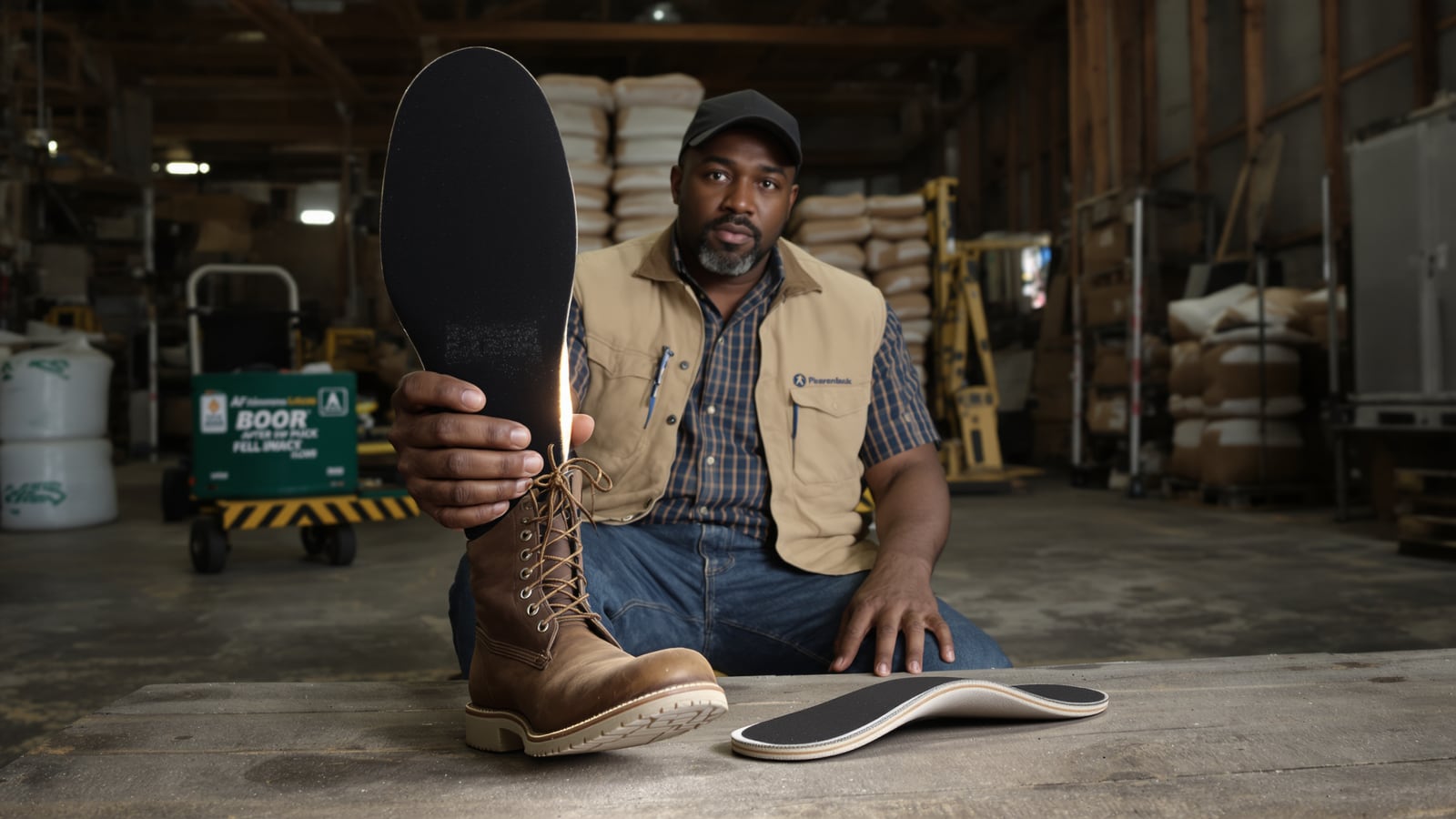
Quick answer: Pull the factory insole out of your boots. If it's thin, flat and packed down, a good aftermarket insole will do more for your feet than a new pair of boots. Buy the insole first, then decide whether the boots still need replacing.
What's actually under your foot
You pay serious money for a boot. Then you stand on a sheet of foam the maker cut flat and dropped in at the end of the line.
Take yours out and look at it. Press your thumb into the heel. Check whether the forefoot has gone shiny and thin. Hold it up to a window and see how much light comes through. Most stock insoles are a comfort feature for the showroom floor, not support for a twelve-hour shift on concrete. They feel fine for the first hour in the store and quit on you by the second month.
The boot is the shell. The insole is what your foot meets all day.
The wet-foot test
You don't need a clinic to find out roughly what kind of foot you have. Wet the sole of one foot and step onto a flattened paper grocery bag or a piece of cardboard. Step off and look.
- A full, wide print with almost no curve on the inside edge: low arch. Your foot collapses inward under load, and you need a firm arch to hold it up.
- A print with a thin strip or a gap between heel and ball: high arch. Less of your foot touches the ground, so the load lands hard on the heel and the ball. You need cushion and a contoured fit.
- A print somewhere between the two: a medium arch. You have the most choices and the least excuse.
This is a rough guide, not a diagnosis. But it keeps you from grabbing a high-arch insole off the rack when your foot is flat as a plank.
Firm underneath, soft on top
Most guys think the answer to sore feet is softer. Squishy gel feels great when you're standing in the store aisle. Over a full day it can let the foot sink and wander, and your arch muscles do the extra work.
What tends to serve a person who stands or walks all day is a structure that holds the arch and heel in place, with a layer of cushion on top. Look for a deep heel cup and a firm shell under the arch. The top layer can be as soft as you like.
Superfeet and Powerstep are two familiar names you'll find at boot stores and sporting goods counters, and both sell insoles built along those lines in several arch heights. Some brands sell heat-moldable versions that you shape in the oven or with a hair dryer. Dr. Scholl's has in-store kiosks that suggest a pair by scanning your feet. They're worth a try if you want a starting point, but don't treat the kiosk as gospel. Put the insole in your boot and stand on it before you decide.
If you want to go further, a podiatrist can make a custom orthotic. That costs a good deal more than anything off the shelf, and it's the right call for a foot that has a real problem. For most guys with tired arches, a good over-the-counter insole is plenty.
Make room for it
The part nobody mentions on the package: a better insole takes up space.
Take the stock insole out first. Always. Stacking a new one on top of it crowds the boot, squeezes your toes and lifts your heel until it slips. Use the old one as a pattern, trace it onto the new one if it needs trimming, and cut a little at a time. You can take more off. You can't put it back.
Then put the boot on with your work socks and lace it up properly. If the boot now feels tight across the top of the foot, you have a volume problem. Some boots have the room for a thicker insole and some don't.
A cowboy boot is the hardest case. The narrow throat and snug heel leave little room, so look for a slim, low-profile insole made for dress or western boots. A bulky work insole will turn the heel into a slipper.
Break them in like you did the boots
Don't wear a new insole through a full shift on day one. Your feet have spent years adjusting to a flat piece of foam. A shaped insole pushes on muscles and tendons they haven't been using, and you can feel it in your arches and your calves.
Wear them an hour or two the first day. Add an hour each day after that. If your arches ache mildly for the first week, that's usually just adaptation. If anything stabs, goes numb or gets worse after the first week, take them out.
When insoles aren't the answer
Be honest about what an insole can't fix.
A boot with a collapsed midsole, a cracked or twisted shank, or a heel worn down to a slant is finished. No insole rescues it. If the outsole wear on the heel is lopsided, your boot is already tilting your whole leg. A good insole in a dead boot is money spent twice.
The same goes for fit. If the boot is a size too big or too small, an insole just papers over it.
And if you have heel pain that's worst on your first steps in the morning, pain that keeps coming back, numbness or swelling, don't keep experimenting at the hardware store. Those can mean something that needs a real diagnosis. Go see a podiatrist or your doctor. An insole is a tool for ordinary tired feet, not a stand-in for a professional.
Know when to swap them
Insoles wear out. You won't see it, but you'll feel it. When the heel cup goes flat, the top layer cracks or the foam stays compressed when you press it, the structure is gone. Heavy daily use wears them out faster than a weekend job does.
Mark the date on the underside with a marker. When your feet start to tell you it's been a while, check the date.
Take care of the boots too, because a good insole belongs in a good boot. Leather fails from neglect long before it wears out covers the cleaning and conditioning that keep the upper alive while the insole keeps your foot happy. And if you're building out the rest of your work wardrobe, workwear that still looks right after you clock off is a good place to start.
Your wife has probably heard about your feet for years. Give her a break and fix them.
Tobias Reed
Style & Grooming
Spent a decade in menswear retail watching men buy the wrong size. Believes fit is ninety per cent of it and says so weekly.

Watch
Worth an hour of your evening
More from Country Style.
From channels we rate. Plays on YouTube.
Read next