Fishing Gear That Fits a Woman, and Water Worth Trying
Reversible reel handles, waders cut for a different hip, and four kinds of water you can fish from the bank or on foot.
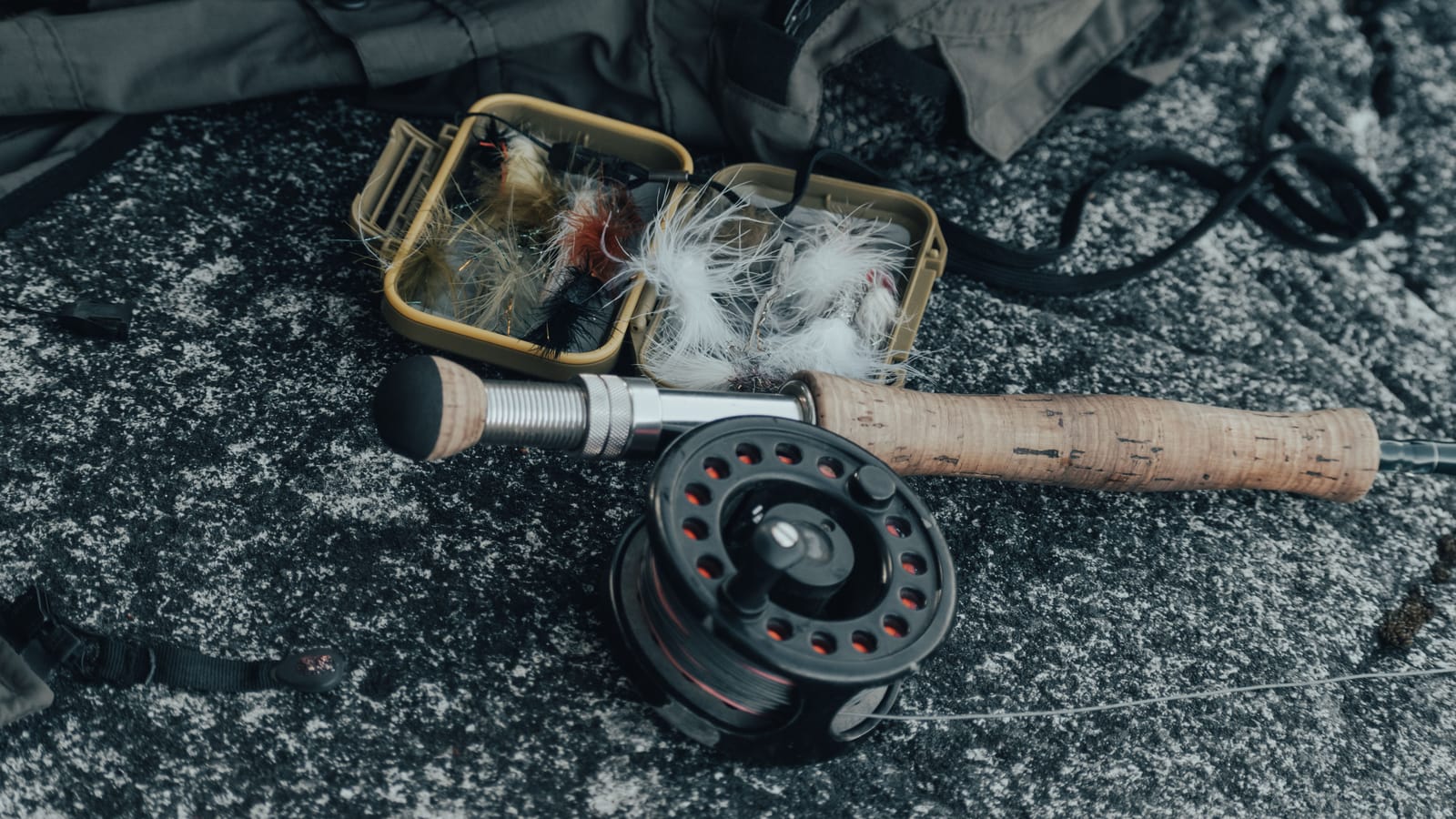
Start with the reel. Nearly every spinning reel on the shelf ships with the handle on the left, and nearly every one of them can be moved. Unscrew the cap on the opposite side, back the handle out, thread it into the other plate, snug the cap down. Two minutes, no tools. If you crank with your right hand, do this before your first cast instead of fighting the rod for a season and deciding you're bad at fishing.
That's the whole theme. Most tackle isn't designed against you. It's designed for an average hand and an average shoulder, and the fix is usually a small adjustment nobody bothered to mention.
The grip is the part that matters most
Pick up a rod in the store and close your hand around the cork ahead of the reel seat. Your fingertips should reach your palm with a little pressure to spare. If they don't, you'll be squeezing all day, and by hour three your forearm will quit before the fish do. Grip diameter varies more between rods than the spec sheets admit, and nobody prints it. You have to hold them.
For a general-purpose spinning setup, a 6-foot-6 medium-light rod with a fast tip covers bluegill, crappie, trout, and the occasional largemouth that eats something meant for a smaller fish. Spool it with 6-pound monofilament and stop thinking about line for a year. If you want braid, 10-pound braid with a 6-pound fluorocarbon leader casts a 1/16-ounce jig a country mile, but you'll be tying a leader knot in the dark at some point, so learn the double uni before you need it.
Fly rods: the 9-foot 5-weight is the default, and it's a good default. An 8-foot-6 4-weight is noticeably lighter in the hand over a long day, throws a size 16 dry fine, and is a better small-water rod anyway. Save the 8-weight for the days you actually need an 8-weight.
Waders, boots, and the thing that actually goes wrong
Women's waders aren't men's waders with a different color yoke. The difference is the rise and the hip-to-waist ratio, and if you buy a men's small because it's what the shop had, you'll get a crotch that hangs low enough to shorten your stride and a waist you can't cinch. That's not a comfort problem. That's a tripping problem, in moving water, which is a real one. Simms, Orvis, Redington, and Patagonia all cut women's models. Order two sizes, keep one, send one back.
Wading boots go over a neoprene bootie plus a sock. Size up one full size from your street shoe, sometimes two. Try them on at home with the waders on, standing up, and walk around the kitchen. A boot that's tight across the instep over a bootie will go numb in 45-degree water and you won't notice until you can't feel the rock you're standing on.
Felt soles grip slick bedrock better than anything else. Several states restrict or ban them because of invasive species transfer, so check before you buy. Rubber lugs with carbide studs are the workaround, and they're loud on a quiet stream.
One more honest note. For a lot of women, men's gear fits fine, especially gloves and rain shells. Buy the thing that fits, not the thing with the label. And if a rod is pink and also happens to be the right rod, buy it. If it's pink and it's a broomstick, leave it.
The gear list that actually earns its space
- A women's-cut inflatable belt pack PFD if you're in a boat or wading anything with current. The vest style rides badly on most women's shoulders and you'll take it off, which defeats the purpose.
- Forceps on a zinger. You will unhook more fish than anyone in your family and you'll want your fingers.
- A rubber-bag landing net. It doesn't wreck slime coats and hooks don't tangle in it.
- A long-sleeve sun hoody with a thumbhole and a buff. Sunscreen on your hands transfers to your bait and fish notice.
- Nail clippers. Not scissors.
Water worth trying
Neighborhood ponds in late spring. When bluegill move onto beds you can see the nests from the bank, pale dinner plates in three feet of water. A 1/32-ounce jig under a small float, or a size 8 bait hook with half a nightcrawler, and you'll catch until your arm hurts. This is the best water in America for teaching a kid, and it's the best water for getting your own timing back after a winter off. No boat. No wading. Park, walk fifty feet, cast.
Tailwaters below dams. Cold, clear, consistent, and often wadeable across broad shallow flats where the footing is gravel instead of greased bowling balls. The catch is generation. Utilities publish release schedules, and many sites sound a horn before water comes up. Learn where your exit is before you wade out, and go back when the horn sounds, not when the water reaches your knees. Rising tailwater moves faster than you do.
Small warmwater rivers in July. Wet-wade in shorts and old sneakers or a light boot, work upstream along a gravel bar, and throw a three-inch tube jig into the seam below every riffle. Smallmouth in current fight above their weight, and a 12-incher on a medium-light rod will make you laugh out loud. You need about two miles of river and an afternoon.
Lighted docks at dusk, fall through winter. Crappie stack under the light line where the glow meets the dark. A 1/16-ounce hair jig on 4-pound line, cast past the edge, count it down, swim it back slow. This is a lawn-chair fishery and it's underrated by people who think fishing requires suffering.
Licenses, and what you're allowed to keep
Every state and province sets its own rules, and they change. Season dates, slot limits, creel limits, felt sole bans, whether a trout stamp is separate from the base license, whether kids under a certain age fish free on your license. Buy through your state fish and wildlife agency or its official app, not a third-party site, and read the regs for the specific water. Many states run a free fishing weekend in June where no license is required. It's a good way to bring a sister or a friend out before she spends a dime.
Keeping fish is fine. Bluegill and crappie are among the best-eating fish that swim, they're abundant, and harvesting them out of a crowded pond is genuinely good for the pond. Filet them cold, fry them hot. Releasing fish is fine too. Wet your hands, keep it in the water, pinch the barb next time so the hook backs out clean.
What isn't fine is the lecture in either direction, from anybody, on the bank of a public lake.
You'll know the gear fits when you stop thinking about it. That's the whole test. Somewhere in the third hour, the rod disappears, the boots disappear, and there's just the float and the light on the water and the fact that nobody can reach you.
Nina Castellan
BRO for Her
Runs the women-facing desk. Same standard, same tools, written for a different reader — not a softer one.

Watch
Watch how it's done
Picked for this article.
From channels we rate. Plays on YouTube.
Daiwa Australia
How to Remove and Swap the Handle on a Spin Reel- Daiwa Tech Tips
Salt Strong
The 2 Different Spinning Reel Handles and How They Work
Read next