A Fishing Report Tells You Yesterday. Read It for Tomorrow.
Reports are old news by the time you read them. Here's how to turn them into a plan, and how to get real answers from the people who know the water.
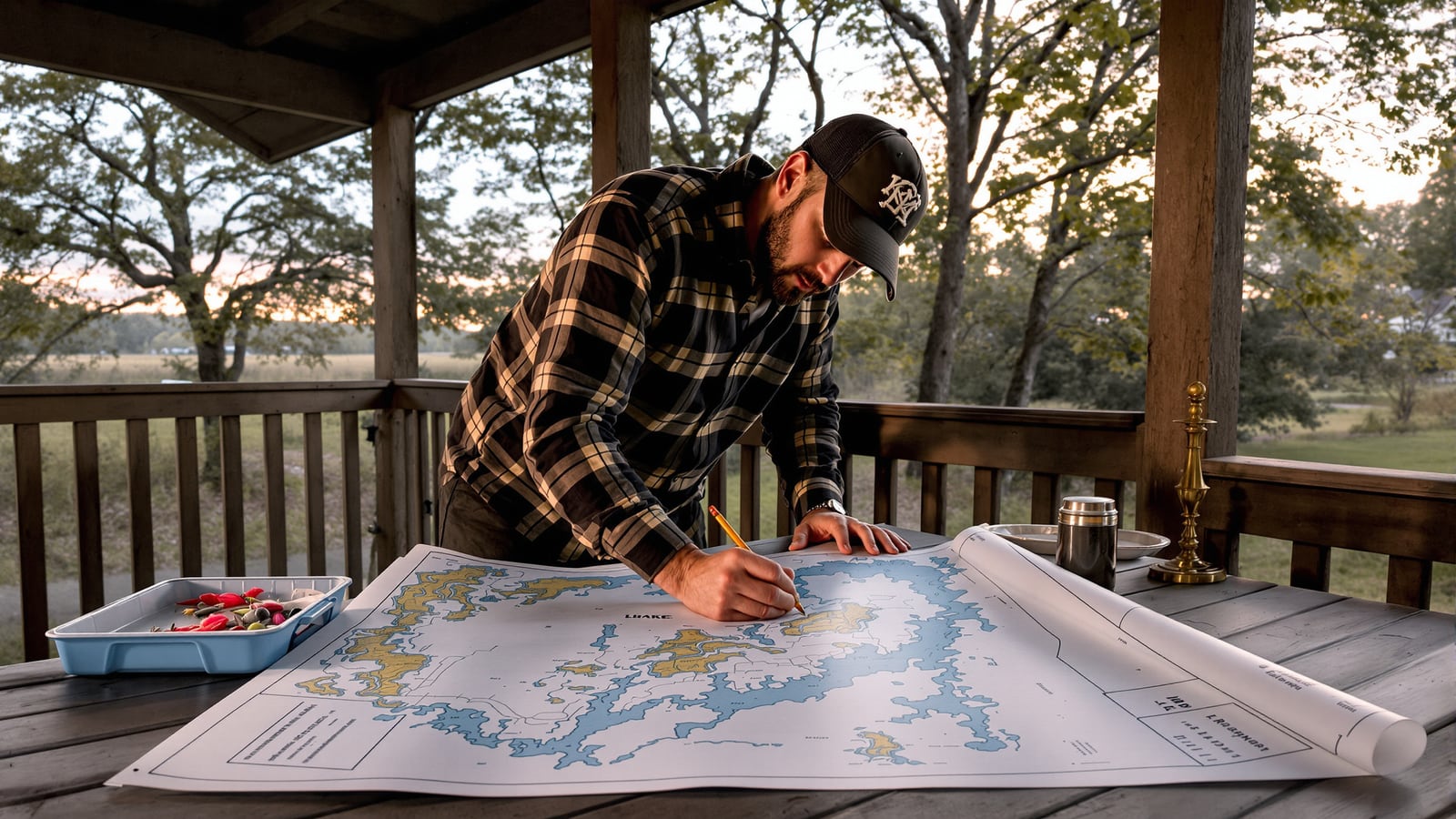
Quick answer: Check the date on the report first. Then read the conditions, not the fish. Call a local shop two days before you go, buy something while you're there, and ask what the water is doing instead of where the fish are.
Read the date before the fish
A fishing report is a photograph. It shows what happened to somebody else, on a particular morning, under a particular sky.
Say you find a post that reads: "Crappie hammering minnows eight feet down off the north dock." Sounds like a plan. But check the date. If it's from last Tuesday, a cold front may have come through since. Wind swung around, pressure dropped, the water cooled a few degrees. Those fish may have slid deeper and gone quiet.
The report didn't lie. It just expired.
So the first question isn't "what's biting?" It is "what was the water doing when it was biting, and what's the water doing now?" That second half is the part you can figure out yourself.
Where to look, in the order I'd trust them
Your state or provincial wildlife agency. Most run websites with stocking schedules, regulations, and sometimes biologist notes on specific lakes. What's offered varies a lot from one state or province to the next, so look yours up. Stocking dates alone can save you a wasted weekend. Trout fresh off the truck behave very differently from trout that have been in the creek a month.
The gauges. For rivers, the USGS posts real-time streamflow data online for thousands of sites. For many reservoirs, the Army Corps of Engineers or the local utility posts lake levels. On the coast, NOAA publishes tide predictions. None of this tells you what's biting. It tells you whether the river is blown out, whether the lake dropped two feet since last week, and when the tide turns. Those facts decide more trips than any hot tip.
The tackle or bait shop. This is the best source you've got, and it's the one most people skip. More on that below.
Forums, groups and social posts. Useful, with caveats. They run behind, they lean toward the good days, and nobody posts "fished six hours, caught a sunburn." A photo of one big fish tells you nothing about the forty casts that didn't connect. Use these for ideas and patterns, not for gospel.
Turn the report into your trip
Take that crappie post and pull out what carries over:
- Depth. Eight feet. Starting point, not a promise.
- Structure. A dock. Fish were holding near cover.
- Bait. Minnows. Live bait, small, slow.
- Conditions. If the post mentions stable weather and rising water temperature, those fish were comfortable and feeding.
Now compare it to your day. Bright, cold, windy after a front? Go deeper than the report said. Fish slower than feels natural. Downsize the bait. If the report was from a warm, overcast stretch and you're getting the opposite, expect a tougher bite and plan to earn it.
That's the whole skill. You're not copying the report. You're asking what the fish needed that day and whether you can give it to them today.
If you're running a boat, a fish finder read right will confirm in minutes whether the depth in the report still holds.
How to talk to the guy at the shop
Most of the real local knowledge in any town sits behind a counter that smells like minnows and coffee. And most people get nothing from it because they ask the wrong way.
Buy something. A dozen nightcrawlers, a pack of hooks, a few jigs in the color he points at. He's running a business, and you're asking him to spend his time. Pay for it.
Go when it's slow. Not Saturday at 5:30 a.m. with six guys behind you. Tuesday midmorning, or call the afternoon before.
Ask about conditions, not coordinates. "Where's your best spot?" gets a shrug, and it should. Nobody hands over a place they worked years to find. Try these instead:
- What's the water temperature doing this week?
- What's been working, and what's been dead?
- Is it a morning bite or an evening bite right now?
- Is the lake clear or stained up?
Those questions are easy to answer and they cost him nothing. You'll walk out knowing more than you would have from a map.
Then listen. If he says use the small jig, use the small jig. Don't explain that you've always had luck with the big one. You asked him for a reason.
Report back. Next time you're in, tell him how it went, even if it went badly. Especially then. A man who hears the result gives better answers the second time.
Keep your own log
This is the part nobody does, and it's the part that matters most in year three.
After each trip, write down the date, water temperature if you have a thermometer, clarity, wind direction, what you threw, what you caught, and what time the bite switched on or off. A notebook in the truck works. So does a note on your phone.
One season of that and you'll start seeing patterns no report will ever give you. The walleye turn on in that bay the week the water hits a certain temperature. The creek fishes better the day after a rain, not during. That's local knowledge, and it's yours. Nobody can take it, and nobody can sell it.
Know the rules before you go
Licenses, seasons, size limits and bag limits change by state and province, and sometimes by individual body of water. A report that says "limit of fish in two hours" doesn't tell you what your limit is today. Check your agency's current regulations before you leave the driveway. Size limits and slot limits are worth understanding, not just obeying. They're why the fish are there to catch.
Keep fish or let them go. Both are fine, and both are part of the tradition. If you're releasing, do it so the fish actually lives.
Pass it on
The unwritten rule runs both ways. You take knowledge from the water and the people around it, and you leave it better than you found it.
Report honestly. Don't inflate the day, and don't post a pin on a spot a local trusted you with. Pick up the line and the bait cups at the ramp, including the ones you didn't drop. Tell the new guy at the dock what's been working. Somebody did that for you.
The man behind that shop counter was a beginner once. Somebody told him which jig to tie on.
Wes Dunbar
Country & Skills
Grew up on an acreage and never quite left. Covers trucks, trades, land, and how to do the thing yourself.

Watch
Worth an hour of your evening
More from Fishing.
From channels we rate. Plays on YouTube.
Read next