

Patch the Tube, Then Find What Put the Hole There
A patched tube that goes flat again in a week means the thorn is still in your tire. Here's how to fix the hole and find the cause.
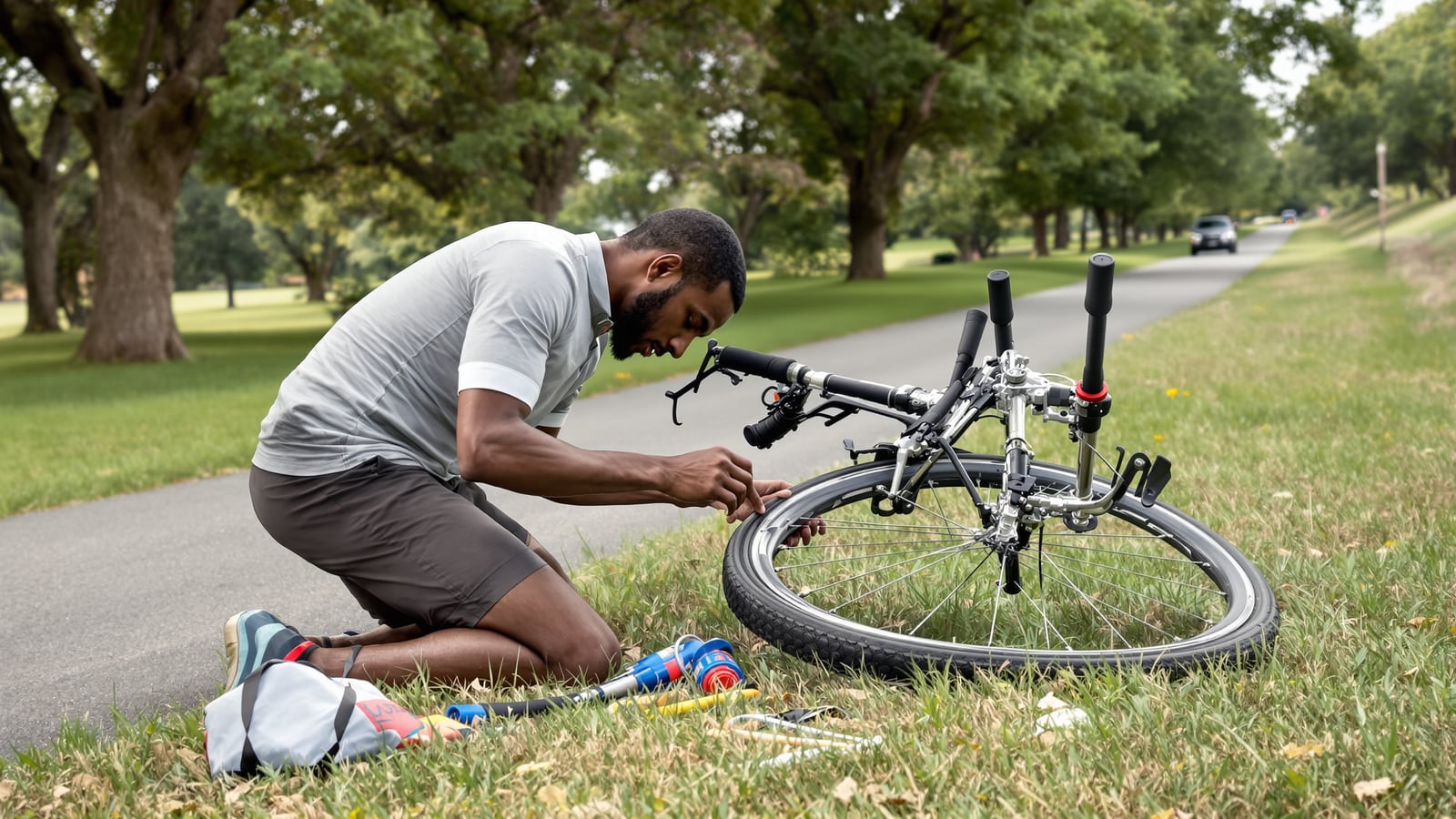
Quick answer: Find the hole, mark it, and patch or replace the tube. Then check the inside of the tire for whatever made it. Skip that last step and you'll be fixing the same flat by Saturday.
Most people treat a flat as a tube problem. The tube is only the victim. A sliver of glass, a wire from a shredded truck tire, a thorn the size of an eyelash: it's still in the rubber, pointed inward, waiting for the new tube.
What you need, and what it costs
- Tire levers. Plastic, about $5 to $10 for a set of three. Don't pry with a screwdriver. You'll gouge the rim or slice the new tube.
- Patch kit. Glue-type runs $5 to $8. It lasts for years.
- Spare tube. $5 to $8. Match the size printed on your tire sidewall, and the valve type (Presta is the skinny one, Schrader looks like a car valve).
- Floor pump with a gauge. $25 to $40. A hand pump gets you home. A floor pump keeps you from needing one.
- A bucket or sink of water, a ballpoint pen, and a shop rag.
Buy the spare tube even though you own a patch kit. A tube costs about what a patch kit does, and on the side of the road you want to swap, not sit there waiting for glue to dry. Patch at the kitchen table.
Diagnose before you pull anything
Is it a fast flat or a slow one? Flat by the time you got to the garage means a real hole or a bad valve. Soft by morning means a pinhole, or a valve core leaking.
Pump the tire up and listen. Press your lips or the back of your hand near the tread and the valve. You'll often feel a leak before you hear it. If air hisses from the valve itself, snug the valve core with a valve tool or a pair of pliers, which is a $3 fix, and skip the rest.
Two holes side by side, like a snake bite, means a pinch flat. You hit a curb or a rock with the tire too soft, and the tube got squeezed against the rim. The cause there isn't debris. It's pressure. Check the sidewall for the recommended range, and check it with a gauge every week or two, since tubes lose air even when nothing's wrong.
Get the wheel off and the tube out
Flip the bike or stand it on its seat and bars. If you have rim brakes, open the brake release. If you have a quick-release axle, open the lever and loosen the nut a few turns. Thru-axle, unscrew it. Rear wheel? Shift into the smallest cog first. It makes the chain and the wheel come apart without a fight.
Let out any remaining air. Hook one lever under the tire bead, the edge that sits inside the rim, and pry it over the rim. Hook the second lever a few inches along and slide it around. The first side comes off easily. The second side usually comes off by hand. Pull the tube out, starting opposite the valve and finishing at the valve.
Before you do anything else, note where the valve sits relative to the tire label. Line them up when you reinstall. That's how you'll find the culprit.
Find the hole
Inflate the tube a little more than normal. Hold it near your cheek and turn it slowly. If that doesn't find it, run it through the water bucket section by section and watch for a stream of bubbles. Dry it off, then mark the hole with a pen. Circle it. You'll lose it otherwise.
Look at where the hole sits. A hole on the outside of the tube, facing the tread, means something came through the tire. A hole on the inside, facing the rim, means the rim itself is the problem: a sharp spoke end poking through, or a rim strip that's shifted. A split along the seam is a manufacturing flaw or old age. Throw that tube out.
Find the cause
This is the part people skip. Line the tube up inside the tire using the valve and label as your guide, then find the spot that matches the hole.
Run your fingertips along the inside of the tire, slowly. Better: use a rag and wipe it along the inner surface. The rag will snag on a thorn or wire, and your thumb won't get cut. Do it twice, in both directions. Then do the outside, picking out any embedded glass or stone with a small screwdriver or a pair of tweezers.
Check the rim strip too. It's the rubber band, or tape, that covers the spoke holes. If it's shifted or cracked, a spoke nipple can chew through the tube. Press it flat. Replace it if it's brittle. Cloth tape runs about $5.
If the tire has a gash through the cords, a bulge, or the casing is peeling at the sidewall, don't patch around it. Replace the tire. Tires run about $30 to $60 for a decent commuter or road tire, and a blowout at speed costs a lot more than that.
Patch it right
Dry the tube completely. Rough up a patch-sized area around the hole with the sandpaper in the kit, in a circle slightly larger than the patch.
Spread a thin layer of glue, thinner than you think. Let it dry until it loses the wet shine, which takes a few minutes depending on the weather. This is the step everyone rushes. It's the same lesson as regluing a wobbly chair: the joint fails when you close it up before the adhesive is ready.
Peel the foil from the patch without touching the sticky side. Press it on, center it over the hole, and push from the middle outward. Hold firm for a minute. Some people crush it with a lever handle or a socket. Whatever works.
Glueless peel-and-stick patches are fine for the roadside. They tend to be less durable. At home, use the glue.
Inflate the tube slightly and check it again in the bucket before it goes back on.
Put it back and check your work
Put just enough air in the tube to give it shape. Tuck it inside the tire, valve first through the rim hole. Work one bead over the rim, then the other, starting at the valve and finishing opposite it. Use your thumbs for the last stretch. If you need a lever, go slowly. This is how tubes get pinched.
Before inflating, run your thumbs along both sides of the rim and check that no tube is stuck between the bead and the rim. A pinched tube blows out with a bang. Wear safety glasses if you're nervous about it, and keep your face away from the tire while you build pressure.
Pump up to the pressure printed on the sidewall, using the gauge. Reseat the wheel, close the quick release or tighten the axle, reconnect the brakes, and spin it to make sure it runs true.
Then check it the next morning. If it's soft, the cause is still in there.
When to hand it to a shop
Take it in if the rim is cracked or dented so the tire won't seat, if the wheel wobbles side to side after the fix, if spokes are loose or broken, or if the tire is tubeless with sealant, which is a different process. Same if you've fixed the same spot three times and still can't find the reason. A shop will look at it in five minutes and charge you little.
It's the same method as chasing a mower that won't start: work through the likely causes in order and stop guessing.
Once it's done, pump up the other tire too. And if it's a family bike, pump up everyone else's while you've got the pump out. They'll never ask, and they'll notice.
Wes Dunbar
Country & Skills
Grew up on an acreage and never quite left. Covers trucks, trades, land, and how to do the thing yourself.

Watch
Watch how it's done
Picked for this article.
From channels we rate. Plays on YouTube.
Park Tool
How to Patch a Bicycle Inner Tube
GCN Tech
How To Fix A Puncture On A Bike
Read next