

Furnace won't light? Identify the ignition before you touch it
A pilot light, a glowing igniter and a spark system fail in different ways. Learn which one you own, then check the thermostat, gas and flame in order.
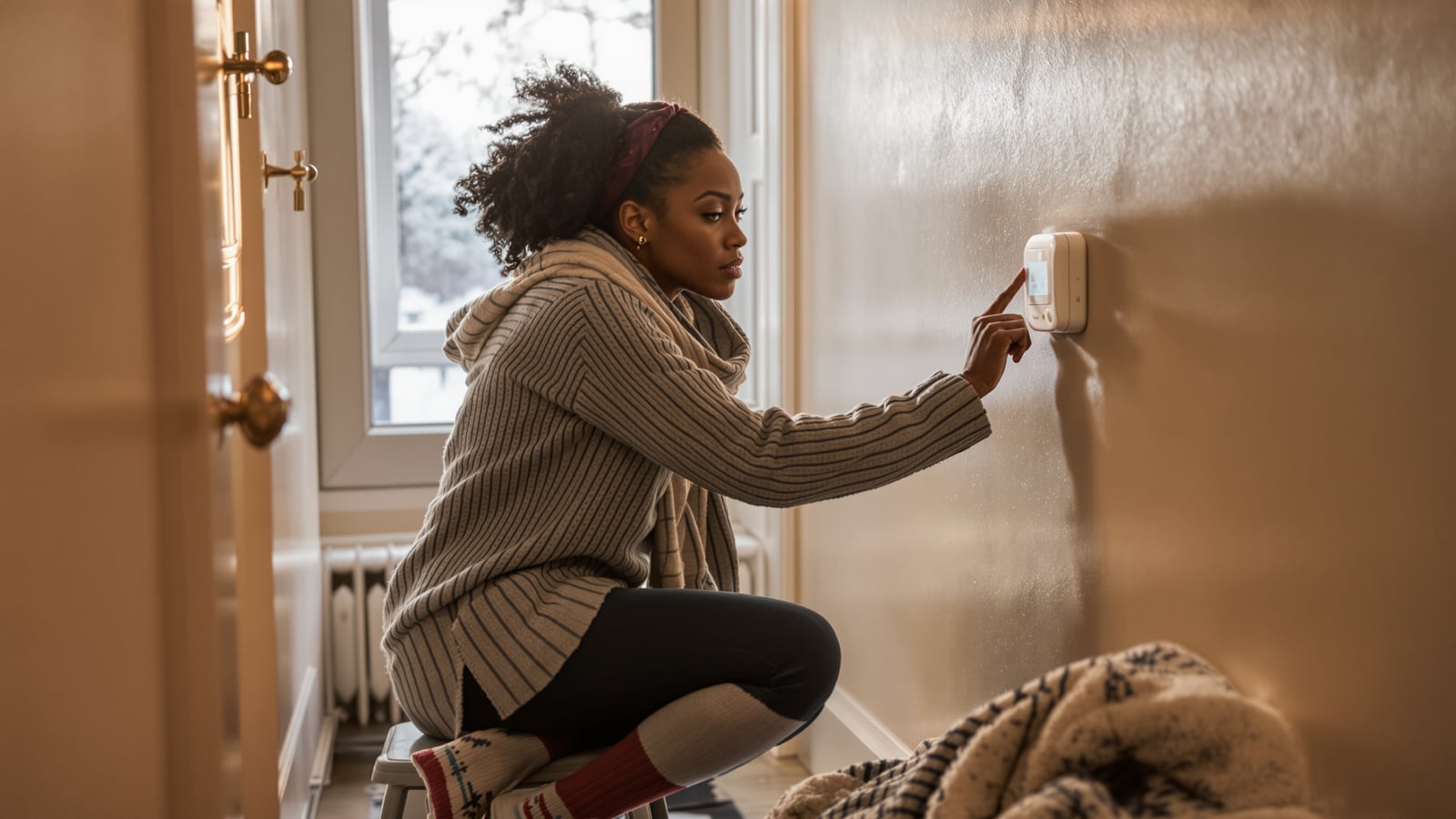
Quick answer: Confirm the thermostat is calling for heat, the furnace has power, and the gas valve is open. Then find out whether your furnace has a standing pilot or an electronic igniter. The fix for one is useless on the other. Anything inside the gas valve itself belongs to a licensed pro.
Safety before anything else
If you smell gas, a rotten-egg odor, stop. Don't flip switches, don't use a lighter, don't hunt for the source. Get everyone out, move away from the house, and report it to your gas utility or the fire department from a safe distance. The furnace can wait.
If your carbon monoxide alarm is sounding, same rule. Get outside first and sort it out after.
For everything below, shut off power at the furnace switch (it looks like a light switch on a wall or joist near the unit) before you reach inside. Gas work and permit rules vary by city and state, and some areas require a licensed tech for anything past relighting a pilot. Check yours.
Step one: rule out the dumb stuff
Most no-heat calls end here, and a service visit runs somewhere around a hundred dollars or more just to learn it.
- Thermostat. Set it to Heat, not Auto or Cool. Turn it five degrees above the room temperature. If the screen is blank, swap the batteries. Two AAs cost about five dollars and fix more furnaces than you'd think.
- Power. Check the furnace switch and the breaker. A flipped breaker once is a fluke. A breaker that trips again is a pro call.
- Door panel. Furnaces have a safety switch that cuts power when the blower door isn't seated. Pull the panel off and snap it back on. People knock it loose all the time, usually while grabbing the filter.
- Filter. A filter packed with dust makes the unit overheat and shut itself down. A new one runs five to twenty dollars. Replace it either way.
- Gas shutoff. Find the valve on the pipe feeding the furnace. The handle should run parallel to the pipe. Crosswise means closed. Ask yourself whether anyone was working in there recently.
Then check whether the stove or water heater is running on gas. If they are, the supply is fine and the problem is in the furnace.
Step two: figure out which ignition you have
Open the lower panel and look. You'll have one of two systems.
Standing pilot. A small blue flame burns all the time, usually visible through a little window or right at the burner. Common in furnaces from roughly the 1980s and earlier. Some still run.
Electronic ignition. No constant flame. When the thermostat calls, the draft inducer fan spins up, an igniter glows orange or clicks with a spark, and the burners light. Nearly every modern furnace works this way. There's usually a small light on the control board that blinks codes. The sticker on the inside of the door tells you what the blinks mean.
If you have a standing pilot
The pilot is out. Here's the relight, which is printed on a label on the furnace and should be followed over anything you read online:
- Turn the thermostat down and the gas valve knob to OFF. Wait five minutes so any gas clears.
- Turn the knob to PILOT. Push and hold it down.
- Hold a long butane lighter (about four dollars) to the pilot opening.
- Keep the knob pressed for 30 to 60 seconds after it lights. Release slowly and set the knob to ON.
If it stays lit, you're done. If it dies the moment you let go, the thermocouple is the likely culprit. That's a metal probe sitting in the pilot flame that tells the valve the flame is real. They go bad with age and soot. A universal replacement costs ten to twenty-five dollars and takes a nut driver and about fifteen minutes with the gas shut off. A yellow, floppy pilot flame instead of a crisp blue one means dirt or a combustion problem. Stop there and bring in a pro.
If the pilot won't light at all and you hear no gas hiss, the supply is blocked or the valve is bad. Don't keep trying. Leaning on a lighter for ten minutes in a closed closet isn't diagnosis.
If you have an electronic igniter
Turn the power back on, set the thermostat to call for heat, and watch through the sight window or with the panel off. This is the one time you're working near live parts, so keep your hands and tools out of the way and watch from outside the cabinet.
Nothing happens. No fan, no glow, no click. That's a power, door switch or control board issue. If the checks above are clean, it's a pro job. A board can run a few hundred dollars.
Inducer fan runs, igniter never glows. A cracked igniter is the usual cause. Look for hairline cracks in the gray element. It's a twenty-to-sixty-dollar part. Turn the power off before you swap it, and handle the new one by the base. Skin oil shortens its life.
Igniter glows, burners light, then shut off after a few seconds. That's a dirty flame sensor, the thin metal rod in front of the burner flame. It's the most common cause of "lights then quits," and the fix costs almost nothing. Power off, gas off, remove the one screw, and rub the rod gently with a fine abrasive pad until it looks bright and clean. Reinstall it. A new sensor is fifteen to forty dollars if cleaning doesn't work.
Igniter glows but the burners never light. The igniter's doing its job, so the gas isn't arriving. Check the shutoff again. If the valve is open and nothing flows, you've reached the gas valve.
The gas valve is where you stop
You can check that the valve at the pipe is open. You don't open, adjust or replace the gas control valve on the furnace. A multimeter (twenty to thirty dollars) can tell you whether it's getting 24 volts, and that's useful to know. But if it's getting power and not opening, the replacement is a licensed-pro repair, usually several hundred dollars including labor. Many places require a permit or inspection for it. That's the system doing its job, not the pro padding the bill.
Leave it better
While the panel's off, vacuum the dust out of the cabinet. Write the filter size and the date on the furnace with a marker. Test your CO alarm while you're at it.
And in a cold snap, text the older neighbor down the street and ask whether their heat is running. A guy with the right tools and a free hour is worth more than he knows.
If you're also chasing a small-engine problem, the same order applies. Spark, fuel and air, in that order works for a mower for the same reason it works here. For a shorter furnace checklist, see these three things to check first.
Check the cheap things first, keep your hands out of the gas valve, and never pay a hundred dollars to find out the batteries were dead.
Wes Dunbar
Country & Skills
Grew up on an acreage and never quite left. Covers trucks, trades, land, and how to do the thing yourself.

Watch
Worth an hour of your evening
More from Can You Fix It.
From channels we rate. Plays on YouTube.
Read next