

Your Basement Floor Drain Backed Up. Check the Trap First
Most floor drain backups are a clogged trap you can clear in an hour. Some are the main sewer line, and that's a different job. Here's how to tell.
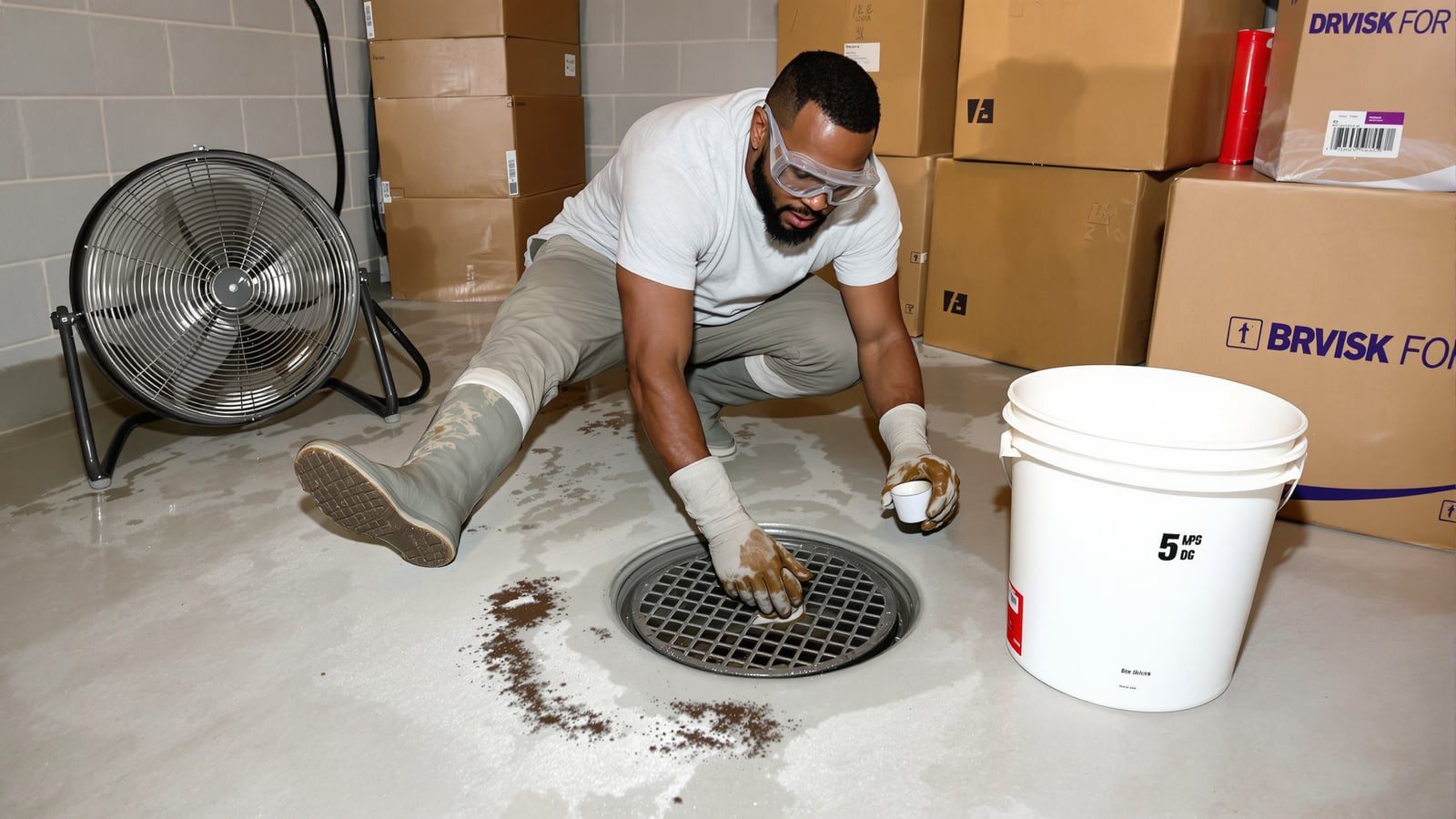
Quick answer: Stop using water, pull the grate, and scoop out whatever's packed in the trap. If the drain only backs up when upstairs fixtures run, or the whole house is slow, skip the DIY and call a licensed plumber.
You come downstairs and there's an inch of gray water on the basement floor, creeping toward the boxes you swore you'd move. Don't grab a bucket yet. First you need to know which kind of problem you have, because the two kinds have very different fixes.
Stop the water and make it safe
Tell everyone in the house: no laundry, no showers, no dishwasher, no flushing. Everything upstairs drains to the same place your floor drain does, and every gallon you add ends up on that floor.
Then look at what the water's touching. If it's near the electrical panel, outlets, a furnace or a water heater, stay out of it. Shut off power at the breaker only if you can reach the panel while standing on dry ground. If you can't, call your utility or a licensed electrician. If you smell gas (a rotten-egg odor), get everyone outside and call the gas utility from the driveway.
Backed-up floor drain water is not clean. Treat it as sewage until proven otherwise. Wear rubber boots, rubber gloves and eye protection, and open a window or run a fan. Sewer gas gives you a headache fast. If you feel dizzy or sick, get into fresh air and get medical help.
Diagnose before you touch a tool
Two quick tests tell you almost everything.
Test one: run a fixture upstairs. Wait until the floor drain has settled, then run the kitchen sink for a minute. Then a bathroom sink. Then flush a toilet. Keep one eye on the drain downstairs. If water rises when you run something, the blockage is in the main line, not your trap.
Test two: check the other drains. Are the toilets gurgling? Is the tub draining slow? Did the washer standpipe burble when you ran a load? Multiple symptoms mean the main line. One backed-up basement drain and nothing else points to a local clog.
Also think about the weather. A drain that only backs up during or after heavy rain is often groundwater or an overwhelmed municipal sewer, not a clog in your house at all. Your city's public works office wants to hear about that one.
And if the drain doesn't back up but just smells like a sewer? That's usually a dry trap. The water seal has evaporated, which happens to floor drains nobody uses. Pour a gallon of water down it and the smell should stop. Do it every few months, or pour in a little mineral oil afterward to slow evaporation.
Clearing the trap, in order
Only one drain is backing up and nothing upstairs makes it worse? Here's the sequence.
- Pull the grate. Most lift out or come off with a couple of screws. A screwdriver is all you need.
- Take out the strainer basket, if there is one. Many floor drains have a removable bucket right under the grate. It's usually full of lint, silt and something that used to be a sock.
- Pull standing water first. A wet/dry vac ($60 to $120 if you don't own one) gets the water out so you can see what you're doing. Don't use a household vacuum.
- Scoop the trap by hand. Gloved hand or a small garden trowel. Sludge and sediment collect in the bend, and that's the clog nine times out of ten.
- Look for a cleanout plug. Some floor drains have a threaded plug on the side of the trap body. An adjustable wrench loosens it. Put a bucket under it first, because the trap will empty out.
- Run a hand auger. A 25-foot hand-crank drain auger runs $25 to $50. Feed it in, crank slowly until it bites, and work it back and forth. Pull it out and clean off what's on the head. Repeat until it comes out clean.
- Try a hose bladder. A drain-blasting bladder or a pressure nozzle on a garden hose ($10 to $25) pushes water through and can flush stubborn sludge down the line. Hold the hose firmly. It can kick.
- Flush and refill. Run a few gallons of hot tap water. Then make sure the trap holds water again, because that water seal keeps sewer gas out of your house.
A plunger helps on a loose clog, but a floor drain's flat grate makes a poor seal. If you try one, take the grate off and use a cup plunger over the open drain. The general technique is covered in Unclog a Drain With a Plunger, a Snake and Ten Minutes.
Skip the chemical drain cleaner
It's tempting. Don't. Caustic cleaner sitting in a backed-up trap, with sewage on top of it, is a splash waiting to happen. If the clog doesn't clear, you've handed the plumber a pipe full of something that burns skin. Mechanical clearing works better here anyway.
When it's time to call a licensed plumber
Some jobs aren't worth your Saturday. Call a pro if:
- Water rose when you ran upstairs fixtures. That's a main line or sewer lateral problem.
- More than one drain is slow or gurgling.
- You've augered the trap clean and it backs up again within days.
- The auger hits something solid and won't pass. That's often tree roots or a collapsed section.
- Sewage has soaked a large area, or touched anything electrical.
A plumber will snake the main with a larger machine, and may run a camera down the line to see what's wrong. Rough ranges, which vary a lot by region: clearing a line often runs a couple hundred dollars up to a few hundred, and a camera inspection often falls somewhere between $150 and $500. Repairing or replacing a broken sewer lateral can run into the thousands. Ask for the camera footage before you agree to anything bigger.
If backups keep happening, ask about a backwater valve. It's a check valve in the line that keeps sewage from flowing back into your house. It's cut into the sewer line, so it's licensed-plumber work, and most areas require a permit. Codes vary by city and county, so check with your local building department before anyone digs.
Call your insurance agent too. Standard homeowners policies often exclude sewer backup unless you've added an endorsement. Find out before you pay for cleanup, and take photos of everything first.
Clean up like the next person owns the place
Once the drain runs, the job isn't over. Sewage water leaves bacteria behind on concrete.
Scrub the floor with a household disinfectant, following the label. Get fans running. Anything porous that got soaked, like cardboard boxes, rugs and old paper, goes in the trash. Run a dehumidifier until the room smells like a basement again and not a swamp.
Wash your boots and gloves outside. Rinse the auger and disinfect it, and if you rented one, return it cleaner than it came. The guy at the counter will notice. Then do the small thing most guys skip: set a reminder to pull that grate again in six months and scoop the trap before it clogs. Ten minutes beats a flooded floor.
If you're also dealing with slow drains upstairs, Your Dishwasher Won't Drain. Do This Before You Call Anyone is worth a read. The kitchen shares the same line.
Wes Dunbar
Country & Skills
Grew up on an acreage and never quite left. Covers trucks, trades, land, and how to do the thing yourself.

Watch
Worth an hour of your evening
More from Can You Fix It.
From channels we rate. Plays on YouTube.
Read next