

Your doorknob wobbles. Fix it before it spins free
A loose knob is a ten-minute, under-ten-dollar job right up until it spins on its spindle and locks you in the bathroom.
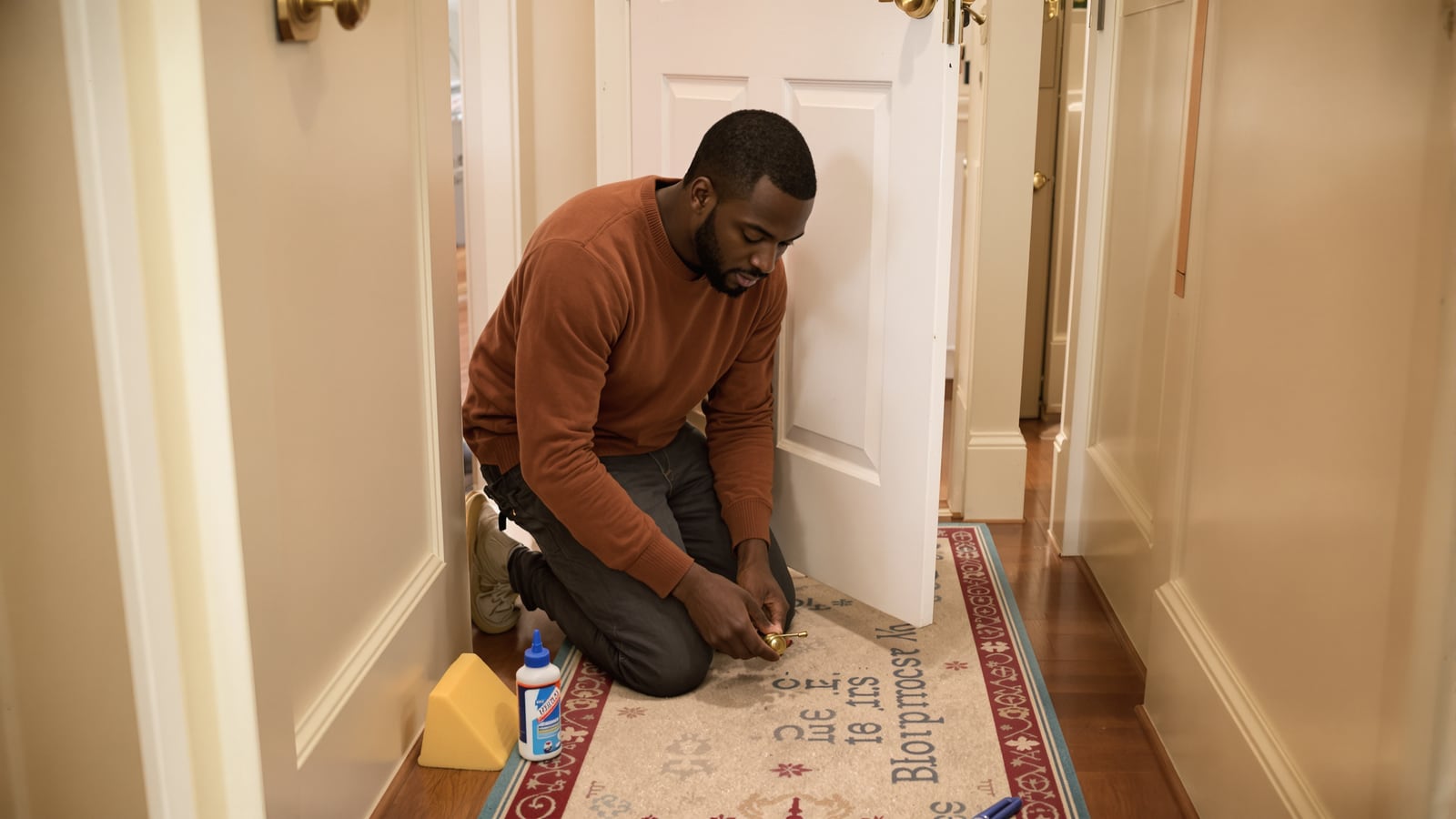
Quick answer: A wobbly knob almost always comes down to one of two sets of screws. Either a small set screw on the neck of the knob or lever, or the two long screws that clamp the plate to the door. Snug the right ones with the right size driver, add a dab of blue thread locker, and you're done. Budget about ten dollars if you own nothing.
Diagnose before you turn anything
Stand at the door and work the knob with your hand. Don't just look at it. The wobble tells you where the problem is.
- The knob rocks side to side on its neck, but the plate against the door stays put. That's the set screw.
- The whole assembly shifts, and the plate moves against the door. That's the through-screws.
- The knob spins without pulling the latch back, or the latch sticks out no matter what you do. The set screw has already backed off the spindle. You're past wobble and into spin.
- The latch works fine but the door rattles in the frame. Your knob is innocent. Look at the strike plate and the hinges.
Do this first and you'll skip the most common mistake, which is cranking on every screw in sight until something strips.
One safety note, and it's a practical one. Prop the door open with a wedge before you start. If the spindle slips out of the other side's knob while the latch is extended, you can end up on the wrong side of a closed door, and that's a bad afternoon if it's a bathroom or a bedroom with a lock. Keep the working side's knob in your hand. Don't pull it off completely until you know how it goes back.
The set screw
Most knobs and levers ride on a square steel bar called the spindle, which runs through the door. A small screw in the neck of the knob presses against a flat spot on that spindle. It's the only thing keeping the handle from sliding off or spinning loose.
Look at the underside or the side of the neck, near the plate. You're looking for a small hole, sometimes hidden on the face of the lever pointing at the floor. The screw inside is usually a hex head. Slotted heads turn up on older hardware.
Grab a hex key set. A decent set of fold-out keys runs five to ten dollars, and it'll fix a lot more than doors. The common sizes here are 3/32, 1/8 and 5/32 inch, so check the fit. The key should drop in snug with no slop. A key that's slightly too small will round the socket, and then you're drilling.
- Turn the screw clockwise until it touches the spindle. You'll feel it stop.
- If it's already tight and the knob still moves, back it out two or three turns and look at it. A worn or burred tip won't bite.
- Slide the knob firmly against the plate. Leave no gap. This is the step people skip, and it's why their fix lasts a month. A set screw tightened with the knob standing off the door just locks in the wobble.
- Put a small dab of blue thread locker on the screw threads and run it in until it's firm. Firm means snug plus a quarter turn. Not a wrestling match.
Blue is the medium-strength kind, about five to eight dollars a small tube, and it'll outlast every other tube in your drawer. Don't reach for red. Red is permanent, and the next person to take this knob off, which may be you, will hate you.
Why tighter isn't always better
The set screw seats on a flat spot on the spindle. Overtighten it and you either strip the hex head or dig a groove in the spindle that lets the screw slip next time. Snug, then stop.
If the screw spins and never catches, the threads in the knob neck are stripped. If it tightens but the knob still slides, the flat on the spindle is probably rounded off. Neither is a repair worth chasing with a file. Which brings us to replacement, further down.
The through-screws
If the whole plate moves, the fix is on the other side of the plate. On many knobs, the plate itself, called the rose, covers the screws. Look for a thin slot or a small notch. Slip a small flat screwdriver in and the rose pops off, or twists off, to show two long screws.
Tighten those with a number 2 Phillips. Alternate between them, a little at a time, the way you'd seat a wheel. If one goes in all the way and the other spins in place, the hole in the wood is stripped. Fix that the way you'd fix any stripped screw hole: pull the screw, push in a couple of wooden toothpicks or a golf tee dabbed in wood glue, snap them off flush, wait an hour, and drive the screw again. The same principle shows up in reglueing a wobbly chair, and it works for the same reason. You're giving the threads something to bite.
When there's no visible screw at all
Some knobs hide everything. Look closely at the neck for a tiny slot or hole. Push a small screwdriver or a paper clip into it, hold it down, and pull the knob straight off. That releases a spring catch. Once it's off, the screws holding the plate are exposed.
Don't pry with force. If it doesn't come, you've missed the catch, so find it first.
When tightening won't hold
Swap the hardware if you see any of these:
- The set screw tightens but the knob slides on the spindle anyway.
- The knob neck is cracked.
- The spindle is bent or the flats are rounded.
- The latch itself is sticky or the spring is dead.
A basic passage or privacy knob set runs roughly fifteen to forty dollars at a hardware store. Measure before you buy. You need the backset, which is the distance from the edge of the door to the center of the hole. It's almost always 2 3/8 or 2 3/4 inches. Bring the old latch with you if you're unsure.
While the latch is out, put a pinch of dry graphite on it. Not oil. Oil gums up with lint and dust.
When to call a pro
A knob is a DIY job. A deadbolt, a keyed entry lock, or anything on an exterior door that you rely on for security is a different story. If the latch won't retract on the door you lock at night, or the strike plate needs reshaping, call a locksmith. The same goes for commercial buildings, fire-rated doors and any door that's part of an exit route. Those carry rules about which hardware you can use, and codes vary by city and county. If you rent, tell the landlord. It's their door and sometimes their liability.
Leave it better than you found it
You've got the key out and the screwdriver warm. Walk the house and give every other knob a quick wobble test. It takes five minutes, and a knob that's starting to loosen costs nothing to catch now. Tighten the strike plate screws while you're at it. Any knob that's been banging the wall can take a rubber stop for a couple of dollars, and a wall that's already dented can be fixed with a little patching drywall without making it worse.
Then tell the kids the door is fixed, and watch how long it takes one of them to hang on it.
Wes Dunbar
Country & Skills
Grew up on an acreage and never quite left. Covers trucks, trades, land, and how to do the thing yourself.

Watch
Worth an hour of your evening
More from Can You Fix It.
From channels we rate. Plays on YouTube.
Read next