Cook Okinawan for a week with what your grocery store has
A three-pound pork belly, a head of cabbage and one pot of dashi will carry five dinners. Almost every mistake is a water problem.
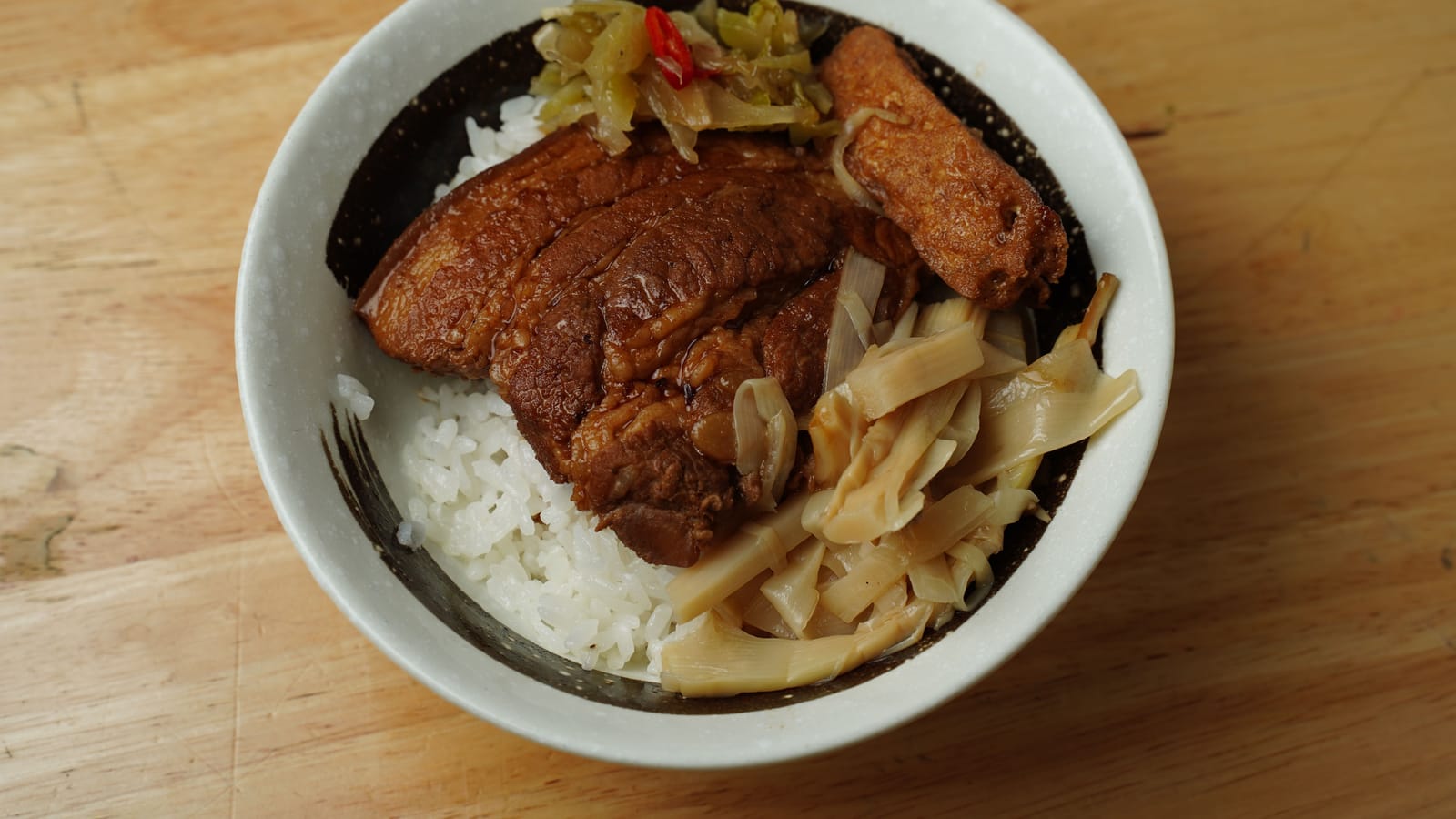
Buy a three-pound slab of pork belly, skin on if the case has it. That's the whole week of meat for a family of four, and it's less pork than most households burn through on a Saturday. Okinawan home cooking treats pork the way Italians treat anchovy: a small amount doing loud work behind a pile of vegetables. You braise it once on Sunday, and it shows up in four more dinners in slices thin enough to see through.
The rest of the list is boring on purpose. Cabbage, carrots, bean sprouts, firm tofu, eggs, a bag of rice, soy sauce, a can of tuna in water, brown sugar. One specialty item worth the trip: a bag of dried kombu, which most stores keep in the natural foods aisle near the nori or in the international section. Eden sells it in a small plastic pouch. If yours doesn't carry it, a jar of Hondashi granules does the same job in eight seconds and nobody at your table will run a lab test.
Make the stock first, and don't boil it
Dashi is the spine of everything below. It's a piece of kombu and a handful of dried bonito flakes, and it takes twelve minutes.
Put a four-inch square of kombu in a quart of cold water and bring it up slowly. Pull the kombu out at around 175 degrees, before the surface breaks into a real simmer. Then kill the heat, throw in a generous pinch of bonito, wait two minutes, strain.
What goes wrong is the boil. Boiled kombu turns the pot slick and faintly bitter, like licking a tide pool. Boiled bonito goes from clean and smoky to aggressive fish glue. You can't fix either one with more soy sauce, and people try.
Make two quarts. You'll use it every single night.
The belly braise takes two hours and no heroics
Cut the slab into two-inch chunks. Cover with cold water, bring to a boil, and let it go ten minutes. The pot will look disgusting. That gray foam is exactly what you're getting rid of. Dump the water, rinse the pork, rinse the pot.
Now it goes back in with dashi to cover, a half cup of soy sauce, a quarter cup of brown sugar, a few slices of ginger and a splash of whatever dry rice wine or sherry you have. Lid on, and hold it at a bare simmer for two hours. Bare means two or three bubbles breaking a second. If it's rolling, the pork tightens and the sugar starts to scorch at the bottom, and you'll spend Tuesday chewing.
At two hours a chopstick goes through the fat with no resistance. Pull the chunks out, chill them overnight, and they slice clean the next day. Warm, they shred into a mess. Cold, they cut like butter.
Skim the fat off the braising liquid and keep it. Both parts. The fat is your cooking oil for the rest of the week and the liquid is a sauce you didn't have to make.
Champuru is a water problem, not a recipe
Champuru means jumbled together. Tofu, a vegetable, a little pork, egg, hot pan. That's it, and it's the dish most Americans manage to ruin on the first try, because they treat a stir-fry like a casserole.
Press the tofu. A full block of firm tofu between two plates with a can of beans on top, thirty minutes, and you'll pour off a shocking amount of liquid. Then tear it into rough chunks with your hands instead of cubing it. Torn edges catch and brown; knife edges slide.
Sear the tofu alone in a dry-ish pan with a spoon of that pork fat until it's gold on two sides, then take it out. Don't skip removing it. Tofu left in the pan while the cabbage releases water turns back into a wet sponge and you've wasted the twenty minutes you spent pressing it.
Cabbage next, cut in wide pieces, over high heat, in a pan big enough that it sits in one layer. Crowded cabbage steams. Steamed cabbage weeps. Weeping cabbage makes a gray soup that tastes like a school cafeteria. Two batches in a twelve-inch skillet beats one batch in a wok you can't get hot.
Pork back in, tofu back in, a splash of dashi and soy, then beaten egg poured around the edge in the last twenty seconds. The egg should set in soft curtains, not scramble into yellow gravel. Off the heat while it's still glossy.
Bitter melon, and what to do if the store doesn't stock it
Goya champuru is the famous one, and bitter melon is easier to find than people think. Check the Latino produce section, where it's often labeled cundeamor or melón amargo. Pale green, bumpy, looks like a cucumber that lost a fight.
Split it, scoop out the spongy core with a spoon, slice into thin half-moons, toss with a teaspoon of salt and let it sit fifteen minutes. Squeeze the water out. That knocks the edge off without erasing the point of the vegetable. If you salt it, blanch it and then rinse it three times, you've built an elaborate machine for producing a boring cucumber.
It's bitter. Genuinely. Your kids may hate it, and that's a fair verdict, not a character flaw. Bean sprouts make an excellent champuru with nothing but sprouts, pork and egg, and it's done in four minutes because sprouts need almost no time. Cabbage version for the skeptics, goya for you.
Wednesday is carrots and a can of tuna
Carrot shirishiri is the most useful thing in this whole piece. Four large carrots, grated on the big holes of a box grater or run through the shredding disc of a food processor. Hot pan, pork fat, carrots, a pinch of salt, three or four minutes until they go limp and sweet. Drain a can of tuna and stir it in. Two beaten eggs at the end, same trick as before, off the heat while soft.
It costs almost nothing, it makes a half-sheet's worth of food, and it's just as good cold out of the fridge at eleven at night.
Taco rice, and the purple sweet potato
Taco rice is genuinely Okinawan, invented near the American bases and now on menus all over the island. Seasoned ground beef over white rice, shredded lettuce, chopped tomato, cheese. Skip the packet and use chili powder, cumin, garlic powder and a spoon of the braising liquid instead of water. Kids inhale it. It's the night that buys you goodwill for the bitter melon.
For a side, look for Stokes Purple sweet potatoes, which a lot of chains now carry next to the orange ones. They're drier and less sweet raw, and they need real time: 375 degrees for an hour, whole, on a sheet pan. Microwaving gives you a chalky brick. The long bake converts the starch and the inside goes deep violet and almost chestnutty. Butter and salt, nothing else.
How the week actually runs
Sunday, braise and make dashi. Monday, cabbage champuru with three slices of pork. Tuesday, taco rice and a purple sweet potato. Wednesday, carrot shirishiri with rice and a bowl of dashi with tofu cubes and scallion floating in it. Thursday, goya or bean sprout champuru. Friday, whatever's left, over rice, with a fried egg on top.
You'll have used maybe a pound and a half of pork across five dinners, and at no point did anyone feel shorted.
Save the braising liquid. A spoonful of it over plain hot rice on Friday night is the best bite of the week, and it costs you nothing except the sense not to pour it down the sink.
Wes Dunbar
Country & Skills
Grew up on an acreage and never quite left. Covers trucks, trades, land, and how to do the thing yourself.

Watch
Watch how it's done
Picked for this article.
From channels we rate. Plays on YouTube.
Just One Cookbook
Rafute (Okinawan BRAISED PORK BELLY) ラフテーの作り方 (レシピ)
世界のウチナーネットワーク
Ryukyu recipe: Rafute (EN)
Read next