Buy the ugly chuck roast and cook it past done
It's marbled, stringy-looking and ignored by most shoppers. Cooked right, a chuck roast feeds your family for days and beats most steaks.
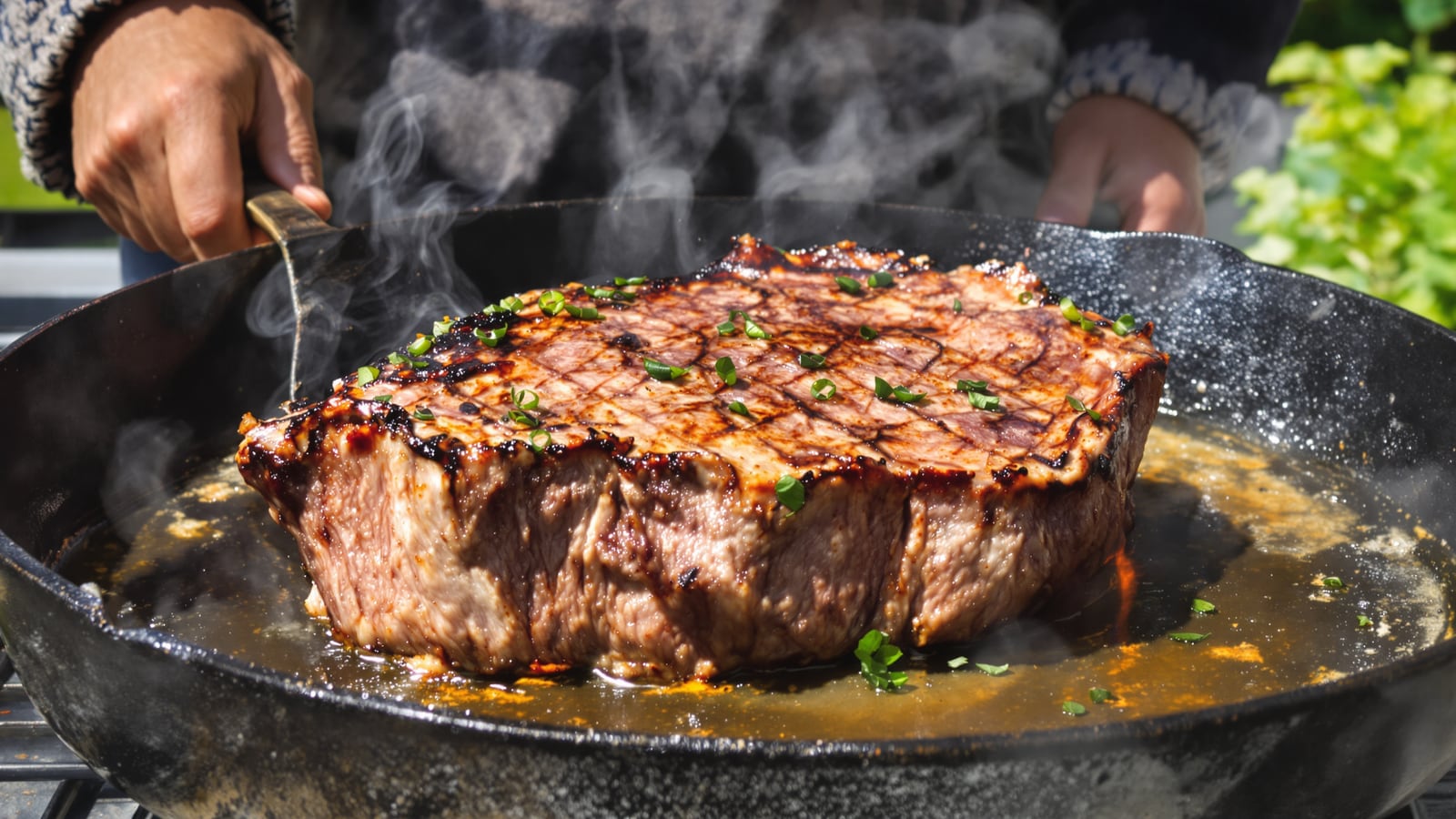
Quick answer: Buy a 3 to 4 pound chuck roast. Salt it the night before, sear it hard, then braise it covered in a 300°F oven until a fork twists in with no resistance, usually three to four hours. Rest it in its own liquid. Feeds six, with leftovers.
The cut people walk past
Stand at the meat case for a minute and watch. People step around the chuck roast to get to the ribeyes. It looks wrong. White seams run through it, there's a gristly edge, and the shape is more or less a lumpy brick.
Those seams are the point. The chuck is the shoulder of the animal, a muscle that works all day. It's loaded with connective tissue, and that tissue makes the meat tough if you cook it like a steak. It's also what turns the meat silky if you cook it the right way.
Collagen, the stuff in those seams, melts into gelatin when it's held at a low, wet heat for long enough. Gelatin is what makes a good pot roast feel rich in your mouth and makes the sauce coat a spoon. A ribeye can't do that. A ribeye doesn't have the material.
The mistake that makes it tough
Most people have eaten a bad pot roast, and it's almost always one of two failures.
They pull it too early. Somebody reads that beef is done at 145°F, so they stop there. At that temperature a chuck roast is a rubber glove. The collagen hasn't started to give up yet.
They crank the heat. A 375°F oven gets the roast to temperature faster, and it also squeezes the moisture out of the muscle fibers before the collagen has dissolved. You end up with meat that's cooked through, dry, and still chewy. Dry and tough at the same time takes some effort.
The fix is counterintuitive. Keep going. A chuck roast starts out tough, gets tougher as it warms, hits a stubborn stretch somewhere in the middle, and then relaxes. If it's fighting you, it's not ruined. It's not finished.
The method
Here's the sequence, and why each step is there.
1. Buy the right roast. Ask for a chuck roast, sometimes labeled "pot roast" or "chuck shoulder." Pick one at least two inches thick with visible marbling. Skip anything labeled round or rump. Those are leaner, and lean cuts dry out in a long braise. Fat is what keeps the meat juicy while the collagen does its slow work.
2. Salt it the night before. About a teaspoon of kosher salt per pound, all over, then park it uncovered in the fridge on a plate. The salt moves into the meat, and the surface dries out, which helps with the next step. Salting right before cooking seasons the outside only.
3. Sear it properly. Heat a Dutch oven over medium-high with a couple tablespoons of neutral oil. Pat the roast dry. Brown every side, about four minutes each, until it's the color of a good saddle. Don't crowd the pot with vegetables yet. Don't move the meat around to check on it. A pale roast means a flat-tasting sauce.
4. Build the liquid. Pull the roast out, soften an onion and a couple of carrots in the fat, then add a cup of beef stock, a splash of red wine or a tablespoon of tomato paste if you like, and scrape the brown bits off the bottom. Put the roast back. The liquid should come about halfway up the meat, no higher.
5. Cover and go low. Lid on, 300°F oven. A 3-pound roast usually takes about three hours, a 4-pounder closer to four. Don't open the lid every thirty minutes to peek. Every peek drops the temperature and lets out steam.
6. Test it with a fork. At three hours, push a fork in and give it a twist. If the meat resists, put the lid back on and give it another 30 minutes. It's done when the fork turns with no effort and the meat starts pulling apart. If you own a thermometer, that's typically somewhere around 200 to 205°F inside. The fork is the real test, though.
7. Rest it in the liquid. Turn the oven off, crack the door and leave the roast in the pot for 20 to 30 minutes. It'll reabsorb some of that liquid. Pull it out right away and it'll look dry on the cutting board.
What goes wrong in the pot
- Too much liquid. If the roast is swimming, you've boiled it. You'll get stringy meat and a watery sauce. Halfway up is enough.
- Pot too big. A wide pot lets the liquid spread thin and evaporate. Pick one that fits the roast with an inch or so to spare.
- Lid doesn't seal. If steam is pouring out, lay a sheet of foil under the lid. A pot that loses its liquid leaves you with a burned bottom and a tough top.
- Slicing too soon, or against the wrong grain. Once it's fork-tender, it'll mostly fall apart anyway. Pull it into chunks along the seams. Don't fight it with a knife.
The trade-off
It takes three or four hours. That's a Sunday job, or a day you're home anyway. The hands-on time is about twenty minutes, front-loaded, and after that the oven does the work. The Sunday roast that leaves your afternoon alone makes the same point about a different cut: the long cook is the easy part.
If you need it on a weeknight, a pressure cooker gets chunks of chuck roast tender in around an hour and a half. You lose some of the deep browned flavor, but you still get the texture. A fair deal on a Wednesday.
Why your family should be eating it
It's one of the cheapest big roasts in the case, and one piece of meat makes four different dinners. The first night, it's pot roast with potatoes and the carrots from the pot. The second, it's shredded into tacos or piled on rolls. The third, it's chopped and fried into a hash with an egg on top. The leftover liquid is the base of a soup. If you're stretching a grocery budget, this is the kind of buy that feeds a family well when the budget is tight. And it fits right in with cooking components instead of meals.
Freeze what you won't eat, with some of the liquid in the container so it doesn't dry out. It'll reheat better than almost anything else you cook.
Make it a little bigger than you need. Take a container of it to a neighbor who's had a rough month, or a new dad, or the guy next door who lives alone. A hot meal on a porch tends to be remembered long after a ribeye is forgotten.
Next time somebody steps around the chuck roast, let them. More for you.
Wes Dunbar
Country & Skills
Grew up on an acreage and never quite left. Covers trucks, trades, land, and how to do the thing yourself.

Watch
Watch how it's done
Picked for this article.
From channels we rate. Plays on YouTube.
Allrecipes
How to Make the Perfect Pot Roast | Allrecipes
Certified Angus Beef ®
Easy Dutch Oven Pot Roast Recipe
Read next