Eggs at 7 p.m. are dinner, if you stop cooking them so hot
Breakfast ran late, lunch never happened, and now you're starving. Cook eggs slower than feels natural and build a real plate around them.
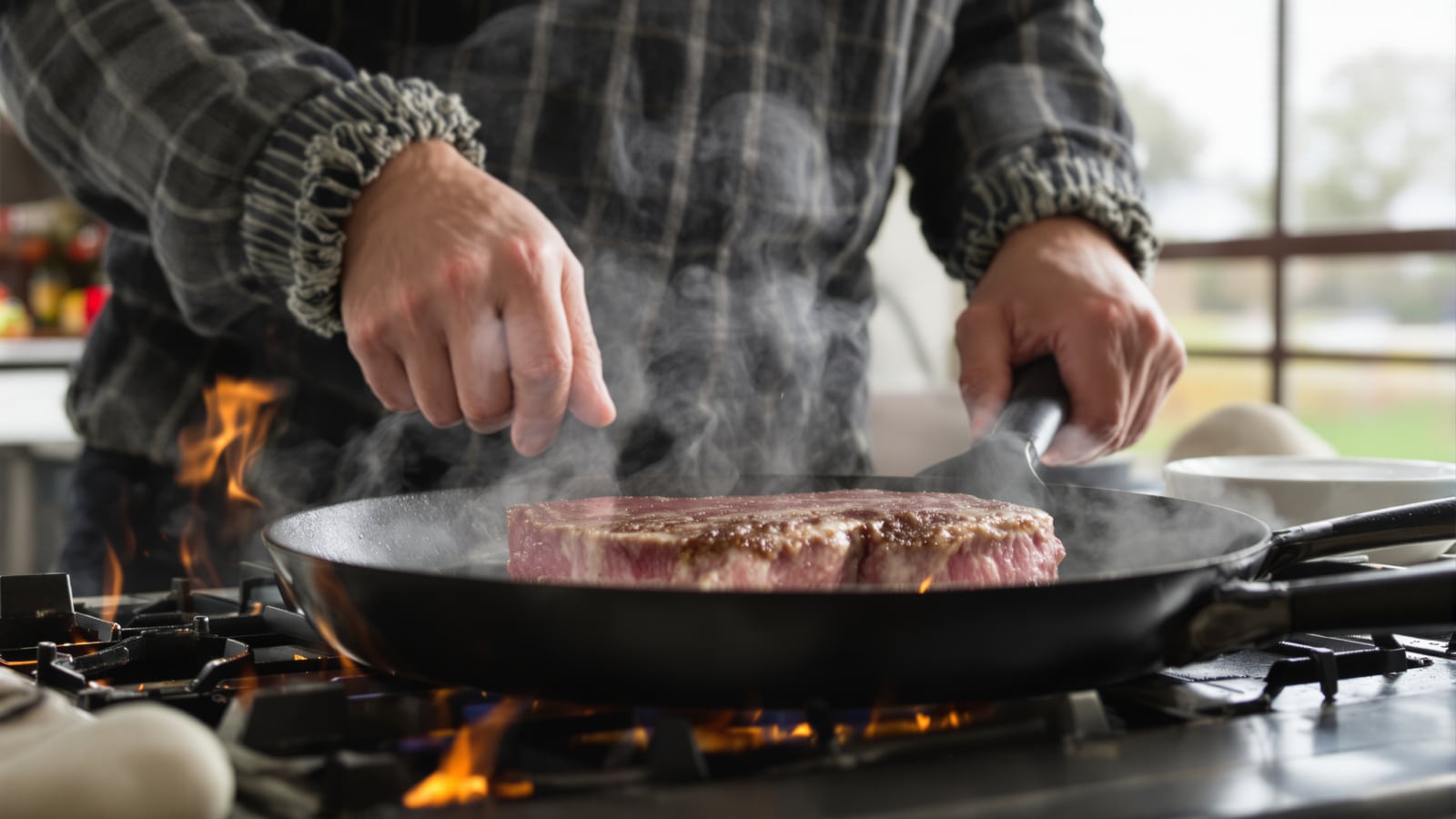
Quick answer: Use three eggs a person, medium-low heat, and real butter. Pull the eggs while they still look a little wet. Put them on something with weight, like fried potatoes, rice, or thick toast, so it eats like dinner instead of a snack.
Why hungry people wreck eggs
It's 7:15. You've had coffee and half a granola bar since morning. You crank the burner to high because you want food now.
Thirty seconds later you've got brown-edged, rubbery curds sitting in a little puddle. That's the protein in the eggs tightening too fast and squeezing out its water. High heat doesn't make eggs faster. It makes them worse and gets you to the same plate a few minutes sooner.
Eggs set at a surprisingly low temperature, well under what a hot pan delivers. Give them gentle heat and they stay tender. Blast them and they seize.
So the first discipline of the hungry cook is to turn the dial down and stay at the stove. It takes about five minutes. You can survive five minutes.
Scrambled, the slow way
Start with six eggs for two people, or three for one very hungry man. Crack them into a bowl, add a good pinch of salt, and beat them hard with a fork until no streaks of white are left. If you can salt them while you gather everything else, do it. A few minutes of rest makes them a little more tender.
Then:
- Put a 10-inch skillet on medium-low. Nonstick works. So does a well-seasoned cast iron pan, and if yours has you worried, it's probably not ruined.
- Add a tablespoon of butter. It should melt and foam gently. If it browns, the pan is too hot. Lift it off the burner for ten seconds.
- Pour in the eggs. Let them sit for about fifteen seconds.
- Drag a rubber spatula across the bottom in long strokes, pushing the set edges toward the middle. Tilt the pan so the wet egg runs into the gaps.
- Keep going for four to six minutes. The curds will be small and soft.
- Pull the pan off the heat while the eggs still look slightly glossy and underdone. They'll keep cooking from the pan's heat as they sit.
That last step is where most people lose. Eggs that look done in the pan are overdone on the plate. If you wait until they look right, you've waited too long.
The fried egg that tastes like effort
Crispy edges and a runny yolk are a different technique, and a hotter one. Medium heat, a tablespoon of oil or bacon fat, and wait until the fat shimmers.
Crack each egg into a small bowl first. This isn't fussy. It means you never fish shell out of a hot pan, and the egg slides in whole instead of breaking.
Slide it in. The white will sizzle and bubble at the edges, which is what you want. Cook for about two minutes, then add a teaspoon of water to the empty side of the pan and cover it with a lid for thirty seconds. The steam sets the top of the white without you flipping and breaking the yolk.
If you like your yolk firm, flip it gently and give it another thirty seconds. That's an over-medium egg. Nobody needs to apologize for it.
What turns eggs into dinner
Two eggs on a plate is breakfast, and you'll be back in the kitchen at nine. Dinner needs a base.
Hash. Dice two or three potatoes into half-inch cubes. Microwave them in a covered bowl with a splash of water for about four minutes until a knife slides in. Then fry them in the skillet with oil over medium-high heat, undisturbed, for eight to ten minutes. Leave them alone. Stirring every thirty seconds is how you get steamed potatoes instead of crisp ones. Add chopped onion for the last few minutes, then push everything aside and fry your eggs in the same pan.
Fried rice. Cold leftover rice is better than fresh, because fresh rice is too wet and clumps. Get the pan hot, cook the rice until it starts to crackle, push it aside, scramble two eggs in the gap, and fold it together with a little soy sauce and whatever vegetables are in the fridge. This is exactly where cooking components instead of meals pays off. A container of rice on Sunday is a hot dinner on Thursday.
Toast and greens. Thick bread, buttered and toasted in the skillet before anything else. Wilt a pile of spinach in the same pan, then top the lot with two fried eggs. Eight minutes, start to finish.
Where it goes wrong
- Wet, watery scramble. You tossed in raw mushrooms, tomatoes, or peppers. They release water into the eggs. Cook the vegetables first, in their own pan time, until the liquid is gone.
- Eggs welded to the pan. The pan was cold when the eggs went in, or there wasn't enough fat. Stainless steel needs a hot pan and more butter than you think. Nonstick forgives a lot but not an empty pan.
- Green-gray tinge on the eggs. They sat too long on heat or in a warm pan. Plate them the second they're ready.
- Everything's cold except the eggs. You cooked the eggs first. Eggs take four minutes and go from perfect to rubber in thirty seconds. Make the base first. Eggs go in last, and plates should already be sitting by the stove.
Cook for the house
If somebody else is coming home late, crack six eggs instead of three. A plate kept covered on the back of the stove won't be as good as one eaten hot. But it tells whoever walks in the door that you thought of them, and scrambled eggs reheated gently with a spoonful of water hold up better than you'd think.
Then wash the pan while it's still warm. A skillet that sits overnight with egg on it fights you in the morning. Wipe it out, rinse it, dry it on the burner for a minute, and leave the stove clean enough that nobody could tell you were hungry.
If this kind of cooking becomes a habit, six meals you know by heart is the next step. Eggs just happen to be the one that's always in the house.
Late, hungry, and tired is when most men order a pizza they didn't want. A dozen eggs and five patient minutes beat it every time.
Wes Dunbar
Country & Skills
Grew up on an acreage and never quite left. Covers trucks, trades, land, and how to do the thing yourself.

Watch
Worth an hour of your evening
More from Food.
From channels we rate. Plays on YouTube.
Read next