Six meals you should know by heart, and how to get there
Recipes are fine. But a man who can feed four people on a Tuesday without reading anything has something better than a recipe.
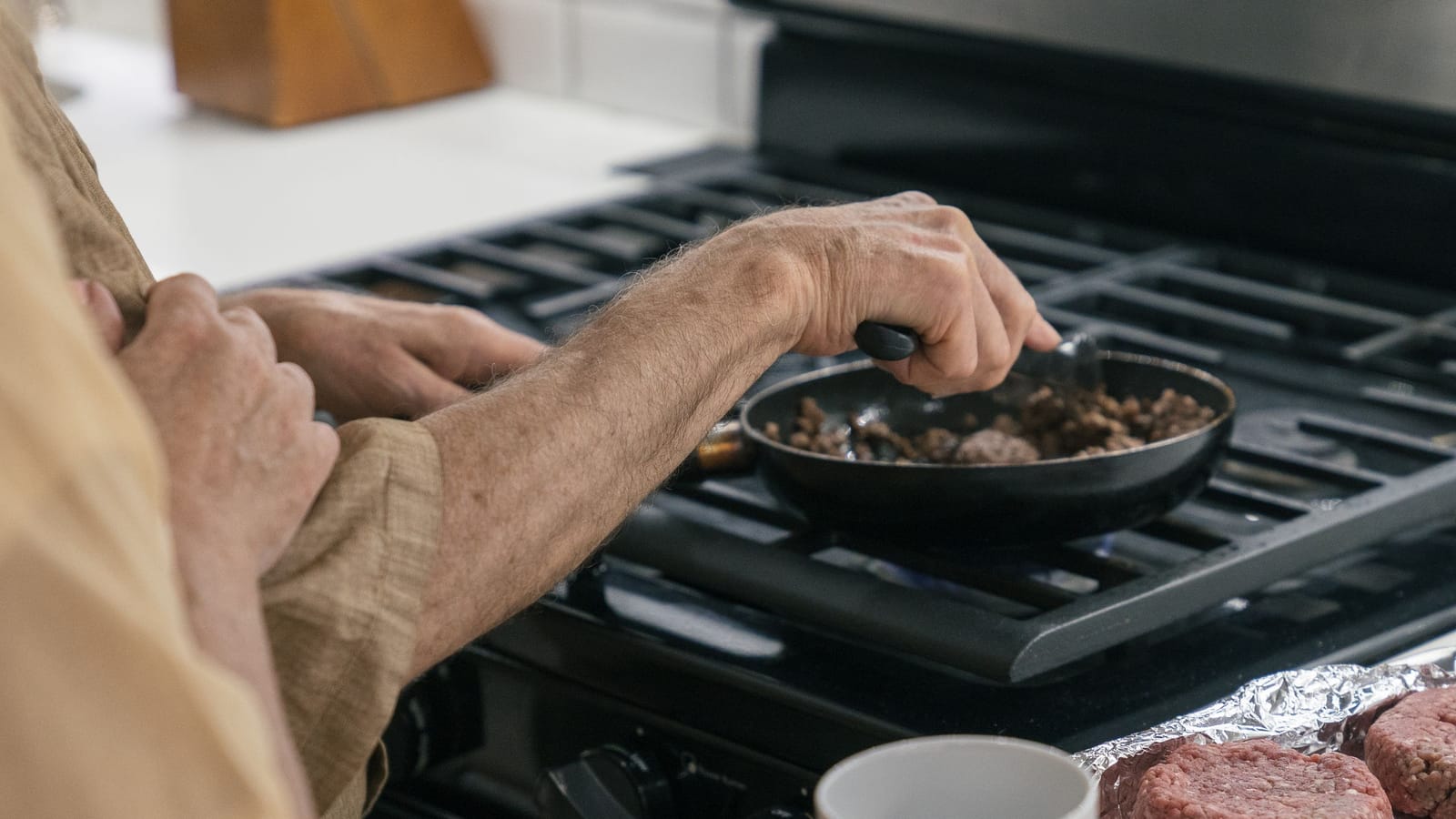
Cooking without a recipe isn't memorization. It's knowing what the food is supposed to look like, sound like and smell like at each stage, so you can steer instead of following directions you can't adjust.
That's the whole skill. A recipe tells you eight minutes. Your pan, your stove and your piece of meat have never read it.
Six meals will get you most of the way there. Each one teaches a technique that shows up everywhere else, which means once you own all six you can improvise most of what a family eats in a week.
Eggs, cooked at a heat that feels too low
Start here because you'll make eggs more often than anything else, and because heat control is the foundation under every other dish on this list.
Scrambled eggs, done properly: butter in a nonstick or well-seasoned pan over medium-low, eggs beaten with a pinch of salt, then constant movement with a rubber spatula. Not stirring. Pushing the set curd off the bottom and letting the liquid run underneath. Pull the pan off the heat while the eggs still look slightly wet and glossy, because they keep cooking in the pan for another thirty seconds.
What goes wrong: heat. Nearly always heat. A hot pan sets the outside of the curd before the inside cooks, which squeezes water out and leaves you with rubber sitting in a puddle. The second failure is cooking them to the texture you want to eat, instead of the texture that's thirty seconds short of it.
An omelette is the same technique plus one rule about pan size. Three eggs want an 8-inch pan. A 12-inch pan spreads them so thin they're cooked through before you can fold anything into them.
A seared steak or chop, and the sauce that comes out of the pan
Buy meat at least an inch thick. Thin steak cooks through before the crust forms, and there's no technique that fixes that.
Dry the surface hard with paper towel. Salt it. Get a heavy pan hot enough that a drop of water skitters, add a thin film of oil, lay the steak down and leave it alone for three or four minutes. Turn it once. For a thick cut, finish with butter, a smashed garlic clove and a thyme sprig, spooning the foaming butter over the top. Rest it eight minutes on a board before you cut.
What goes wrong: a wet steak steams instead of browning. A crowded pan drops the temperature and does the same thing. And most people cut too early, which dumps the juice onto the board instead of leaving it in the meat.
The pan sauce is free and it's the thing that makes people think you can cook. Pour off most of the fat, drop the heat, add a chopped shallot for a minute, then a splash of stock, wine or plain water. Scrape the brown stuff off the bottom. Let it reduce by half, then swirl in a knob of cold butter with the pan off the heat. That's it. Four minutes, no measuring.
A whole roast chicken
The cheapest way to put a real dinner in front of people, and the leftovers carry into two more meals.
Salt the bird all over the day before and leave it uncovered in the fridge. The salt works into the meat and the skin dries out, which is what makes it crisp. Take it out an hour before it goes in the oven. Roast at 425°F on a rack, or sitting on top of halved potatoes and onion wedges that catch the fat. A four-pound bird is usually done in a little over an hour. Check the thigh, not the breast, and pull it when the thermometer reads 165°F there.
Rest it fifteen minutes. Carve on a board with a channel, and pour whatever collects back over the meat.
What goes wrong: roasting straight from the fridge, so the outside overcooks while the inside catches up. Skipping the salt the day before and wondering why the skin is pale and flabby. Packing the vegetables in so tightly they steam in their own moisture instead of browning.
Buy the thermometer. An instant-read costs less than the chicken and removes the only genuinely difficult part.
Something braised
This is the meal you start and then walk away from, which makes it the most useful thing in the repertoire when the afternoon is busy.
Chuck roast, pork shoulder, lamb shank, chicken thighs. Cut into big pieces, dry them, salt them, brown them hard in batches. Set them aside. Cook onion and carrot in the same pot until soft, add garlic for a minute, then liquid: stock, beer, wine, tomatoes, water. Return the meat. The liquid should come halfway up the meat, not over it. Lid on, into a 300°F oven for three hours.
It's done when a fork twists in the meat with no resistance. Not before. Time is a guess; the fork is the test.
What goes wrong: skipping the browning, which is where all the flavor lives. Drowning the meat, so you boil it and get gray, washed-out protein in thin broth. Cooking it hot and fast because you're behind schedule, which tightens the muscle instead of melting the collagen. A braise that isn't tender yet almost never needs more heat. It needs more time.
Pasta that finishes in the pan
Most home pasta fails in the last ninety seconds, when the noodles get drained in the sink and the sauce gets ladled on top. Those are two separate foods sitting next to each other.
Salt the water until it tastes seasoned. Pull the pasta a minute before the box says. Move it into the pan with the sauce using tongs or a spider, bring a ladle of the starchy cooking water with it, and toss it over heat for a minute or two. The starch and the fat emulsify and the sauce grabs onto the noodles instead of sliding off.
Learn one sauce with no tomatoes: garlic sliced thin, gently colored in good olive oil, chili flake, pasta water, parsley, cheese off the heat. Eight minutes, pantry ingredients, and it teaches you the emulsion better than anything else will.
What goes wrong: rinsing the pasta, which strips the starch you need. Tipping all the water down the drain before you remember you wanted some. Adding cheese to a screaming hot pan, where it seizes into strings.
A pot of beans or lentils
The cheapest food on earth and the one that rewards the least attention.
Aromatics in fat, then beans and water two inches above them, then the barest simmer with the lid cracked. Lentils take forty minutes and don't need soaking. Dried beans take a couple of hours and soaking helps. Salt them early; it won't hurt them.
What goes wrong: boiling, which blows the skins apart and turns the pot cloudy. Beans that have sat in a cupboard for three years and will never soften no matter what you do. Adding vinegar or tomato at the start, which slows the softening down considerably. Acid goes in at the end.
How you actually get there
Pick one. Cook it once a week for a month. By the third time you'll stop reading, by the fifth you'll start adjusting, and by the eighth it's yours for life.
Taste constantly. Keep salt in a bowl where you can pinch it. Own a thermometer, a heavy skillet, a sharp knife and a pot with a lid, and you can skip almost everything else the store wants to sell you.
The night the power goes out, or a friend turns up unannounced, or your wife is flat on her back with the flu and there are kids asking what's for dinner, nobody's looking anything up. Somebody just cooks. Be that.
Wes Dunbar
Country & Skills
Grew up on an acreage and never quite left. Covers trucks, trades, land, and how to do the thing yourself.

Watch
Worth an hour of your evening
More from Food.
From channels we rate. Plays on YouTube.
Read next