Your cast iron pan is probably not ruined
Sticky, rusty, food welded to the bottom — nearly every cast iron problem is one of five mistakes, and all of them are reversible.
If your pan feels tacky, like old varnish that never quite dried, you used too much oil the last time you seasoned it. That's the single most common cast iron failure, and it's not damage. It's a fixable mistake you can undo in an afternoon.
Almost nothing actually ruins cast iron. It's a slab of metal roughly a quarter-inch thick. You can drop it, burn it, leave it in the rain and bring it back. The pans people inherit from their grandmothers went through decades of rough handling and they still work. What people call "ruined" is nearly always one of five things, and each one has a specific cause and a specific fix.
What seasoning actually is
Seasoning isn't oil sitting on the metal. It's oil that's been heated past its smoke point until it breaks down and bonds into a hard, dry, plastic-like layer. Chemists call it polymerization. You can't feel it as grease. A properly seasoned pan feels dry and slick, like a river stone.
That's why too much oil fails. A thick coat can't fully polymerize. The outside hardens, the inside stays soft, and you get a sticky film that collects dust and picks up fingerprints. It'll also flake off in black specks into your eggs.
The rule that fixes it: oil the pan, then wipe it off like you made a mistake. Every surface, inside and out, then take a clean cloth or paper towel and remove all of it. What's left in the pores is exactly enough. The pan should look dull, not wet. If it shines, keep wiping.
The five things that go wrong
Sticky surface. Too much oil, or oven temperature too low to finish the polymerization. Fix below.
Rust. Water left sitting, or the pan put away damp. Cast iron will start spotting within hours in a humid kitchen. Steel wool it off, wash, dry on the burner, re-oil. Rust is surface-level and it's never a reason to throw a pan away.
Food welded to the bottom. Almost always a heat problem, not a seasoning problem. You put cold protein into a pan that wasn't properly preheated, or you didn't use enough fat.
Flaking black bits. Old, thick, uneven seasoning breaking down. Scrub the loose stuff off aggressively and rebuild.
A dull gray patch. You cooked something acidic — tomatoes, wine, lemon, vinegar — long enough to strip the seasoning off that spot. Mostly harmless. Re-season and avoid long acidic simmers until the pan's built up a few years of use.
Heat is the part everyone gets wrong
Cast iron conducts heat badly and stores it brilliantly. That combination surprises people. Put it on a burner for two minutes and you get a scorching ring in the middle and cool edges. Meat lands on that cool edge and sticks.
Give it time. Medium heat, five to eight minutes, and let the whole pan come up together. You can check by holding your hand a few inches above different parts of the surface — the heat should feel even from center to rim. Or flick in a few drops of water. They should skitter and evaporate at the same rate everywhere.
Once it's hot, it stays hot. That's the payoff. A cold steak won't drop the surface temperature the way it would in thin stainless. You get a real crust.
The flip side: cast iron overshoots. If you preheat on high and then add butter, the butter's black before you've turned around. Preheat lower and longer than feels right.
Soap is fine
The idea that dish soap destroys seasoning comes from an era when soap was made with lye, which would genuinely eat it off. Modern dish detergent won't. Seasoning is polymerized, not greasy — detergent has nothing to grab.
What actually damages a pan is long soaking. Water sitting in contact with iron for an hour does more harm than any amount of soap in sixty seconds.
The routine, every single time:
- Scrape while the pan's still warm, not hot and not cold. A stiff plastic scraper or a chainmail scrubber does it.
- Hot water, a drop of soap if it needs it, a quick scrub.
- Rinse, then put it back on the burner over medium until the last of the water steams off. Thirty seconds.
- Off the heat, a few drops of oil, wipe it out until the cloth comes away nearly clean.
That's it. The whole thing takes less time than loading a dishwasher.
Never put it in a dishwasher. Never leave it in the sink overnight. Never run cold water into a screaming-hot pan — thermal shock can crack it, and cracked cast iron genuinely is finished.
Rebuilding a pan from scratch
If yours is sticky, rusty, or patchy, strip and rebuild.
Scrub hard with steel wool or a chainmail pad, with soap and hot water. You're trying to remove every loose, sticky, or flaking bit. Bare gray metal isn't a disaster — that's the starting point. Dry it immediately on the stove.
Oven to around 450 to 500°F. Wipe a thin coat of a neutral oil over the whole pan, then wipe it off. Grapeseed, canola, and vegetable oil all work fine. Flaxseed builds a beautiful hard finish that tends to chip later, so it's not worth the fuss.
Pan upside down, rack in the middle, foil or a tray below to catch drips. An hour. Turn the oven off and let it cool inside.
Repeat three or four times. You want layers, not thickness in one go. Open a window — polymerizing oil smokes.
Then cook in it. Bacon, sausage, anything that renders fat. Real cooking builds seasoning faster and better than anything you do in an oven.
Choosing and breaking in a new one
A ten-inch skillet handles most of what one or two people cook. A twelve-inch handles a family and a whole chicken. Those two cover nearly everything.
New pans come out of the mold with a slightly pebbled surface. That's cosmetic. It fills in with use, and within a year you won't notice it. If you want smooth out of the box, that's what secondhand pans give you — older manufacturing machined the cooking surface flat, and a well-used vintage skillet is lighter and slicker than a new one. Check for cracks, wobble on a flat counter, and pitting. Rust is negotiable. A crack isn't.
Enameled cast iron is a different tool with different rules. Don't preheat it empty, don't shock it with cold water, and don't scour it. It doesn't need seasoning and it won't forgive you the way bare iron will.
The egg test, honestly
People judge a pan by whether an egg slides. Fair enough, but the technique matters more than the pan.
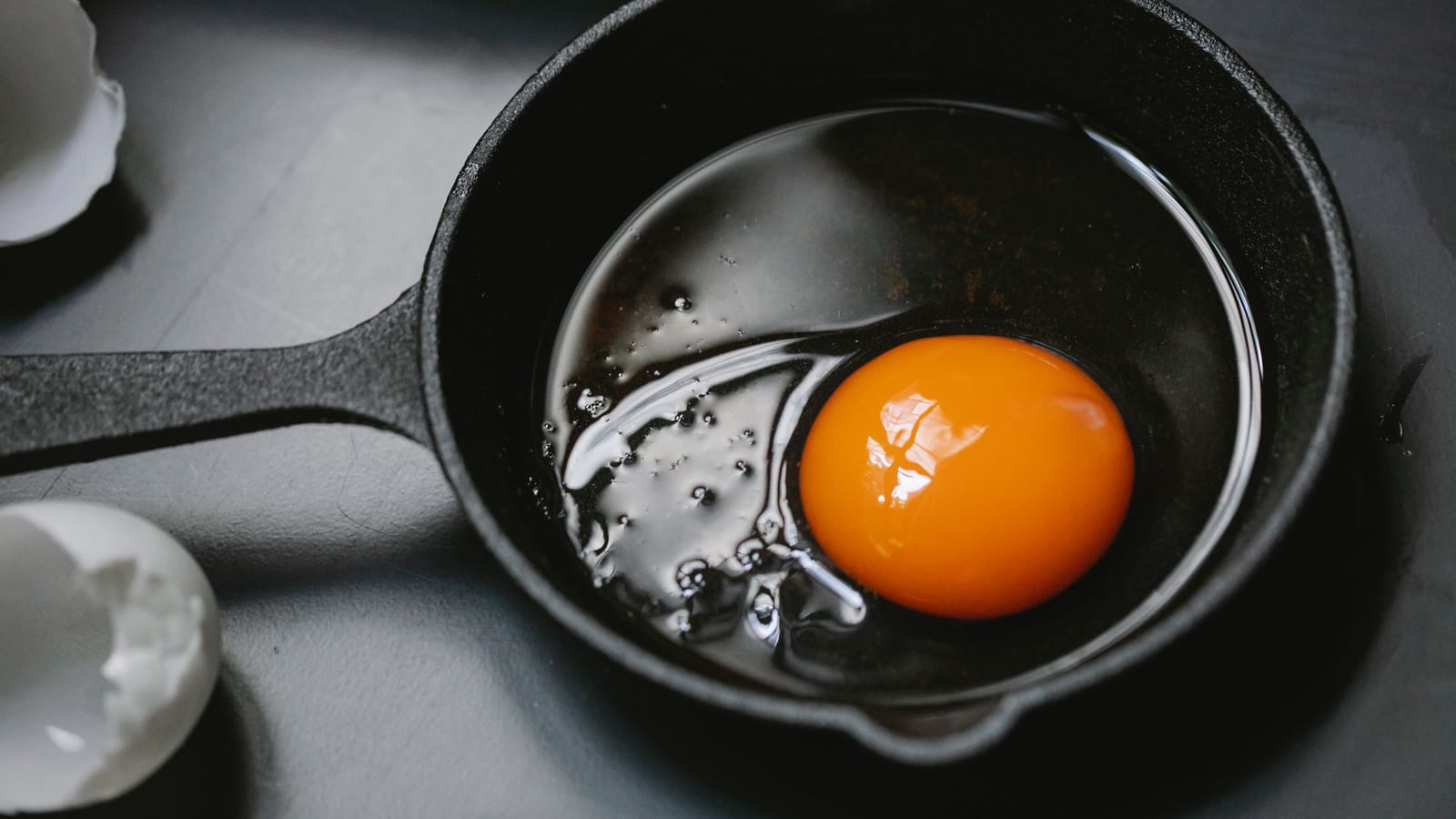
Preheat properly on medium-low. Enough fat to actually coat the surface — a teaspoon, not a mist. Let the fat get hot before the egg goes in. Then leave it alone. Eggs stick to metal for the first twenty seconds and then release on their own. If you go prodding at that stage, you tear the white and blame the pan.
Buy the skillet once. Cook in it three times a week. In a decade it'll be better than the day it arrived, and it'll still be around when your kids are arguing over who gets it.
Wes Dunbar
Country & Skills
Grew up on an acreage and never quite left. Covers trucks, trades, land, and how to do the thing yourself.

Watch
Worth an hour of your evening
More from Food.
From channels we rate. Plays on YouTube.
Read next