Cook these five things until you don't need the recipe
Five dishes that teach five kinds of heat control. Learn them properly and you can improvise dinner for the rest of your life.
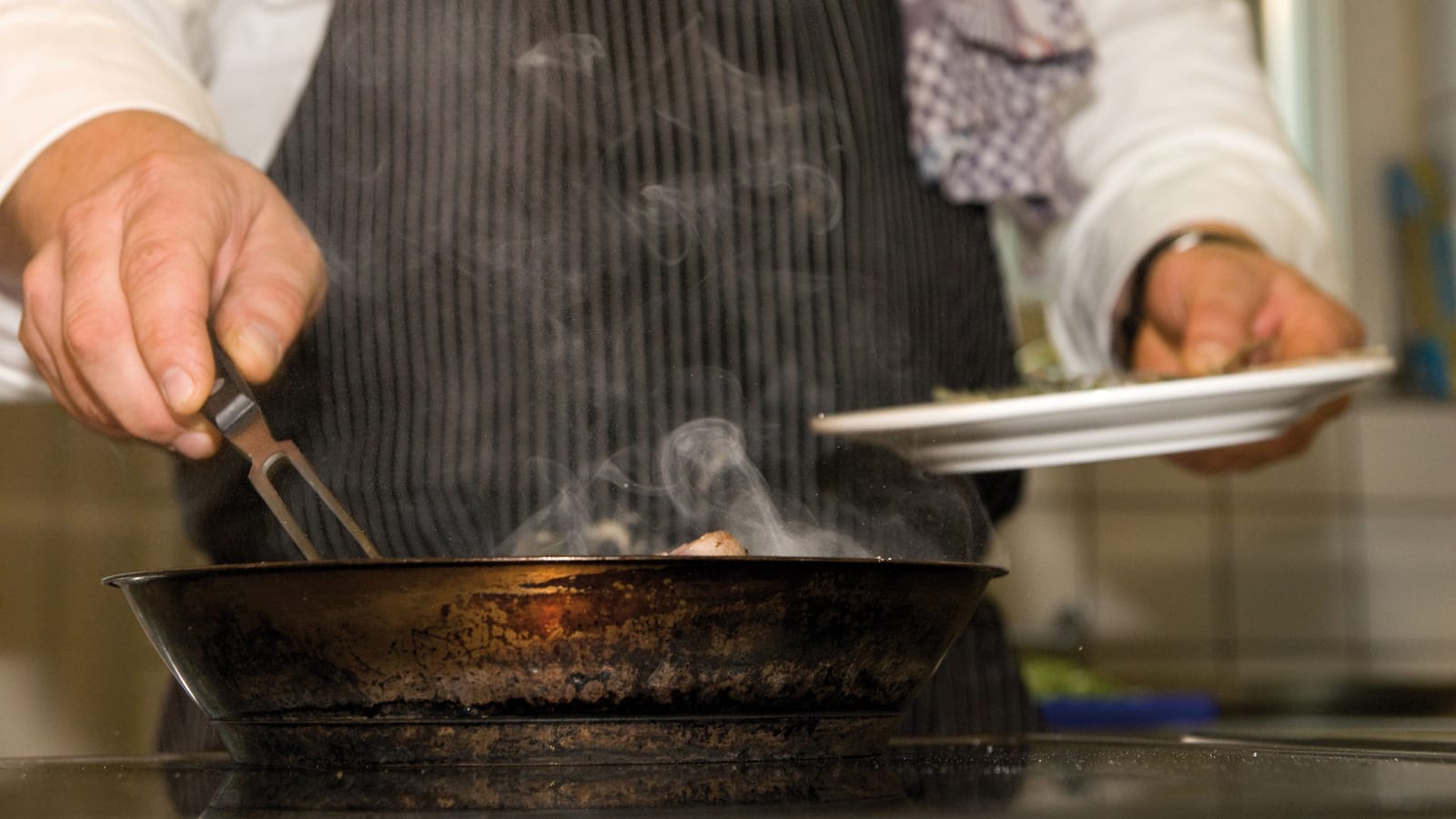
A recipe tells you "sear four minutes per side." Your pan, your stove and the thickness of that particular steak all disagree with it. That's why people who cook exclusively from recipes never get better. They're following clocks instead of reading what's in front of them.
Five dishes cover almost everything you'll ever need to put on a table. Each one teaches a different kind of heat control, and the technique transfers. Learn to braise a chuck roast and you've also learned short ribs, pork shoulder, lamb shank, chili and every ragù. Cook each of these once a week for a month and the phone stays in your pocket.
Steak in cast iron
Buy the steak thick. An inch and a quarter minimum, an inch and a half is better. A half-inch supermarket steak can't be cooked well indoors and no technique will save it.
Salt both sides generously and leave it on a rack in the fridge, uncovered, for at least 45 minutes. Overnight is better. The salt draws moisture out and then the meat pulls it back in seasoned, and the surface dries, which is the part that matters. A wet steak steams. Steam doesn't brown.
Get a 12-inch cast iron skillet hot on medium-high for a good five minutes. Flick water at it. If the drops skitter and vanish, you're there. Thin film of a neutral oil, steak in, and then leave it alone for two to three minutes. Don't poke it. Flip, another two minutes, then drop in a big knob of butter, a smashed garlic clove and a sprig of thyme, tilt the pan and spoon the foaming butter over the top for a minute.
Pull it at 125°F on a probe thermometer for medium rare. It'll climb to about 130°F while it rests. Rest it eight minutes on a warm plate, loosely tented. Wrap it tight in foil and you'll steam the crust you just spent ten minutes building.
The annoying part nobody mentions: your kitchen will fill with smoke. Fan on, window open, and move the smoke detector before you start rather than after it goes off.
Then make the pan sauce. Pour off most of the fat, splash in a little stock or red wine, scrape the brown bits up with a wooden spoon, reduce by half, pull it off the heat and swirl in cold butter. That's thirty seconds of work and it's the difference between a steak and a dinner.
Eggs, which nobody takes seriously enough
An 8-inch nonstick pan and low heat. Lower than you think. Beat three eggs until there are no streaks of white left, into the pan with a lump of butter, and stir slowly with a rubber spatula, pushing the curds around and scraping the bottom constantly.
Take them off the heat when they still look slightly underdone and wet. Eggs keep cooking in the pan for another twenty seconds after you kill the flame, and that's exactly where most people ruin them. Rubbery scrambled eggs aren't a cooking failure, they're a timing failure.
The omelette is the same skill with more nerve. Same three eggs, butter foaming over medium, shake the pan with one hand while stirring with the other for about twenty seconds, then stop and let the bottom set. Cheese or herbs down the middle, tip the pan, roll it out onto the plate. It should be pale gold on the outside. Brown means the heat was too high.
Learn this and you've got dinner for anyone who walks in the door at nine at night.
A whole roast chicken
A three-and-a-half to four pound bird. Pat it bone dry with paper towels, then salt it heavily all over, including inside the cavity. If you can salt it the day before and leave it uncovered in the fridge, do that. The skin dries out and crisps far better.
Don't stuff it. Don't truss it tightly either, because tight legs mean the thighs cook slowly while the breast dries out. Just tie the legs loosely, or not at all.
425°F. Sit the bird on a bed of halved onions, carrots and a few potatoes in a skillet or roasting pan, so the vegetables cook in the drippings and you get the whole meal out of one dish. Roughly 55 to 70 minutes. Start checking at 50.
Probe the thickest part of the thigh, avoiding bone. You want 170°F to 175°F there. The breast will be around 160°F and that's correct. Thighs and breasts don't finish at the same temperature, and cooking the whole bird until the thigh juices run clear is how you end up with chalk for breast meat.
Rest it 15 minutes before carving. Then put the carcass in a pot with water, an onion and a bay leaf and simmer it for a few hours. That's your soup on Tuesday.
One braise, four dinners
Chuck roast, pork shoulder, beef shank, lamb neck. Cheap, tough, full of collagen. Lean meat has nothing to turn into gelatin, so it comes out dry and stringy no matter how long you cook it. That's the single biggest braising mistake and it happens in the butcher aisle, not the kitchen.
Cut it into big chunks, dry them, salt them, and brown them hard in batches in a heavy pot. Crowd the pot and everything steams gray. It takes three rounds and fifteen minutes and there's no shortcut.
Set the meat aside. Onions, carrots, celery into the fat. Tomato paste if you're making something red, cooked until it darkens. Deglaze with wine, beer or stock, scraping everything off the bottom. Meat back in, liquid to come about halfway up the meat, not over it. Braising isn't boiling.
Lid on, 300°F oven, two and a half to three hours. It's done when a fork twists out with no resistance, not when the timer says so.
Taste and salt it again at the end. Braises always need a second round of seasoning, and a splash of vinegar at the finish wakes the whole thing up.
It's a three-hour commitment, so it's a Sunday dish. But it feeds four people twice, and it's better on day two.
Pasta, and the water you keep pouring away
Salt the water until it tastes like a mild broth. No oil. Oil does nothing except stop sauce sticking to the pasta later, which is the opposite of what you want.
Pull the pasta ninety seconds before the box says. Have your sauce already warm in a wide pan. Move the pasta straight into the sauce with tongs, add a ladle of the cooking water, and then toss it hard over medium heat for a minute or two.
That cloudy water is starch, and starch is what turns oil and water into a glossy sauce that coats every piece. This is the single technique that separates restaurant pasta from the sad plate with a puddle of red spooned on top. Take the pan off the heat before you add cheese, or it'll seize into strings.
Garlic, chili flakes and good olive oil is a complete meal and takes eleven minutes. Learn that one first.
Making it stick
Cook the same dish four weeks running and change one thing each time. Different cut, different finish, hotter pan. Repetition with variation is how technique gets into your hands, and cooking five different recipes once each teaches you almost nothing.
Buy an instant-read probe thermometer. It's the one tool that converts guessing into knowing, and it makes the steak and the chicken essentially foolproof.
Learn the ratios, not the ingredient lists. Brown, deglaze, aromatics, liquid halfway, low oven, long time. Hot dry pan, dry surface, don't touch it, rest it. Those two sentences are most of cooking.
My oldest can now smell a chicken going in at four o'clock and knows what time we're eating. He doesn't know a recipe. He knows the smell of his father's kitchen on a Sunday, and that's a thing worth building on purpose.
Dean Shaw
Gear & Garage
Reads the warranty, the parts list and the long-term owner reviews before anything else. Trucks, tools, watches, and the cheap version that costs more.

Watch
Worth an hour of your evening
More from Food.
From channels we rate. Plays on YouTube.